The most common roof problems in Massachusetts are failed pipe boots and flashing, shingles that come unsealed and lift, ice dams, poor attic ventilation, rotted decking and clogged gutters. At Powersol Roofing, homeowners tell us “my shingles are lifting” or “there’s water by the chimney.” Across the roofs we replace, the trouble tends to sit around the shingles: the flashing, the ventilation, a reused pipe boot, bad nail placement, a missing ice-and-water barrier, or decking that quietly rotted for years.
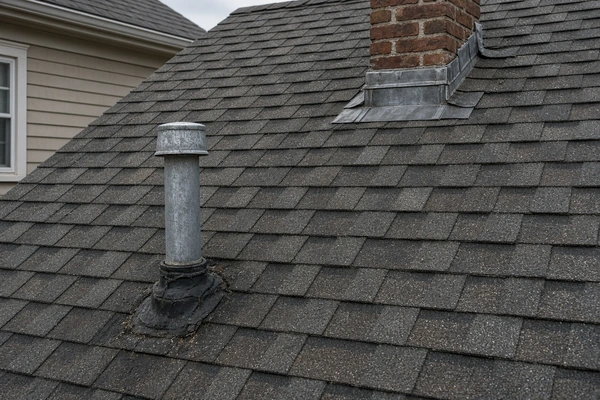
What Are the Most Common Roof Problems in Massachusetts?
Common roof problems are the failures that let water, ice or attic heat get past a roof’s outer layer. On Massachusetts asphalt roofs, the usual list is failed pipe boots and flashing, unsealed or lifting shingles, ice dams, poor attic ventilation, rotted decking, clogged gutters and moss. Black algae streaks are common too, but they’re mostly cosmetic.
Old houses make the list longer. The median owner-occupied home in Massachusetts is 59 years old, against 42 nationally, according to the National Association of Home Builders’ analysis of 2024 Census Bureau data.
Houses that old have been re-roofed, sometimes more than once. Each re-roof is a chance to reuse old flashing, keep an old pipe boot or cut the ice barrier short. Those details show up when an old roof comes off.
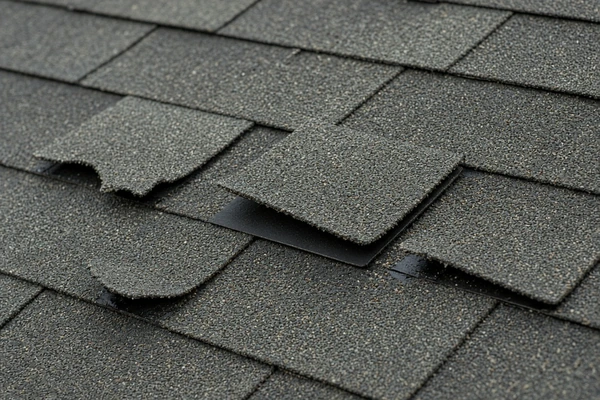
Shingles That Lift in the Wind
Shingles lift when the sealant strip under each tab lets go or the nails went in the wrong spot. The tab can lie flat on a calm day and flap in a gust. Wind-driven rain, the kind a coastal storm throws sideways, then gets under the tabs and reaches the underlayment.
Shingle age adds to it. IBHS weathered shingles for 10 years in South Carolina, Wisconsin and Ohio and published the results in September 2026. Wind resistance for most products began to drop between years 5 and 10. The researchers called unsealing “the single greatest driver of wind vulnerability.”
Bad nail placement is the other cause, and it’s on the short list of install problems that show up under old roofs. From the driveway, look for shingles that are lifting or curling at the edges. Our inspections check shingle sealing, and you get photos of your own roof, not stock images of somebody else’s. Our post on curling shingles covers curling and early blow-offs.
Water by the Chimney
Water by a chimney points to the flashing first. Chimneys and skylights leak for the same reason: they’re holes cut in the roof, sealed only as well as their flashing. The counterflashing has to be cut into the mortar and layered over the base flashing. A wide chimney also needs a small peak called a cricket behind it to split the water.
When we open up older roofs, we often find the old flashing was reused or face-nailed on the last job instead of being woven into the shingles. Roof cement smeared over a suspect spot doesn’t fix that. It can send the water somewhere new and leave the real entry point leaking. On every roof we replace, the flashing at chimneys, walls and valleys is new, not reused.
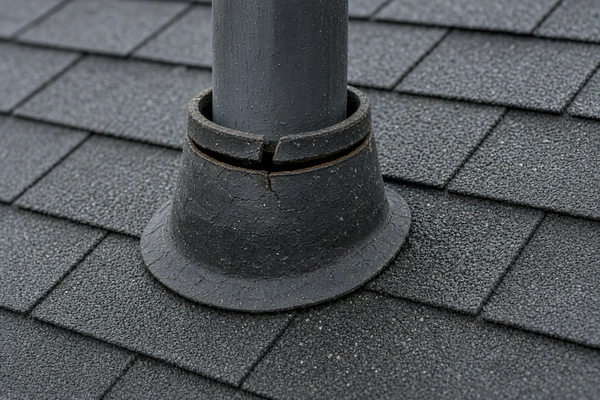
Leaks at Pipe Boots and Valleys
A leak in the middle of a ceiling, away from walls and chimneys, often traces to a pipe boot or a valley. The single most common roof leak we find is a failed pipe boot, the rubber collar that seals around a plumbing vent pipe. In our experience, the rubber dries out and splits, usually in 8 to 12 years, long before the shingles are worn out.
Reused pipe boots are one of the most common things we find when an old roof comes off. New pipe boots go on every roof we replace, and they’re on the written scope you get before anything comes off the house. If you’re comparing quotes, ask whether the pipe boots get replaced.
Valleys, where 2 slopes meet, carry the runoff from both. Clog either one, gutter or valley, and water backs up where it doesn’t belong. If none of this matches your stain, our breakdown of what causes roof leaks covers the rest.
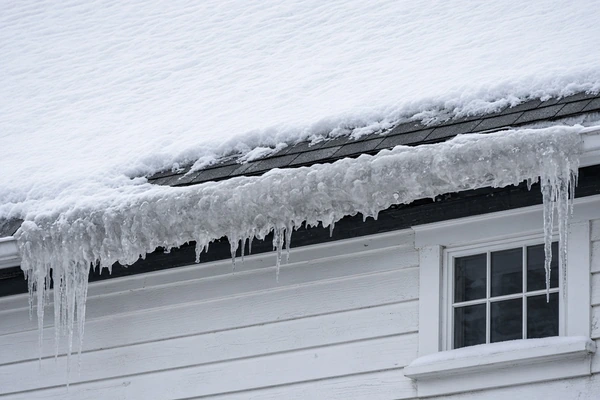
Ice Dams and the Massachusetts Ice Barrier Rule
An ice dam is a ridge of ice at the roof edge that traps meltwater, which then backs up under the shingles. It forms when the upper roof is above 32 degrees F and the edge is below freezing, so snow melts up high and refreezes at the cold eave.
Massachusetts wrote this into its building code. The residential code lists ice barrier underlayment as required statewide. The state’s ice barrier guidance says it must run from the roof edge to at least 24 inches inside the exterior wall line. On roofs pitched 8 in 12 or steeper, it has to reach at least 36 inches up from the eave. On a typical Massachusetts house with a real overhang, a single 36-inch course doesn’t reach the line the code sets.
Of the ice barrier failures we see at tear-off, the most common is a membrane that stops short of the wall line. That’s why we measure the coverage from the inside wall, not the roof edge. We run GAF WeatherWatch leak barrier at the eaves and in the valleys on every roof we install. It decides whether a dam becomes a stain on your ceiling, but it doesn’t stop the dam from forming. More on the membrane in our post on ice and water shield.
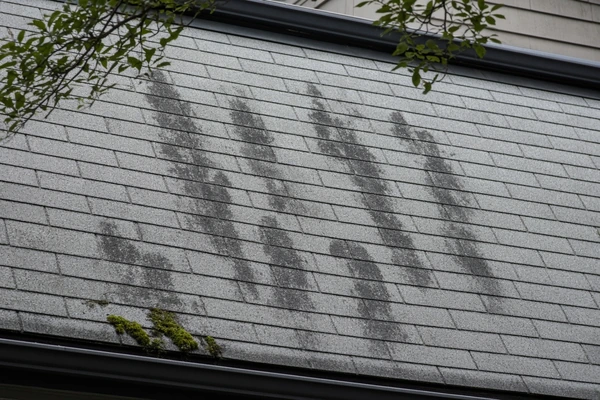
Are Black Stains on a Roof a Problem?
Usually not. Those streaks are typically algae, often a type called Gloeocapsa magma. The Asphalt Roofing Manufacturers Association (ARMA) says there’s no scientific evidence that algae damages asphalt shingles, though it does affect how a roof looks.
Don’t let anyone rush you to replace a roof over algae or moss alone. On a sound, mid-life roof, most of these are fixable. If you want the streaks gone, ARMA’s guidance is a bleach-and-water solution left on for 15 to 20 minutes, applied by a pro, and the result is temporary. Never pressure wash an asphalt roof. ARMA says high-pressure washing is likely to damage it.
Moss is different. It can lift or curl the leading edges of shingles and, in bad cases, cause leaks, according to ARMA. It tends to grow on north-facing slopes and in the shade of overhanging branches. ARMA also advises against adding zinc or copper strips to an existing roof, since putting them on can break the shingle seal.
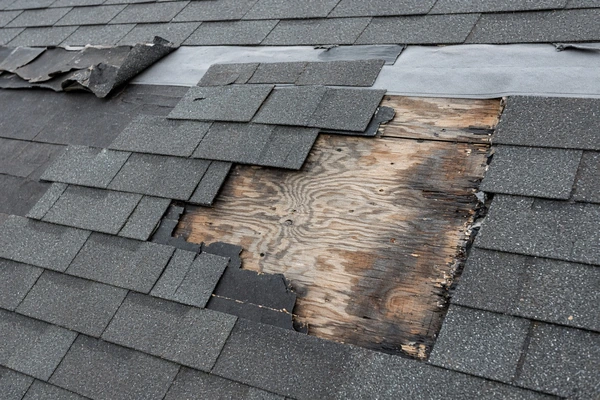
Soft Wood Under the Shingles
When the wood feels soft, the roof deck has rotted. That’s the plywood or boards under the shingles, and it rots from water getting in over time. Rotted decking is common on older roofs.
When we tear off an old roof, we check the deck before anything new goes down. If the plywood is soft or rotted, we replace it, and we show you the photos first. We also explain the added cost before we go further, which is why a written scope beats a quick phone number.
It’s also why we don’t quote overlays in Massachusetts. A second layer of shingles covers the old details instead of fixing them, and on the roofs we open up, those details are usually the problem. ARMA’s FAQ makes the same point: new shingles can’t be properly applied over warped, rotted or unsound decking, which has to be fixed first. More on that in overlay vs. tear-off.
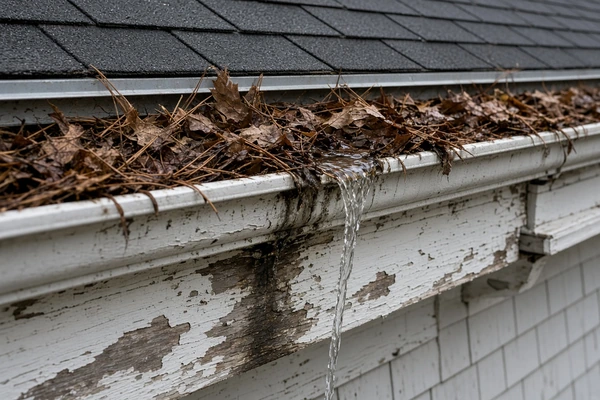
Rotting Edges and Overflowing Gutters
Rot at the roof edge often starts with water leaving the roof the wrong way. Gutters packed with pine needles and oak leaves overflow, spill behind the drip edge, and in winter freeze into their own little dams. Without drip edge, water can curl back onto the fascia board.
A Taunton homeowner we worked for needed a full roof replacement plus new gutters and PVC fascia and soffit, because the edges of the roof mattered as much as the shingles. We’ve done similar full-exterior work in Randolph, with a roof, gutters and siding. The pattern is the same: the parts you don’t see decide how long the roof lasts.
A Hot, Damp Attic
Poor attic ventilation and air leaks cause problems that look like roof problems. ARMA’s FAQ notes that attic ventilation moves heat out of the attic, which helps the roof last. It also carries moisture from cooking, laundry and showers out before it causes mold, wood rot and wet insulation, and it helps fight ice dams in cold climates.
Venting alone won’t stop ice dams, though. University of Minnesota Extension says leaking warm air from the house is often the main way heat reaches the roof, and its first fix is an airtight ceiling.
On new roofs, we install a GAF Cobra ridge vent and check and correct the attic ventilation, because a hot attic shortens shingle life. We also confirm the soffits are open, because exhaust without intake does nothing. If the fix is clearing soffits and adding baffles, we’ll tell you that. We cover attic ventilation in its own post.
Which Roof Problems Can Wait? A 2026 Triage Table
An active leak and a sagging roofline can’t wait for a lifespan conversation. If you see either one, get the roof looked at this week. Other signs point to replacement on an older roof, and some are worth checking but often repairable. This table sorts them into the same groups as our list of 10 new roof signs, with the source behind each call.
| What you notice | Likely cause | Fix now or watch? |
| Active leak or fresh ceiling stain | Failed pipe boot, flashing, valley or ice dam | Now. Get it looked at this week; EPA says dry wet areas within 24 to 48 hours |
| Sagging roofline | Rotted decking or a structural problem | Now. Get it looked at this week |
| Soft or rotted decking | Water getting in over time | Usually means replacement on an older roof |
| Granule loss, curling or cracked shingles | Shingles wearing out | On a roof past 20 years, a strong replacement signal |
| Missing shingles after a storm | Wind damage | Often repairable on a sound, mid-life roof |
| Failed flashing | Worn, reused or face-nailed flashing | Often repairable |
| Algae streaks or moss | Algae is cosmetic; moss can lift shingle edges (ARMA) | Often repairable |
| Rusted gutters or fascia | Overflow and age | Often repairable |
| Grit in the gutters after a new roof | Normal granule shedding | Normal on a new roof |
Our inspection reports sort every item the same way: needs attention now, worth watching, or perfectly sound. Age matters too. ARMA calls a roof more than 20 years old a prime candidate for reroofing. Past 20 years, any of the replacement signs usually means replacement, not another patch.
Should You Repair or Replace the Roof?
A single leak is usually a repair. A wet, worn or aging roof is usually a replacement. To decide, we weigh 5 things: whether the damage is isolated or widespread, how much water reached the decking, whether the structure is sound, the roof’s age and the quality of the last install.
Most of the problems in this post are repairs. ARMA’s February 2026 guidance says asphalt shingle roofs “can often be readily repaired,” and most parts can be fixed without tearing up a large area of the roof. If a repair solves it, that’s what we tell you, even when a full replacement would pay us more. When replacement is the honest call, we say that too and show you why.
When it is time, you get materials, layers, timeline and cleanup priced line by line before we start. A detailed scope also helps you compare quotes instead of choosing on the lowest total. Most standard replacements take 1 to 2 days once material is on site and the weather holds, and our average install is about 1 day.
What to Check Before the First Snow
Snow hides roof problems, and ice dams find them. 4 checks you can do from the ground and the attic:
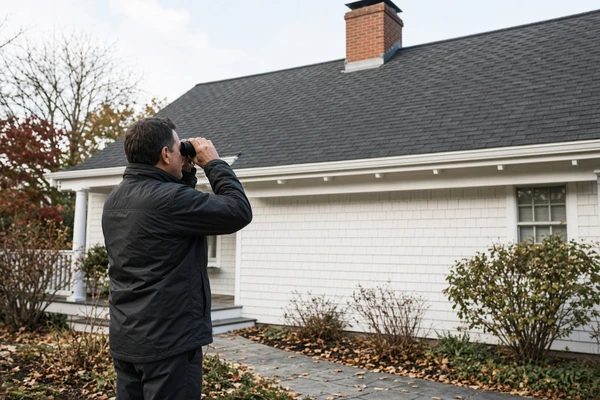
- Walk around the house with binoculars, as ARMA suggests, and look for shingles that are lifting or curling at the edges. Don’t climb up. ARMA warns that walking on a roof is dangerous and can damage it.
- Look at the chimney for chalky white residue on the brick, rust on the flashing or stains on the wall near the fireplace.
- Clear the gutters once the leaves are down, before they overflow behind the drip edge or freeze into dams.
- Check the attic with a flashlight for stains, wet spots, frost or rusted nail tips.
Not every one of these common roof problems is urgent, and a documented photo inspection tells you what is real, what is urgent and what can wait. If you’re seeing any of this, book a roof inspection. We’re based at 100 Hancock St in Quincy and inspect roofs across Quincy and the South Shore. Every finding is photographed and explained in plain English, and you get a written summary of what needs attention now, what can wait and what is fine. If it’s not time yet, we say so.
FAQs
What is the most common roof problem in Massachusetts?
It’s a failed pipe boot, the rubber collar that seals around a plumbing vent. In our experience, the rubber dries out and splits, usually in 8 to 12 years, long before the shingles wear out. Owner-occupied homes in Massachusetts have a median age of 59 years, per NAHB’s analysis of 2024 Census data. Reused boots turn up often when we tear off roofs that old.
Are black streaks a common roof problem that needs fixing?
They’re common, but they rarely need fixing. The streaks are typically algae. The Asphalt Roofing Manufacturers Association says there’s no scientific evidence that algae damages asphalt shingles. A pro can clean them with a bleach solution left on for 15 to 20 minutes, but ARMA notes the result is temporary.
Can you pressure wash a roof?
No. ARMA says never to use a pressure washer on an asphalt shingle roof, since high-pressure washing is likely to damage it. Moss loosens over time after treatment and can then be cleared with a leaf blower.
How soon should a roof leak be fixed?
Right away. An active leak doesn’t wait for a lifespan conversation, so get the roof looked at this week. The EPA says to dry water-damaged areas and items within 24 to 48 hours to prevent mold growth.
Is ice and water shield required in Massachusetts?
Yes, the state residential code lists ice barrier underlayment as required statewide. State guidance says it must run from the roof edge to at least 24 inches inside the exterior wall line. On roofs pitched 8 in 12 or steeper, it must reach at least 36 inches up from the eave. A typical Massachusetts house with a real overhang needs more than a single 36-inch course to reach that line.
At what age do common roof problems mean a new roof?
Around 20 years. ARMA calls a roof more than 20 years old a prime candidate for reroofing. Past that age, granule loss, curling, cracking or soft decking usually means replacement, not another patch. A single leak on a younger roof is usually a repair.