Most roofs don’t fail all at once. They warn you first. Some of those warnings mean call someone today, and some can wait until spring. The hard part is telling them apart.
Below are the 10 signs you need a new roof, ranked by how urgent each one is. Two are emergencies at any age. The other eight depend on something most roofers gloss over: how old your roof is compared to how long the material was built to last.
I’m Manny, owner of Powersol Roofing. We replace and repair roofs across Massachusetts, and we don’t sell fear. If your roof can be fixed, we say so. If it’s finished, we show you why with photos and explain it in plain words. Here’s how to read your own roof before anyone gets on a ladder.
What Are the Signs You Need a New Roof?
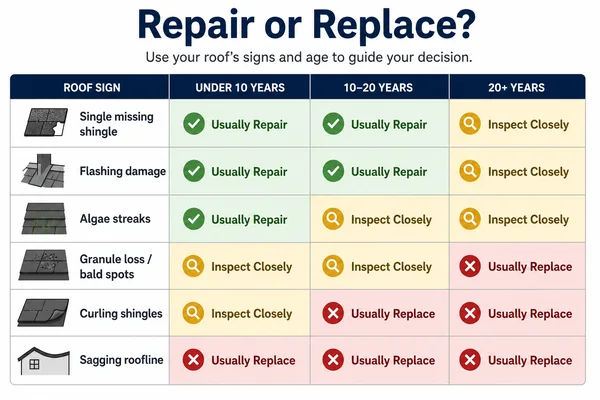
The clearest signs you need a new roof are a sagging or wavy roofline, active leaks or ceiling stains, and bald spots where the shingle granules have worn off. Curling, cracked, or missing shingles matter more as the roof nears the end of its life. A roof past 20 years showing any of these usually needs replacement, not another patch.
Roof Age Is the Real Deciding Factor
Find out how old the roof is before you worry about a few bad shingles. Age changes the whole answer.
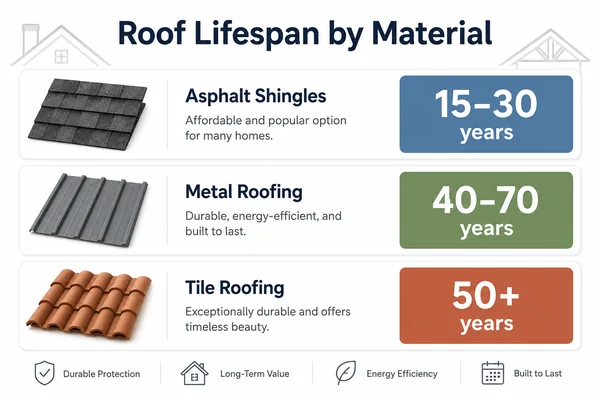
Home-inspection data compiled by This Old House puts a basic 3-tab asphalt roof around 20 years and architectural shingles like the GAF Timberline HDZ we install near 30. Metal runs roughly 40 to 70 years, and slate or tile 50 to 100 or more. Massachusetts weather, freeze-thaw cycles, and attic ventilation all pull those numbers up or down.
Here’s why age matters more than the symptom. A 12-year-old roof with a few curled shingles by a vent is usually a repair, often a ventilation or flashing issue. The exact same curling on a 24-year-old roof usually means the surface is spent. That’s the difference between a targeted repair and a full roof replacement, and it hinges on age, not the shingle. If your roof is getting up in years, read the rest of these signs with that in mind.
Signs to Fix Now, No Matter How Old the Roof Is
These two don’t wait for a lifespan conversation. If you see them, get the roof looked at this week.
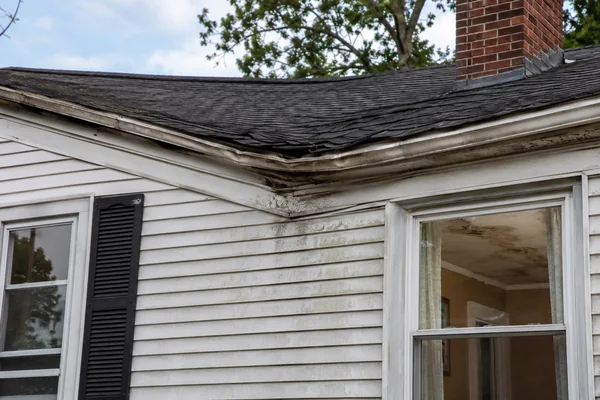
1. A sagging or wavy roofline. A roof should read as a straight line. If the ridge dips or the deck looks wavy from the street, that points to a structural problem, a failing truss, or wet, rotted decking under the shingles. This is the one sign I never tell someone to sit on. Get it inspected right away.
2. Water leaks or ceiling stains. Active water inside is a worst-case sign. A brown ring on the ceiling, a damp spot in the attic, or the homeowner’s classic line, “water is coming in by the chimney,” all mean water has already beaten the roof. Left alone, it wrecks insulation, frames mold, and rots the deck. Sometimes it’s one bad flashing and we can stop the leak with a repair. Sometimes it’s the whole roof. Either way, don’t wait on water.
Signs That Usually Mean Replacement, Especially on an Older Roof
Line these up against the roof’s age. On a roof past 20 years, any one of them is a strong replacement signal.
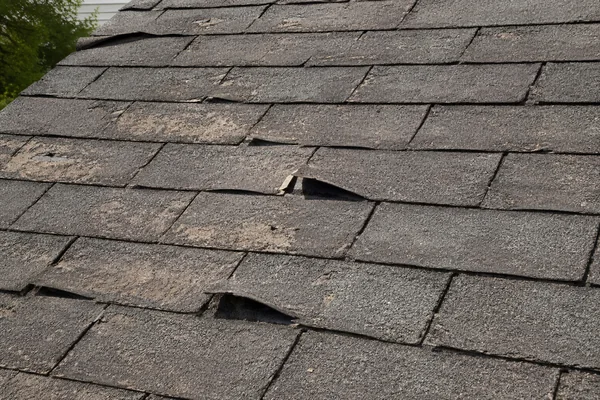
3. Bald spots and granules in the gutters. Those granules are the shingle’s sunscreen. A little loss on a new roof is normal, and you’ll see some grit in the gutters after install. But wide bald patches, or shiny dark asphalt showing through, mean the shingles are cooking and cracking from here on. Research from IBHS, which runs a full-scale hail lab, shows even small hail knocks granules loose and speeds up a roof’s aging. On an older roof, that’s a replacement sign.
4. Curling, cupping, or clawing shingles. When shingle edges lift or the middle cups, the roof can’t shed water the way it should. Homeowners usually call this “my shingles are lifting.” On a young roof it can trace back to poor attic ventilation or a bad prior install. On an aging roof, it’s wear, and wear doesn’t reverse.
5. Cracked or torn shingles. A few cracked shingles after a storm can be swapped out. Cracking spread across the roof is different, it’s the material giving up. If you’re replacing shingles every year in new spots, you’re funding a slow replacement anyway.
6. Soft, spongy, or rotted decking. If a roofer’s foot presses into the roof, or you find soft wood in the attic, the deck under the shingles is compromised. Homeowners describe this as “the wood feels soft.” You often can’t confirm it until the old roofing comes off, which is why we check every deck at tear-off and replace what’s bad before new material goes down.
Signs Worth Checking, but Often Repairable
Don’t let anyone rush you to replace over these alone. On a sound, mid-life roof, most are fixable.
7. A few missing shingles after a storm. Wind lifts shingles, especially along edges and ridges. A handful gone after a Nor’easter is usually a repair, not a new roof, unless the roof was already near the end. If a storm took a whole section, that’s a different talk, and it may be storm or hail damage worth documenting.
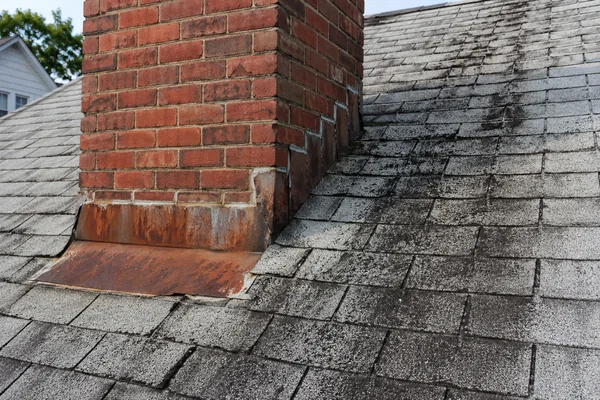
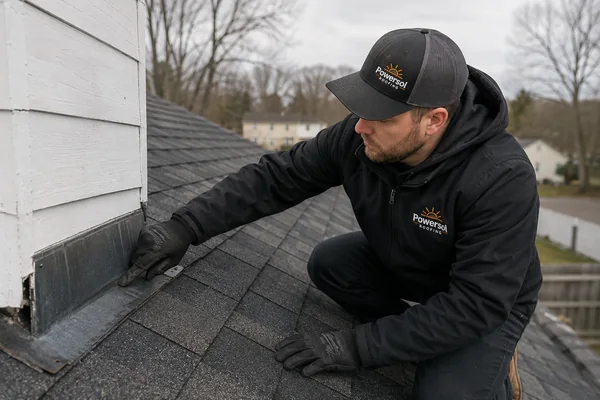
8. Failed or rusted flashing. Flashing is the metal that seals the roof where it meets chimneys, walls, valleys, and vents. Most leaks I see start here, not in the middle of the field. Rusted or lifted flashing is often repairable on its own, and catching it early is how you avoid a deck-rot problem later.
9. Moss, algae, or black streaks. Those dark streaks people call “black stains” are usually algae, and they’re mostly cosmetic. Moss is the bigger concern, because it holds moisture against the shingles and can lift them over time on the shady, north-facing sections. Neither is an automatic replacement, but both are worth watching.
10. Rusted gutters, rotting fascia, and popped nails. Rusted gutters and a “rotting corner” often signal water sitting where it shouldn’t and can take out the fascia and soffit that tie the roof to the house. Exposed or backing-out nails are another quiet age tell. None of these alone means a new roof, but together on an older home they add up.
Do I Need a New Roof or Just a Repair?
Most of the time it comes down to three questions: how old is the roof, how much of it is affected, and is water already getting in. One bad area on a mid-life roof is a repair. Widespread wear on a 20-plus-year roof, or leaks in several spots, is a replacement. When it’s a close call, we lay out both options with photos and a written scope so you can decide, not us.
Here’s a position most roofers won’t put on their site: the cheapest roof is rarely the best deal, and neither is the scariest quote. If one number is far lower than the rest, ask what’s missing, tear-off, decking, flashing, ventilation, cleanup, and who stands behind the work. A roof is a system. The shingles are just the part you can see, and a bad deck, weak flashing, or poor ventilation will fail long before the shingles do. That’s the whole idea behind treating a full system, not a shingle swap.
How Much Does a New Roof Cost in Massachusetts?
Every roof is different, so a reliable estimate should be based on the actual condition and scope of the project, not a one-size-fits-all price. The biggest cost factors include the roof’s size and pitch, the number of existing layers that must be removed, damaged or rotted decking, chimney and skylight details, flashing and ventilation work, access around the property, and whether gutters, fascia, or soffits are included.
A detailed scope also helps you compare quotes accurately instead of choosing based only on the lowest total. Two proposals may appear very different, but they may also include completely different materials, preparation, warranties, and repairs. Financing is available through approved partners for homeowners who prefer to spread out the cost.
Will Insurance Pay for a New Roof After a Storm?
Sometimes, if there’s real storm, wind, or hail damage, but no honest roofer can promise approval. Here’s how it works with us. We inspect, take photos, and tell you straight whether it looks like true damage or normal wear. If you open a claim, we help you understand the process, hand over documentation, and meet the adjuster when needed. We won’t tell you to file a claim when the damage isn’t there. And the deductible, plus anything the carrier won’t cover, is the homeowner’s responsibility.
What We Actually Find When We Get Up There
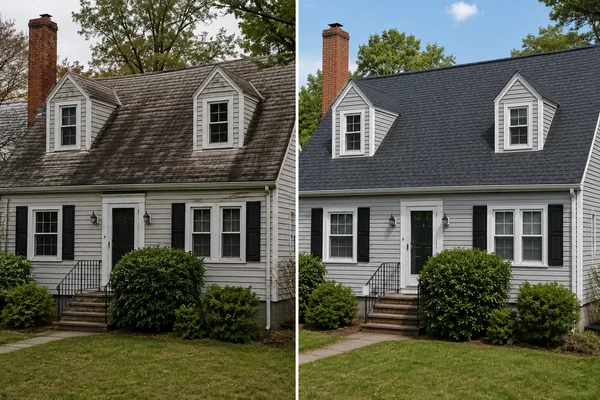
From the ground, most roofs look fine. Up close is where the truth shows. Across the roofs we do, the problem usually isn’t the shingle at all. It’s the flashing, the ventilation, reused pipe boots, open valleys, bad nail placement, a missing ice-and-water barrier, or rotted decking nobody mentioned until the old roof came off.
Real example: on a Taunton project, the homeowner needed a full roof replacement plus new gutters and PVC fascia and soffit, because the edges of the roof mattered as much as the shingles. We’ve done similar full-exterior work in Randolph, roof with gutters and siding, and a roof-and-windows project in Dorchester. The pattern is the same, the parts you don’t see decide how long the roof lasts. A straight roof inspection with photos is the fastest way to know where you actually stand.
How Long Does a Roof Replacement Take?
Most standard roof replacements take 1 to 2 days once the material is on site and the weather holds. Our average is about one day. Before we start, we tell you when material is arriving, what to clear from the driveway, and whether a dumpster or dump truck is coming. When we finish, we run a magnetic nail sweep across the yard, take final photos, and walk the job with you. Roofing is loud, but it’s short.
If you want the team behind Powersol to take a look and tell you honestly whether you need a repair, a replacement, or just a little time, that’s the call to make.
Frequently Asked Questions
What are the most urgent signs you need a new roof?
A sagging or wavy roofline and active leaks are emergencies at any age. Widespread granule loss or curling shingles on a roof past 20 years usually means replacement is close, not another repair.
How do I know if I need a new roof or just a repair?
It comes down to age and how much is affected. A 12-year roof with a few damaged shingles is usually a repair. A 24-year roof with the same problem, or any roof leaking in several spots, usually needs replacement.
How long does a roof last in Massachusetts?
Architectural asphalt shingles typically last about 25 to 30 years and metal roofs about 40 to 70, depending on ventilation, install quality, and weather. Older 3-tab shingles run closer to 15 to 20 years.
Will insurance pay for a new roof after a storm?
It depends on whether there’s real storm, wind, or hail damage. We document it with photos and can meet your adjuster, but no roofer can promise approval, and the homeowner covers the deductible.
How long does a roof replacement take?
Most standard replacements take 1 to 2 days once material is on site and the weather holds. Our average is about one day, finished with a magnetic nail sweep and final photos.
Do granules in the gutters mean I need a new roof?
A little loss is normal, especially on a newer roof. Heavy loss and bald patches on an older roof mean the shingles are failing and replacement is likely.