Most roof leaks in Massachusetts don’t start where you see the stain. Water finds a gap at a roof penetration, a cracked pipe boot, a lifted piece of flashing, an open valley, then runs down the underside of the deck and drips through the ceiling three or four feet away. The wet spot over your living room light might actually start up at the chimney.
Here’s what most homeowners get wrong, and what the big national roofing articles won’t tell you: aging shingles are rarely the first thing that leaks. On the roofs we inspect across Taunton, Brockton, and the South Shore, the water is usually getting in at flashing, pipe boots, valleys, or a spot where a previous installer cut a corner. A roof works as a system. The shingles are the part you see, but the flashing, underlayment, ventilation, and pipe boots decide whether it keeps water out.
What causes roof leaks in Massachusetts? The most common causes are failed flashing and cracked pipe boots, worn shingles, wind-torn or missing shingles, ice dams at the eaves, clogged gutters, blocked valleys, worn chimney and skylight seals, and attic condensation. Nine times out of ten, the entry point is a roof penetration, not the open field of the shingles.
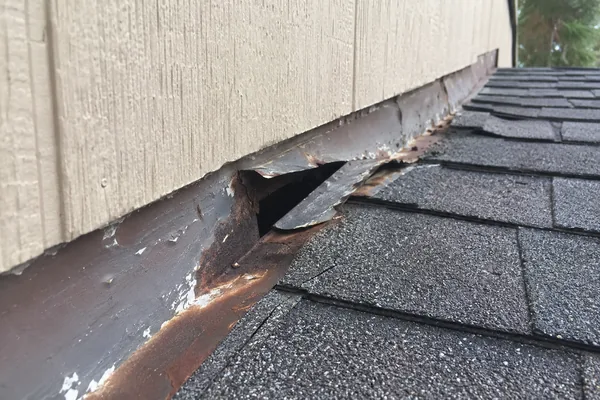
What’s The Most Common Cause Of A Roof Leak?
The single most common roof leak a working roofer finds is a failed pipe boot: the rubber collar that seals around a plumbing vent pipe. The rubber dries out and splits, usually in 8 to 12 years, long before the shingles are worn out. It’s a small, cheap part that fails quietly and drips right down the vent stack into a wall or ceiling.
Flashing is the other big one. Flashing is the metal that seals the joints where your roof meets a wall, a chimney, a valley, or a vent. When it lifts, rusts, or was never set right, water walks straight in behind it. On a lot of the Massachusetts roofs we open up, the old flashing was reused or face-nailed on the last job instead of being woven into the shingles the way it should be.
Flashing repairs vary, and anything involving a chimney climbs from there. If you already see a stain, honest roof leak repair starts with finding the real entry point, not smearing sealant over the symptom and hoping. We swap tired boots for new ones and integrate step flashing with the leak barrier, so the seal isn’t riding on a bead of caulk.
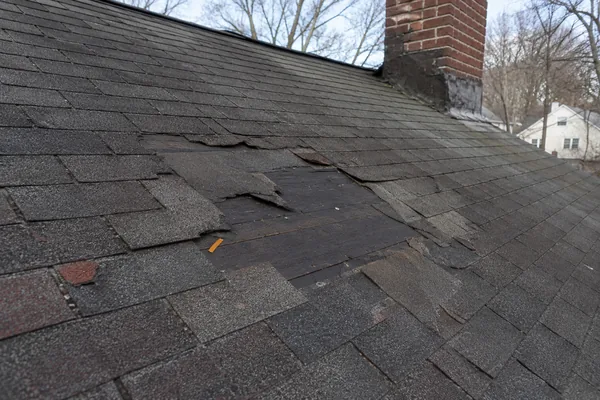
Worn, Cracked, and Missing Shingles
Shingles fail from the top down and the edges in, and Massachusetts weather speeds it up. Summer UV bakes the asphalt, winter freeze-thaw cracks it, and Nor’easter winds lift or tear tabs off entirely. Once a shingle is gone, the deck and underlayment underneath take the weather directly.
There’s a detail here that trips people up. Asphalt shingles are built to shed water falling straight down. Wind-driven rain, the kind a coastal storm throws sideways, gets under the tabs and reaches the underlayment. That’s why some roofs only leak in a driving rain and stay bone dry in an ordinary shower. If you’re finding shingle granules in your gutters that look like coarse black sand, the shingles are aging out.
The GAF Timberline HDZ shingles we install have a wider nailing zone that holds better against the wind we get here. If your roof is 15 to 20 years old and shedding granules, it may be closer to the end than a patch can fix, which is the call we walk homeowners through when we help them decide whether to repair or replace it.
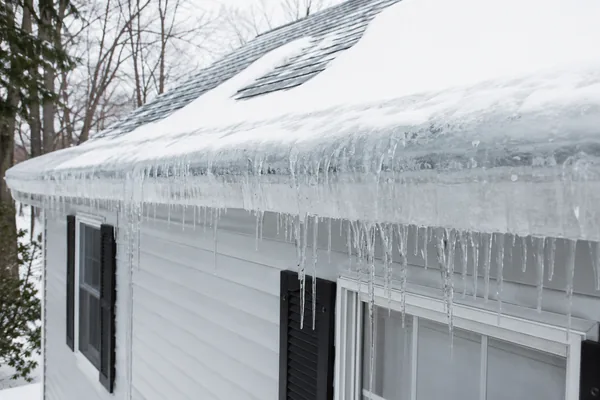
Massachusetts Winters: Ice Dams and Freeze-Thaw
Ice dams are the leak Massachusetts homeowners underestimate. Heat escaping into the attic melts the snow on the upper roof. That water runs down to the cold eaves, refreezes into a ridge of ice, and then more water pools behind the dam and backs up under the shingles. It can happen on a roof with no other problems at all.
Ice dams form with as little as 2 inches of snow, and the National Weather Service ties them directly to attic heat loss. The federal ENERGY STAR guidance on attic ventilation is blunt about the fix: air seal the attic floor, add insulation, then ventilate so the roof deck stays cold. Soaked insulation loses up to half its R-value, which makes the next winter’s ice dam worse.
This is why a leak barrier along the eaves matters so much in our climate. On our installs we run GAF WeatherWatch ice-and-water barrier up from the eaves, so dam water hits a waterproof membrane instead of bare decking.
Clogged Gutters and Blocked Valleys
Gutters and valleys do the same job: move water off the roof fast. Clog either one and water backs up where it doesn’t belong. Gutters packed with pine needles and oak leaves overflow, spill behind the drip edge, and in winter freeze into their own little dams. Valleys, the V-shaped channels where two roof slopes meet, carry more water than any other part of the roof. Let debris build up there and the flow pushes sideways under the shingles.
Clearing a clogged gutter averages about $163, which is cheap next to the rot that follows if you skip it. Twice-a-year cleaning, plus a look after big fall storms, keeps both moving. A proper Powersol roof inspection checks the valleys and the drip edge, not just the shingle field, because that’s where this water actually gets in.
Chimney and skylight leaks
Chimneys and skylights leak for the same reason: they’re holes cut in the roof, sealed only as well as their flashing. Every edge is a seam, and every seam can fail.
Around a chimney, watch for a chalky white residue on the brick, rust on the flashing, or stains on the wall near the fireplace. The counterflashing has to be cut into the mortar and layered over the base flashing, and a wide chimney needs a small peak called a cricket behind it to split the water. Skylights leak at the seals and the flashing kit around the frame. If you see fog or condensation trapped between the glass panes, that seal is already gone.
Is It a Leak or Just Attic Condensation?
Not all attic water is a leak. In winter, warm indoor air rises, hits the cold underside of the roof deck, and condenses into frost or droplets that drip when they thaw. Homeowners mistake it for a leak every single year.
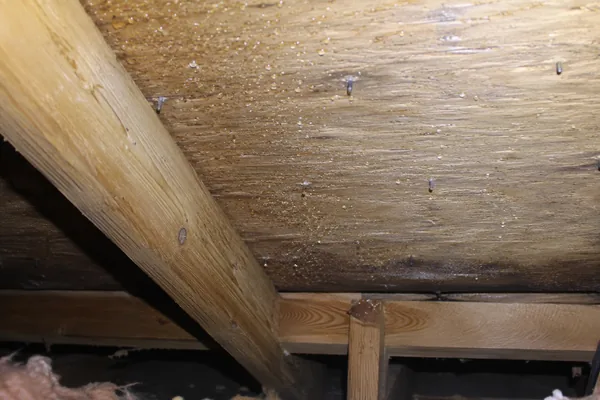
Here’s how to tell them apart. A real leak follows the rain: it shows up during or right after a storm, and the stain has a defined edge. Condensation is seasonal and spread out. You’ll see even frost on the nail tips poking through the deck, damp sheathing across a wide area, and it’s almost always paired with poor ventilation or a bathroom fan dumping moist air into the attic instead of outside. The fix is airflow: balanced intake at the soffits and exhaust at the ridge, with a vent like the GAF Cobra ridge vent, plus sealing the attic bypasses that let house air up there. Left alone, that trapped moisture rots the sheathing, one of the quiet dangers of an old roof that nobody sees until the tear-off.
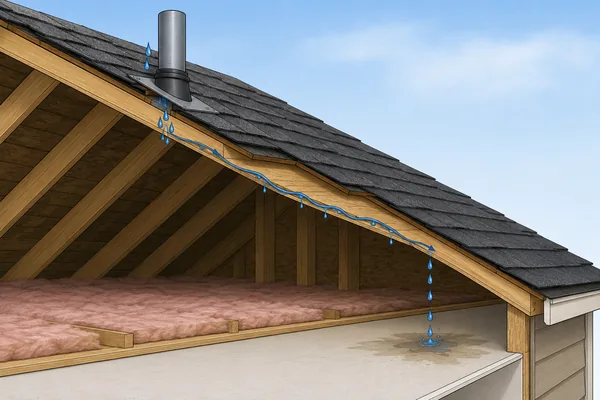
How Do I Find Where My Roof Is Leaking?
Find the entry point by looking uphill from the stain, not straight above it. Water enters high and travels down the rafters and deck before it drops, so the wet spot on your ceiling is almost never directly under the hole.
Go into the attic with a flashlight during or just after a rain. Trace the water trails and the dark staining on the underside of the deck back up to the highest wet point. Then check the usual suspects in order: penetrations first (vent pipes and pipe boots), then flashing at walls and chimneys, then the valleys, and only last the open shingle field. Mark the spot, measure over from something you can find on the roof like a chimney or a gable end, and match it topside.
Call in a pro if you don’t have attic access, the water is coming in actively, or the roof is wet and steep enough that climbing it isn’t safe. Finding the true source is most of the job. The repair is often the easy part once you know where the water starts.
Is a Roof Leak an Emergency?
A roof leak is an emergency when water is actively pouring in, the ceiling is sagging or bulging, you can see daylight through the roof deck, or a storm just stripped shingles off. Anything else is urgent but not a middle-of-the-night call.
If it is active, move furniture and electronics clear, put a bucket down, and if the ceiling is bulging with trapped water, poke a small hole to drain it into the bucket. It feels wrong, but it saves the whole ceiling from collapsing. Photograph everything for insurance, and tarp the area only if you can do it safely from the ground or a stable ladder. Then call for emergency roof repair. If the stain is small and not growing and you’re seeing only light granule loss, you don’t need to panic. Book an inspection and get ahead of it.
Does Homeowners Insurance Cover Roof Leaks in Massachusetts?
Massachusetts homeowners insurance usually covers sudden, accidental damage, a tree limb through the roof or wind that stripped shingles in a named storm, but not leaks from age, wear, or skipped maintenance. The dividing line is whether the damage was a one-time event or a slow decline the policy expects you to keep up with.
Document it early: dated photos of the damage inside and out, and a record of when the storm hit. We’ll inspect, photograph what we find, and tell you honestly whether it looks like storm damage or normal wear. We won’t tell you to file a claim that isn’t there, and we can meet your adjuster on site. Your deductible and anything the carrier won’t cover are still your responsibility, so it’s worth knowing what you’re dealing with before you file.
How to Prevent Roof Leaks
Prevention is cheaper than a repair, and a repair is far cheaper than replacing a rotted deck. Two roof checks a year, spring and fall, plus a look after any major storm, catches most leaks before they ever reach your ceiling.
Keep the gutters clear, twice a year and more often under pines and oaks. Trim tree limbs back so they’re not dragging on the shingles or dropping debris into the valleys. Have the flashing and pipe boots checked, since those are the parts that fail first, and replace a brittle boot before it splits. Keep the attic sealed and ventilated so winter moisture and ice dams never get started. A small roof repair caught in spring is a few hundred dollars. The same leak ignored through a New England winter is a rotted deck and a mold problem by summer.
Get a Straight Answer From a Massachusetts Roofer
If your ceiling has a stain or your attic smells musty, the worst move is waiting for it to dry out on its own. It won’t. Water in the deck rots wood and grows mold whether or not you can see it yet.
The team at Powersol Roofing inspects the roof, takes photos of what’s actually happening up there, and tells you the truth: whether it’s a $300 pipe boot or a sign the roof is near the end. We’ve done roof and exterior work across Taunton, Randolph, Dorchester, and the South Shore, and the GAF systems we install carry a 50-year manufacturer-backed workmanship warranty on material and labor. Book an inspection and we’ll show you exactly what we find.
Frequently Asked Questions
What is the most common cause of roof leaks in Massachusetts?
Failed flashing and cracked pipe boots. The rubber collar around a plumbing vent pipe dries out and splits in about 8 to 12 years, and flashing at walls, chimneys, and valleys lifts or rusts. Both let water in long before the shingles themselves wear out.
How do I find where my roof is leaking?
Look uphill from the stain, not directly above it. Water enters high at a penetration or flashing joint and runs down the deck before it drips, so the ceiling stain is usually feet away from the actual entry point. In the attic, trace the water trail on the underside of the deck back to its highest wet point.
Do ice dams cause roof leaks?
Yes, and they’re a top cause in Massachusetts. Ice dams form with as little as 2 inches of snow when attic heat melts snow that refreezes at the cold eaves, backing water up under the shingles. The fix is air sealing, insulation, and ventilation to keep the roof deck cold.
Can a roof leak without any missing shingles?
Yes. Most leaks come from flashing, pipe boots, valleys, or attic condensation, not the open shingle field. Wind-driven rain can also push water under intact shingles, which is why some roofs leak only in a driving storm.
Is a roof leak covered by homeowners insurance in Massachusetts?
Usually only if it’s sudden, accidental damage, like a tree limb through the roof or wind that tore shingles off in a storm. Leaks from age, wear, or deferred maintenance are typically not covered. Document the damage with dated photos before you file.
Is a roof leak an emergency?
It’s an emergency if water is actively coming in, the ceiling is sagging, you see daylight through the deck, or a storm just tore shingles off. A small stain that isn’t growing is urgent but can wait for a scheduled inspection.