The answer to “how long does a flat roof last” on a Massachusetts house is 20 to 30 years for EPDM rubber or TPO. Modified bitumen runs a little less. That’s the range Powersol plans on in New England, and drainage is the biggest variable. The home inspectors’ chart comes in lower, and the rubber makers’ trade group comes in higher.
Flat roof estimates from inspectors and manufacturers run 7 to 38 years. InterNACHI’s life expectancy chart lists EPDM at 15 to 25 years, modified bitumen at 20 and TPO at 7 to 20. The EPDM Roofing Association says a properly installed and maintained EPDM roof lasts 38 years or more. Powersol plans on 20 to 30 for EPDM and TPO.
At Powersol Roofing, we replace and repair flat roofs on three-deckers, porch roofs, shed dormers and additions across Quincy and the South Shore. That includes a three-decker in Wollaston and a porch roof in Braintree. On three-deckers, we work with tenants and families in place.
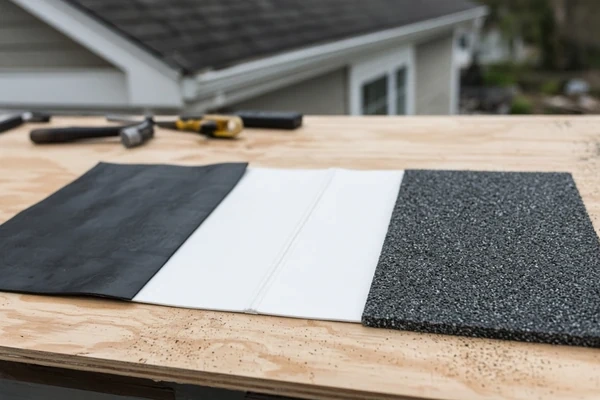
How Long Does a Flat Roof Last by Material?
EPDM and TPO are the longest-lasting membranes we install, and modified bitumen runs shorter. The charts don’t agree on any of them.
| Membrane | Where we use it on Massachusetts houses | InterNACHI estimate | What Powersol plans on |
| EPDM rubber | Three-deckers and multi-families | 15 to 25 years | 20 to 30 years |
| TPO | Roofs where summer heat gain matters | 7 to 20 years | 20 to 30 years |
| Modified bitumen | Small porch roofs, bay windows, tie-ins | 20 years | A little less than EPDM or TPO |
EPDM is the black rubber on Quincy and Dorchester three-deckers, and it’s the workhorse of the flat roofs we install. It handles freeze-thaw and stays flexible in the cold. We fully adhere it and prime, tape and roll every seam.
TPO is white and heat-welded, so its seams fuse together, and its reflective surface cuts summer heat gain. Modified bitumen is asphalt rolled roofing reinforced with polyester or fiberglass. It goes on small porch roofs, bay windows and tie-ins, and its granulated surface handles foot traffic.
TPO, PVC and built-up roofs
TPO shows the widest gap between the chart and our number. InterNACHI’s range starts at 7 years. The Defense Department’s roofing criteria (UFC 3-110-03) say a properly built heat-welded membrane “may last 15 years or more.” Our TPO seams are heat-welded and probe-tested.
PVC is the other heat-welded membrane. It isn’t on InterNACHI’s chart, and the same DoD line covers it. Built-up tar-and-gravel roofs, still found on some older Boston buildings, get 30 years from InterNACHI.
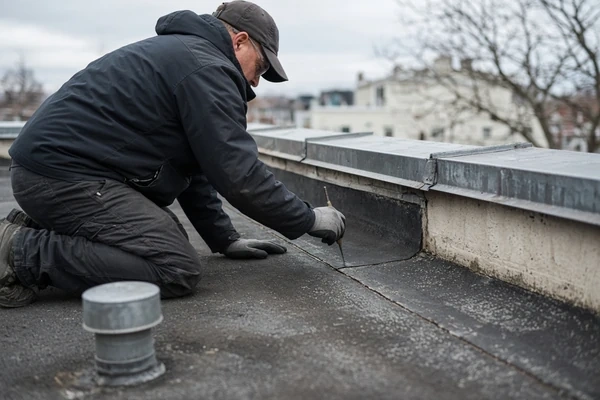
Why the Lifespan Charts Don’t Agree
The same EPDM membrane gets 15 to 25 years from InterNACHI and 38 or more from the companies that make it. Neither number is a plan for your roof.
InterNACHI says its figures assume normal wear and tear plus regular maintenance, and that they “should be used as guidelines only.” The EPDM Roofing Association built its 38-year figure partly on a 2025 survey of 569 roofing professionals. It assumes the roof was “properly designed, installed, and maintained.” Both numbers describe a roof that drains and was built right.
That’s the catch. A flat roof lasts 25 years or leaks in 3, and the membrane rarely decides which. On the flat roofs we inspect, the open middle of the membrane is almost never what failed. Flashing, drains, edges and transitions are. Those spots are where flat roofs leak, and they set the real end date.
So plan around your own roof: its age, its drainage, its seams and edges, and whether the insulation under it is dry.
How Many Years Does Your Flat Roof Have Left?
Start with the age, then check 3 things. Each one tells you whether your roof is headed for the top of its range or the bottom.
Start with the age
Compare the roof’s age with the range for its membrane. On our numbers, that’s 20 to 30 years for EPDM and TPO and a little less for modified bitumen.
NRCA, the national roofing contractors’ association, recommends at least 2 roof inspections a year, preferably in spring and fall, plus extra checks after severe weather. From year 10 on, make sure that roof inspection covers the seams and flashing. Checking them from year 10 adds years to a flat roof.
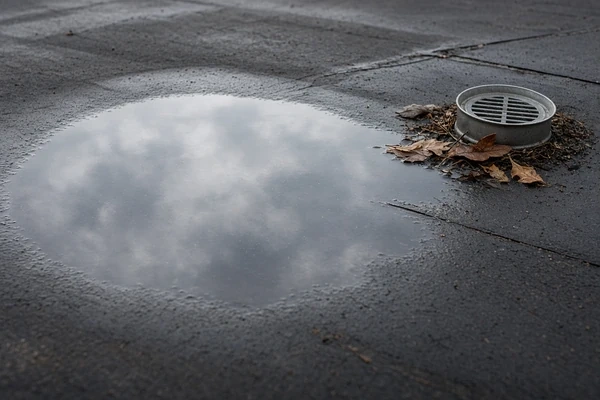
Water should be gone in 48 hours
NRCA defines ponding as water that’s still sitting on a roof more than 48 hours after rain in drying weather. Water that sits that long ages the membrane and works into the seams.
It’s heavy, too. The U.S. Geological Survey puts water at about 62.4 pounds per cubic foot, so every inch of standing water adds about 5.2 pounds to each square foot of roof.
Slope fixes ponding. The International Residential Code calls for at least 1/4 inch of slope per foot on membrane roofs. When we tear off a ponding roof, we use tapered insulation to correct the slope.
Look at the seams, flashing and edges
Watch for open seams, flashing pulling away from a wall or vent, and edges lifting at the perimeter. Those are 3 of the 4 failure points on our flat roofing page, along with ponding.
The pattern we keep finding on Massachusetts houses is a porch roof tied into the pitched roof with sealant instead of proper flashing. The joint is the problem there.
Find out if the insulation is dry
This check outweighs the age. If the insulation and deck under the membrane are dry, the membrane repairs well, and a sectional repair can fix it. If the insulation is wet, the wet sections have to come out at minimum.
You can’t see it from a ladder. It takes a moisture scan or a core cut. Every flat roof job we quote starts with a moisture check, and the result goes in writing. Our flat roof maintenance guide gives the example of a 22-year-old roof with a dry deck that’s still worth coating.
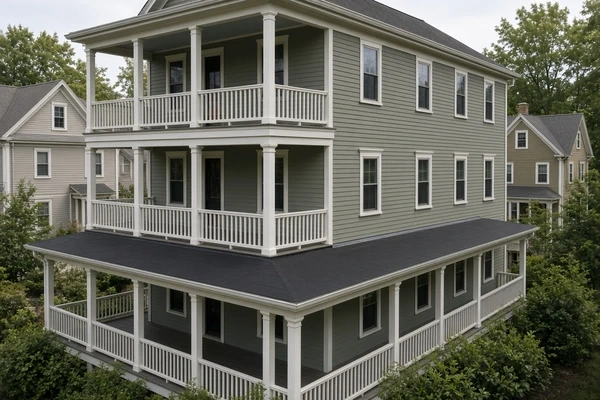
Why Massachusetts Porches and Three-Deckers Need a Membrane
Shingles need slope, and these roofs don’t have it. Anything flatter than 2 inches of rise per foot gets a membrane.
The International Residential Code allows asphalt shingles only on roofs with at least that much slope (R905.2.2). The Boston Preservation Alliance estimates about 15,000 triple-deckers went up in Boston and nearby cities between 1880 and 1930. Most of South Boston’s were built with flat roofs, and Dorchester’s were a mix of flat and pitched. Porch roofs, shed dormers, bay windows and additions add more.
We match the membrane to the roof: fully adhered EPDM on three-deckers, modified bitumen on small porch roofs and tie-ins. Shed dormers and additions get tied into the shingles.
We also roof storefronts and mixed-use buildings, which leak in the same spots. We compare those commercial flat roof types separately.
Can a New Flat Roof Go Over the Old One?
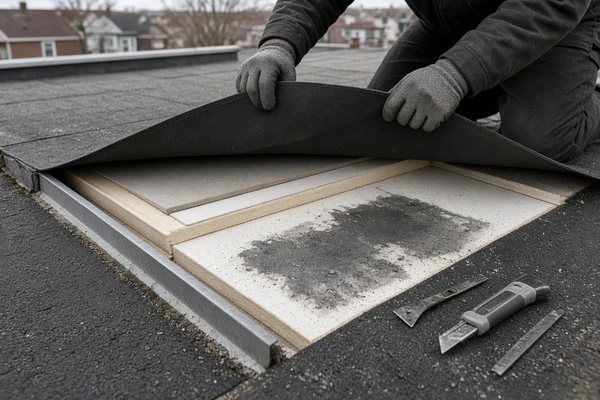
Sometimes. We’ll put rubber over an existing roof where code and conditions allow it, but a moisture check comes first.
Section R908.3.1.1 of the International Residential Code bars a new roof over an existing one that’s water-soaked or too deteriorated to hold new roofing. It also bars one over a roof that already has 2 or more layers. Massachusetts builds its residential code on the 2021 IRC through the 10th edition of the state building code.
A wet roof rules out a recover under that section, so the moisture check decides it. When we tear off instead, we remove the wet material, repair the deck while it’s open and use tapered insulation to correct the slope. It’s the same 2-layer rule that governs shingle overlays.
Should You Replace a Flat Roof Before Adding Solar in 2026?
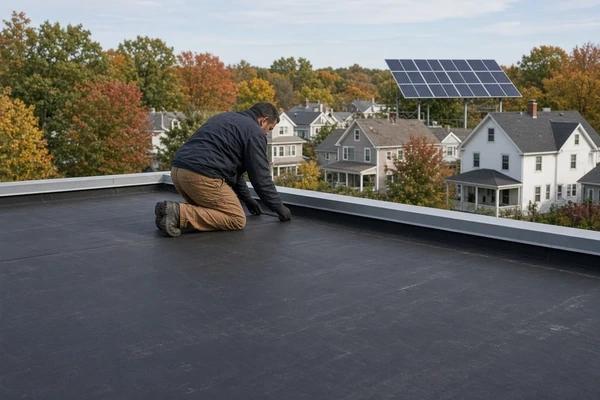
Yes, if the roof won’t outlast the panels. The U.S. Department of Energy says solar panels last about 25 to 30 years, “similar to the lifetime of a roof.”
Replacing the roof first means the panels don’t have to come off and go back on later. If your flat roof is past the middle of its range, have it inspected before the panels go on.
The Defense Department sets a clear bar for its own buildings. Its roofing criteria require at least 10 years of service life left on an existing roof before solar goes on top.

Get Your Flat Roof’s Real Number
Your roof’s real number comes from its age, its drains, its seams and edges, and the insulation underneath. A chart can’t see any of those.
Charts answer “how long does a flat roof last” with a range, and an inspection tells you where your roof sits in it. Get a free estimate or call (617) 631-5435. We’ll show you photos of what we find and put in writing whether it needs a repair, a replacement or nothing yet. If water is coming in right now, we answer the phone 24/7.
FAQs
How long does a flat roof last in Massachusetts?
Powersol plans on 20 to 30 years for EPDM rubber and TPO flat roofs in New England, and a little less for modified bitumen. InterNACHI’s life expectancy chart is more conservative: 15 to 25 years for EPDM, 7 to 20 for TPO and 20 for modified bitumen. Drainage and the seams, flashing and edges decide where a roof lands in that range.
How long does a flat roof last compared with a shingle roof?
InterNACHI lists architectural asphalt shingles at 30 years and 3-tab shingles at 20, against 15 to 25 years for EPDM and 20 for modified bitumen. On a house with both, plan the 2 roofs together. The tie-in between them is where Powersol keeps finding sealant used in place of flashing.
Does TPO last longer than EPDM?
The charts disagree. InterNACHI gives EPDM 15 to 25 years and TPO 7 to 20, while Powersol plans on 20 to 30 for both when they’re installed right. Powersol picks by roof: EPDM for three-deckers, where freeze-thaw and cold flexibility matter, and TPO where summer heat gain matters.
Is standing water on a flat roof normal?
Not after 2 days. NRCA defines ponding as water still on a roof more than 48 hours after rain in drying conditions. Each inch of standing water adds about 5.2 pounds per square foot. The International Residential Code calls for at least 1/4 inch of slope per foot on membrane roofs.
Can you put a new flat roof over an old one?
Sometimes. Section R908.3.1.1 of the International Residential Code bars a new roof over one that’s water-soaked or deteriorated, or that already has 2 or more layers. Massachusetts builds its residential code on the 2021 IRC. Powersol puts rubber over an existing roof only where code and conditions allow, after a moisture check.
Should I replace my flat roof before installing solar panels?
If the roof won’t outlast the panels, yes. The U.S. Department of Energy says solar panels last about 25 to 30 years, similar to the lifetime of a roof. Replacing the roof first avoids taking the panels off and reinstalling them. The Defense Department requires at least 10 years of remaining roof life before solar goes on its existing buildings.