Home / Services / Metal Roofing
Metal Roofing In Quincy, MA
Standing seam panels and metal shingles installed for Quincy and South Shore homes, spec’d for the weather that actually hits this coast: nor’easter wind, wet snow, and salt air off the bay. Metal costs more up front than asphalt and lasts two to three times as long. We’ll tell you honestly whether that math works for your house, and when it doesn’t.
The short version
What Metal Roofing Is, and Who It Is For.
Metal roofing pays off for homeowners who plan to stay past their next asphalt replacement. It’s a roof system of interlocking steel or aluminum panels or shingles over solid sheathing and underlayment. Installed right, it lasts 40 to 70 years, sheds snow instead of feeding ice dams, and holds against the wind uplift a nor’easter throws at it. The trade-off is the up-front cost. If you’re selling in a few years, asphalt is usually the smarter spend, and we’ll say so.
Powersol Roofing installs metal roofs across Quincy and the South Shore from our shop at 100 Hancock St. Every estimate is free and quoted line by line, so you see exactly where the money goes. Call (617) 631-5435 or send the estimate form.
One caution up front: metal rewards good installation and punishes bad. Most “metal roof problems” you read about, oil canning, leaking screws, rust streaks, trace back to the wrong panel or the wrong fastener for the location, not to the metal itself. A roof is a system, not a single layer on top. Getting the spec right for a coastal street is most of the job, and it’s the part we don’t hand off.
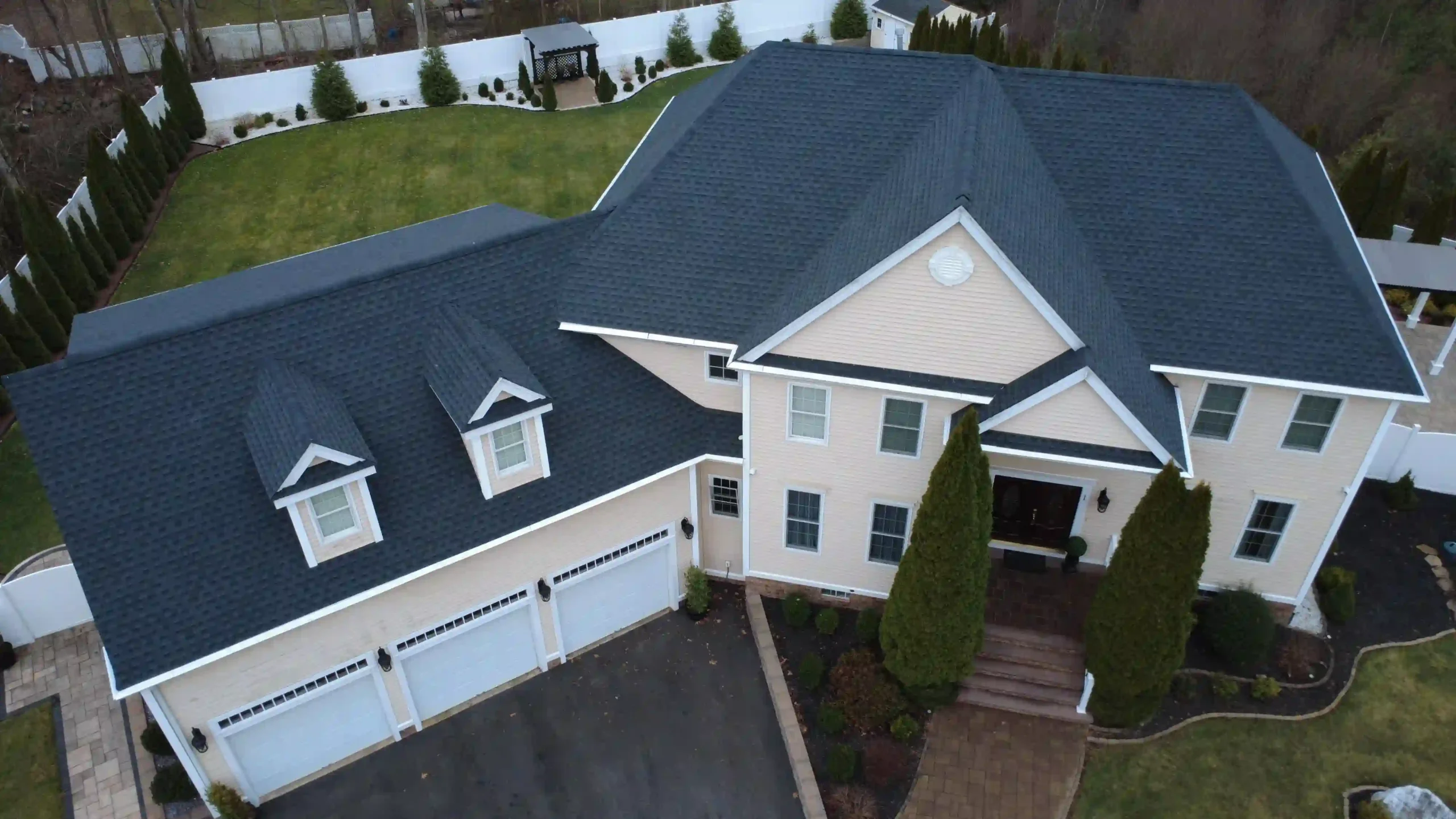
The honest comparison
Metal vs. Asphalt Roofing: Which Is Right for Your Home?
Asphalt is a good roof, and we install plenty of them. Here’s the plain comparison we walk through at every metal estimate, so you can decide which one your house and your plans actually call for.
| What matters | Metal roof | Architectural asphalt |
|---|---|---|
| Lifespan | 40 to 70 years | 20 to 30 years |
| Up-front cost | Higher | Lower |
| Cost per year of service | Often lower over the life of the roof, since it is bought once | Rises once replacement cycles are counted |
| Nor’easter wind | Interlocked panels engineered for high wind uplift | Good when new; seals weaken with age |
| Snow and ice dams | Sheds snow; surface is impervious to meltwater | Vulnerable at eaves without ice & water shield |
| Salt air | Aluminum and marine-coated steel handle it | Granule loss accelerates on exposed coastal roofs |
| Maintenance | Occasional fastener and sealant checks | Periodic shingle and flashing repairs |
| Resale story | A roof the next owner never replaces | Standard; age counts against it at sale |
What we install
Three Metal Roofing Systems. One Recommendation That Fits.
Which one fits depends on your roof’s pitch, its exposure to the water, and what you want it to look like from the street. We quote the one your house calls for, not the one with the biggest margin.
Standing seam
Vertical panels with concealed fasteners raised above the water line. The cleanest look, the longest life, and no exposed screws to work loose in freeze-thaw cycles. What we recommend for most full-house installs.
- Concealed-fastener panels, 40 to 70 year service life
- Best wind and snow-shedding performance
- Coated steel or aluminum for coastal streets
Metal shingles
Stamped steel or aluminum shingles that read like architectural asphalt or slate from the curb, with metal’s lifespan underneath. The right answer in neighborhoods where a standing seam roof would look out of place on a colonial.
- Slate, shake, and shingle profiles
- Interlocking panels resist wind uplift
- Lower cost than standing seam
Ribbed & low-slope panels
Exposed-fastener ribbed panels for garages, barns, porches, and additions, and mechanically seamed panels where the pitch gets low. Practical, fast to install, and easy to match to the main roof later.
- Economical for outbuildings and additions
- Panels cut to length, fewer seams
- Snow guards above doors and walkways
Built for this coast
Built for Salt Air, Coastal Wind, and Harsh Weather
Quincy roofs live a harder life than most: salt air off the bay, wet snow that sits for weeks, and gusts that cross open water with nothing to slow them down. Metal is the one roofing material whose case gets stronger the closer you get to the shore.
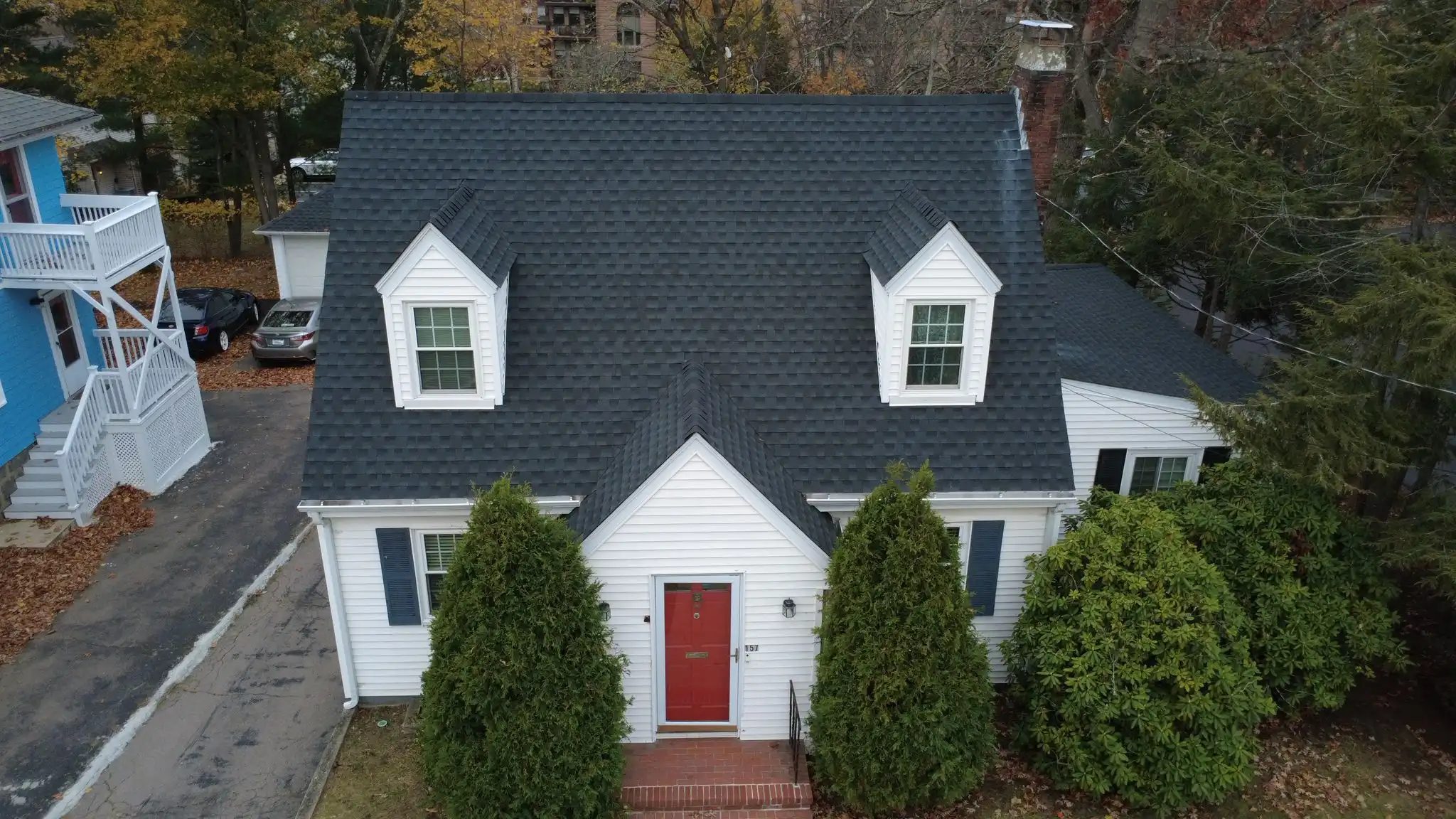
How the Install Unfolds
From the First Measurement to the Final Seam
Metal is less forgiving of shortcuts than asphalt: panel layout, expansion clearance, and flashing details decide whether it lasts 50 years or leaks in five. Here’s the sequence every install follows.
Measure & specify
We measure the roof, check pitch and exposure, and spec the metal for your street: aluminum or Galvalume with a PVDF finish near the water, G90 steel inland. You get it in plain English, not roofer jargon.
Line-item quote
Panels, underlayment, ice and water barrier, flashing, snow guards, and labor, each priced separately so you can see where the money goes before you commit. One scope, so you can compare apples to apples.
Tear-off & deck prep
Old roofing comes off to the deck. We inspect the sheathing and replace any rotted or soft decking before anything goes back on, and you see photos of what we find. Then high-temperature underlayment and the ice and water barrier go down at eaves, valleys, and penetrations.
Panels, flashing & walkthrough
Panels are set with expansion clearance, flashing is bent on site to fit, and we finish with a magnetic nail sweep, final photos, and a walkthrough of the roof with you. Workmanship warranty in writing.
Local, licensed, accountable
A 50-year Roof Deserves an Installer Who Stays Local.
A metal roof will outlive most contractors’ phone numbers. Ours has answered from Quincy for over a decade, and it will still answer when the roof needs its first fastener check.
Where we work
Metal Roofing Across Quincy and the South Shore.
Based at 100 Hancock St in Quincy, we install metal roofs from Squantum to Hingham. Exposure changes block by block here: a roof in Marina Bay takes salt spray a Randolph roof never sees, and the metal we quote reflects that.
Straight answers
Frequently Asked Questions
How much does a metal roof cost in Massachusetts?
It depends on the system, the size and complexity of the roof, and the metal specified, so we do not quote prices sight unseen. Metal shingles generally sit at the lower end of the range and standing seam at the upper end, and every metal roof costs more up front than architectural asphalt. Because it can last 40 to 70 years, the cost per year of service often works out favorably. Every estimate is free and itemized line by line.
How long does a metal roof last?
A properly installed metal roof lasts 40 to 70 years depending on the metal and coating: coated steel typically 40 to 60 years, aluminum often longer near salt water. That is two to three asphalt roof cycles. Manufacturer finish warranties commonly run 30 to 40 years, and we put the workmanship warranty in writing.
Is a metal roof noisy when it rains?
Not on a home. Residential metal roofs are installed over solid sheathing and underlayment, not open framing like a barn, so rain sounds about the same as it does on asphalt shingles. Most homeowners cannot tell the difference from inside.
Can you install a metal roof over my existing shingles?
Sometimes, but we rarely recommend it. Covering old shingles hides the condition of the deck, traps moisture problems, and can void finish warranties. A full tear-off lets us inspect the sheathing, install ice & water shield at the eaves, and give you a roof that actually earns its 50 year lifespan.
Does a metal roof help with ice dams and snow?
Yes. Snow slides off a smooth metal surface instead of sitting and melting into dams, and the panels themselves are impervious to the freeze-thaw water that works under asphalt shingles. On roofs above doorways and walkways we install snow guards so the slide is controlled.
Will a metal roof rust this close to the ocean?
Not if the metal is specified for the location. Within about a mile of salt water we quote aluminum or steel with a marine-grade coating system, both of which are made for coastal exposure. This is exactly why a local installer matters: a storm-battered Squantum or Houghs Neck roof should not get the same spec as one in Randolph.