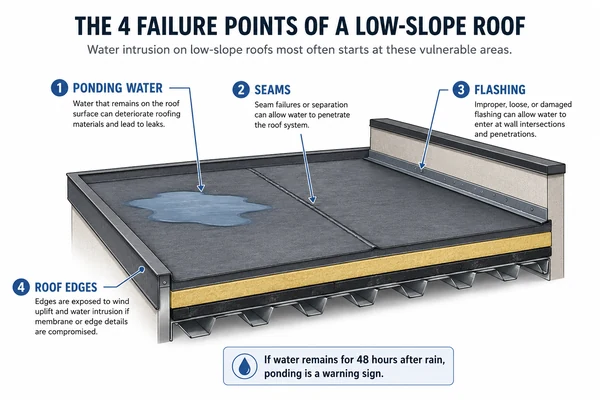
Flat roofs leak at four places, not everywhere: standing water, the seams, the flashing where the roof meets a wall or a pipe, and the edges. That’s the honest answer to why flat roofs leak. The open field of the membrane almost never fails first. On the three-deckers and porch roofs we work on around Quincy and the South Shore, a leak is almost always a rushed detail, a drain that quit draining, or a flashing that pulled loose over one Massachusetts winter. Most pages won’t say this part: a well-built flat roof doesn’t leak more than a pitched one. A badly detailed flat roof leaks far more. The material rarely gives out first. The workmanship does.
A flat roof leak is water getting past a single-membrane roof system, the EPDM rubber, TPO, or modified bitumen sheet used on roofs below a 2:12 pitch. With almost no slope to move water, the seams, flashings, and drains do all the waterproofing. When one of those details fails, water reaches the deck below.
What Actually Causes a Flat Roof Leak?
Four failure points cause most flat roof leaks: ponding water, failed seams, bad flashing, and loose edges. The International Building Code treats anything at or below a 2:12 slope as a low-slope roof, and with that little pitch, water sits instead of running off.
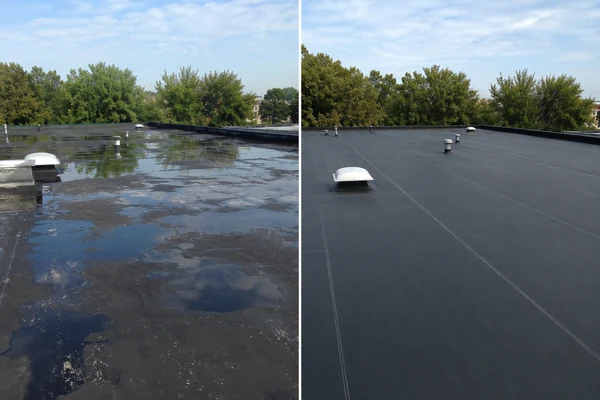
- Ponding water. The National Roofing Contractors Association defines ponding as water still on the roof more than 48 hours after a rain, and its manual says a roof passes only when no ponding is left 48 hours after the storm in drying weather. Water that lingers that long ages any membrane and works into the smallest seam gap. We correct slope with tapered insulation so water reaches the drains.
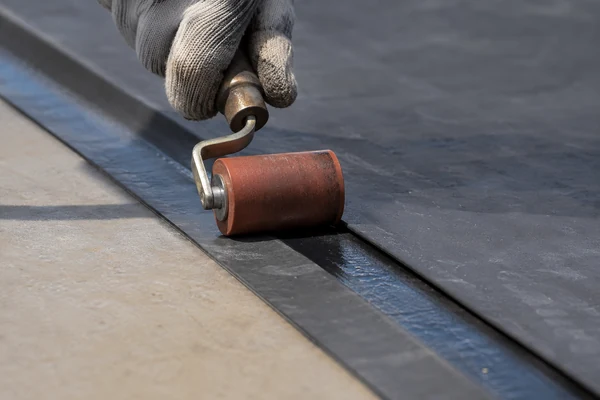
- Failed seams. Every seam is a future leak if it’s rushed. We prime, tape, and roll EPDM seams; TPO seams get heat-welded and probe-tested. Seam work is where installers separate, and you can’t see it from the ground.
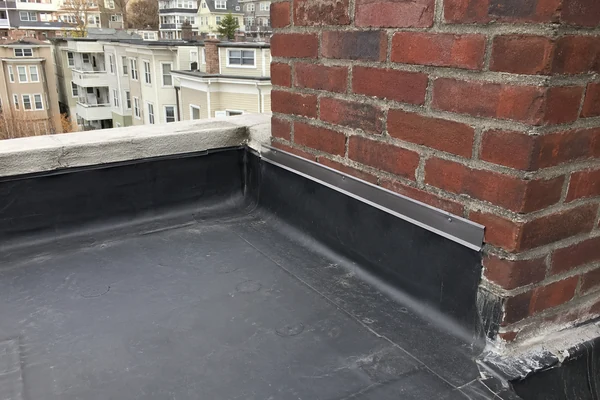
- Bad flashing. Where the membrane meets a parapet, chimney, vent, or HVAC curb is where most leaks start. Each spot needs its own flashing detail, terminated and sealed, not a smear of roof cement.
- Loose edges. Wind gets under a flat roof at the perimeter. Drip edge, termination bars, and fastened edge metal keep a nor’easter from turning a corner of membrane into a sail.
Get those four right and the rest of the roof mostly takes care of itself, which is the whole idea behind the flat roof systems we install.
Do Flat Roofs Really Leak More Than Pitched Roofs?
No, not when they’re detailed right. A flat roof leaks more only when the seams, flashing, or drainage were done poorly. A sound flat roof is built for positive drainage so water clears within about two days, which the roofing industry treats as the baseline, not a bonus. Installer skill matters more on a flat roof than on almost any other roof, because there’s no slope to cover a weak seam. A quick flat-roof inspection tells you which camp your roof is in.
Why Flat Roofs Leak in a New England Winter
Winter is when South Shore flat roofs show every weak spot. Freeze-thaw cycling, snow that sits for weeks, and iced-over drains put constant pressure on seams and flashing.
- Freeze-thaw. Water slips into a hairline seam gap, freezes overnight, expands, and pries it wider. Do that fifty times a winter and a pinhole becomes a leak. EPDM rubber handles it better than most because it stays flexible in the cold, which is why it’s the black roof on most Quincy and Dorchester three-deckers.
- Snow load and ponding. Melting snow refreezes at cold eaves and over unheated porches, and one blocked interior drain turns a low-slope roof into a shallow pool. We set drainage so meltwater always has a path off, and we keep drains and scuppers clear.
- Reflective membranes and heat. TPO’s white surface reflects the summer sun; the EPA credits reflective ‘cool’ roofs with lowering roof surface temperature by up to 50 degrees on a hot day and cutting cooling energy 5 to 20 percent. That matters over living space, though in a Massachusetts winter the bigger issue is always drainage.
Where Three-Deckers and Porch Roofs Leak First
On a Quincy or Dorchester three-decker, the first leak is almost always at the parapet wall or a roof penetration, not the middle of the membrane. The usual first offenders:
- Parapet walls, where the flat roof meets the brick and the flashing takes the most abuse.
- Tie-ins, where a flat section meets the pitched shingle roof over a dormer or addition.
- Porch roofs and shed dormers, often modified bitumen, where the area is small, awkward, and easy to rush.
- Reused pipe boots and old flashing left from a previous install to save an hour.
This is three-decker country, and those roofs are a specialty for us, not a sideline. Storefronts and mixed-use buildings leak in the same spots, which is why our commercial flat roofs get quoted the same way.
How Do I Know if My Flat Roof Is Leaking?
The signs usually show up inside before anything looks wrong on the roof: a brown ring on the ceiling, a musty smell, bubbling paint, or a drip that only shows during heavy rain.
Water travels, too. It can enter at a bad seam and appear ten feet away, because it runs along the deck until it finds a way down. That’s why pinning the real source takes moisture readings, not a guess, and it’s the first thing we do when we find the source. On the roof itself, look for ponding stains, blisters in the membrane, open seams, and cracked flashing.
Repair or Replace? It Comes Down to What’s Under the Membrane
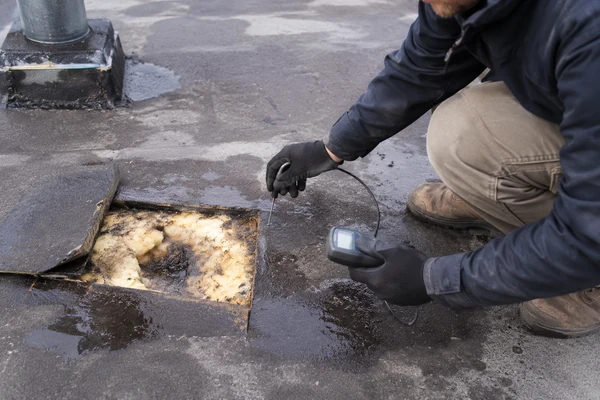
The deciding factor isn’t the size of the leak. It’s whether the layers under the membrane are still dry. Dry insulation and decking usually mean a section repair holds. Once water has soaked in, a surface patch just hides the problem for a season.
A coating can add years to a sound roof. Rolling a coating over a wet, ponding roof is a bandaid, not a repair, and we’ll say so in writing after a moisture check rather than sell you a coating that seals the water in.
What Flat Roof Repair Costs, and What Moves the Price
There’s no honest flat rate for a flat roof leak, because the price follows the damage, not a menu. A single seam or flashing repair on a dry roof is a small job. Once wet insulation and rotted decking come into it, the number climbs.
What moves it: roof size and access, the membrane, how much wet insulation and decking have to come out, the number of penetrations and flashing details, and any drainage or edge-metal work. We give a line-item estimate, free, so repair and replacement sit side by side with the evidence for each. You can get a written estimate before you decide anything.
What to Do Right Now if Your Flat Roof Is Leaking
If it’s actively leaking, contain the water inside, move what you can out of the way, and photograph everything for insurance before it dries. Then call a roofer who actually works on flat roofs.
Don’t climb up in the rain, and skip the DIY tar smear; it traps water and makes the real repair harder. We answer the phone 24/7, including nights and nor’easters, so emergency roof repair starts with a moisture check that targets the actual source, not the stain. Flat roofs leak at the details. Fix the detail, and the roof goes back to being something you never have to think about.
Flat Roof Leak Questions, Answered
Why do flat roofs leak more than pitched roofs?
They don’t, as long as they’re built right. Flat roofs fail at specific details, seams, flashing at walls and penetrations, and standing water, not across the open membrane. The NRCA standard is that a roof drains within 48 hours; a membrane that ponds past that ages fast. Installer quality decides it more than the flat shape does.
What is the most common cause of a flat roof leak?
Ponding water and bad flashing are the two most common. Water that sits longer than 48 hours after rain works into seams and flashing joints, and penetrations like vents and HVAC curbs are where leaks usually start. On older three-deckers, parapet-wall flashing is the classic first failure.
Can a leaking flat roof be repaired, or does it need full replacement?
Often it can be repaired. If the insulation and decking under the membrane are still dry, a seam or flashing repair usually holds. Once those layers are saturated, patching the surface just delays a replacement. A moisture reading tells you which situation you’re in, and we put that in writing.
How long should a flat roof last in Massachusetts?
A properly installed EPDM or TPO membrane typically lasts 20 to 30 years in New England, with modified bitumen somewhat less. Drainage is the biggest variable: a roof that sheds water reliably outlasts an identical one that ponds. Checking seams and flashing after year ten adds meaningful life.
Why does my flat roof leak in winter but not in summer?
Freeze-thaw is usually the reason. Water seeps into a small seam or flashing gap, freezes, expands, and opens it wider, while snow that sits and iced-over drains add standing water. EPDM stays flexible in the cold, which is one reason it’s the common rubber membrane on Quincy and Dorchester three-deckers.
Do flat roofs leak more on three-deckers and older homes?
The leaks cluster at the same points: parapet walls, tie-ins to pitched sections, porch roofs, and reused flashing from an old install. The buildings aren’t the problem; rushed detailing is. Flat-roof three-deckers are among the most common buildings in Quincy and Dorchester, and they hold up well when the details are done right.