On the South Shore, the answer to “how long does a metal roof last” is 40 to 70 years when the metal fits the street. Exposure changes block by block here. A roof in Marina Bay takes salt spray a Randolph roof never sees, and the metal we quote reflects that.
A properly installed metal roof lasts 40 to 70 years, depending on the metal and its coating. Coated steel typically runs 40 to 60 years, and aluminum often lasts longer near salt water. That’s 2 to 3 times as long as an architectural asphalt roof, which runs 20 to 30 years.
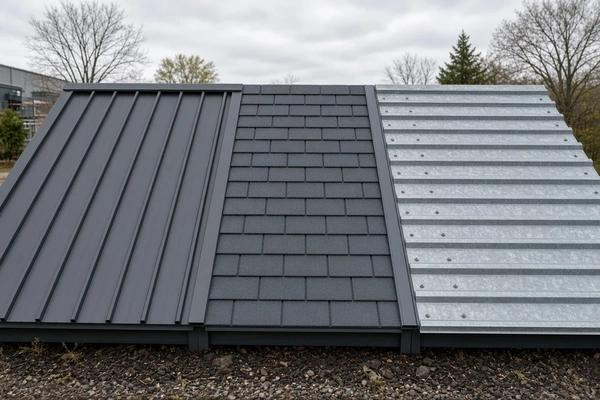
How Long Does Each Type of Metal Roof Last?
Standing seam lasts the longest of the 3 metal roofing systems we install. Ribbed panels leave their screws exposed.
- Standing seam: vertical panels with concealed fasteners raised above the water line. We put them at a 40 to 70 year service life, and there are no exposed screws to work loose in freeze-thaw cycles.
- Metal shingles: stamped steel or aluminum in slate, shake and shingle profiles. From the curb they look like architectural asphalt or slate, with metal’s lifespan underneath.
- Ribbed panels: exposed-fastener panels for garages, barns, porches and additions. Where the pitch gets low, we use mechanically seamed panels instead.
The metal matters as much as the system. Aluminum often outlasts coated steel near salt water, which is why it’s 1 of the 2 metals we quote within about a mile of the water.
The Metal Itself Is Rarely the Problem
Most metal roof problems trace back to the wrong panel or the wrong fastener for the location. The oil canning, leaking screws and rust streaks you read about usually start with that choice.
That’s why the spec matters more than the brochure. Getting the spec right for a coastal street is most of the job, and it’s the part we don’t hand off.
So when someone sells you a metal roof that lasts a lifetime, ask which panel and which fasteners they’re quoting for your house, and why.
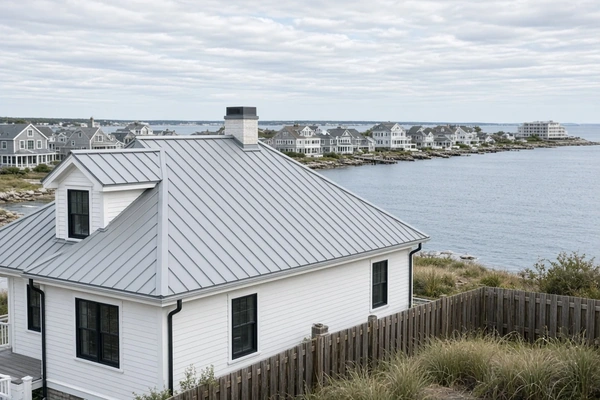
How Long Does a Metal Roof Last Near Salt Water?
Near salt water, a metal roof lasts as long as its metal and coating are made for salt spray. Aluminum and PVDF-coated steel handle the salt spray that shortens ordinary roofs near the bay.
We spec the metal for the street: aluminum or Galvalume with a PVDF finish near the water, and G90 steel inland. Within about a mile of salt water, we quote aluminum or steel with a marine-grade coating system, both made for coastal exposure.
Salt isn’t the only coastal test. Nor’easter wind is where metal pulls ahead of asphalt. Interlocked panels are engineered for high wind uplift, and the panel systems we install are tested for high-wind coastal use, where gusts come across open water uninterrupted.
Asphalt has its own problems on the coast. Its seals weaken with age, and granule loss speeds up on exposed coastal roofs.
If your house is in Squantum, Houghs Neck, Marina Bay or anywhere along Quincy Bay, ask every roofer you’re comparing which metal and coating they’re quoting for your street, and get it in writing. Our list of questions worth asking covers the rest of the hiring decision.
Finish Warranties Run Shorter Than the Roof
Manufacturer finish warranties commonly run 30 to 40 years. That’s shorter than the 40 to 70 years we put on a properly installed metal roof.
Covering old shingles with metal can void those finish warranties, which is 1 reason we rarely recommend it. We put our workmanship warranty in writing too, so ask to see both before you sign.
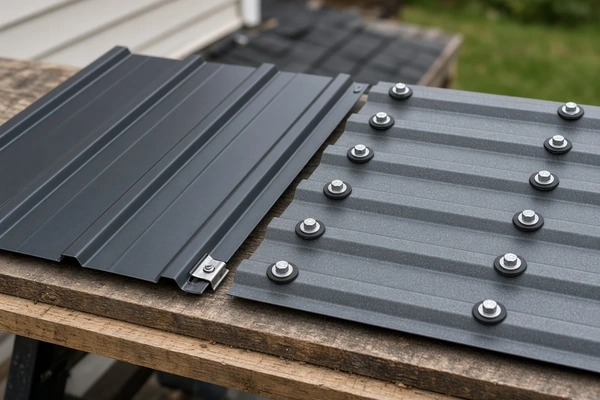
Concealed Fasteners Outlast Exposed Screws
Concealed fasteners last longer because freeze-thaw cycles have no screw heads to work loose. Every screw on a ribbed panel goes through the face of the panel, so those screws need checking over the life of the roof.
The upkeep we list for metal is occasional fastener and sealant checks. If you already have a metal roof, a photo-documented inspection looks at it from above and at the attic from below, and every finding is photographed and explained in plain English.
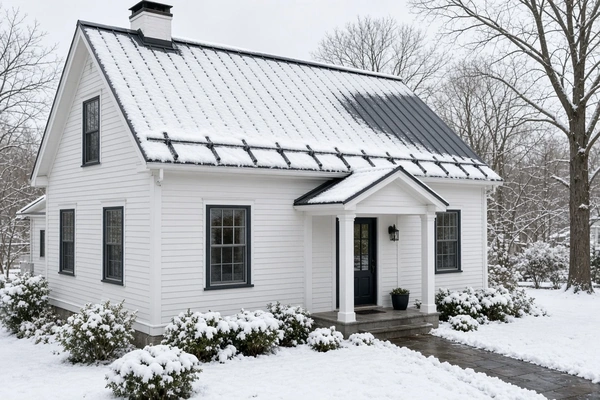
What Shortens a Metal Roof’s Life in Massachusetts?
Install shortcuts, old shingles left underneath and a warm attic all work against a metal roof here. Metal is less forgiving of shortcuts than asphalt.
Panel layout, expansion clearance and flashing details decide whether a metal roof lasts 50 years or leaks in 5.
Old shingles left underneath are the next problem. Covering them hides the condition of the deck and traps moisture problems. Our post on overlay vs tear off covers the code side.
Snow and ice come last. Metal sheds snow fast, so we install snow guards over doors and walkways to control the slide. But a metal roof over a warm, leaky attic still gets ice dams. An ice dam needs 3 things: snow on the roof, freezing weather and an attic that leaks heat. Only the attic is under your control.
Our snow comparison of metal and asphalt covers the fix. The Department of Energy’s ice dam guidance calls sealing the air leaks into the attic “the most important step.”
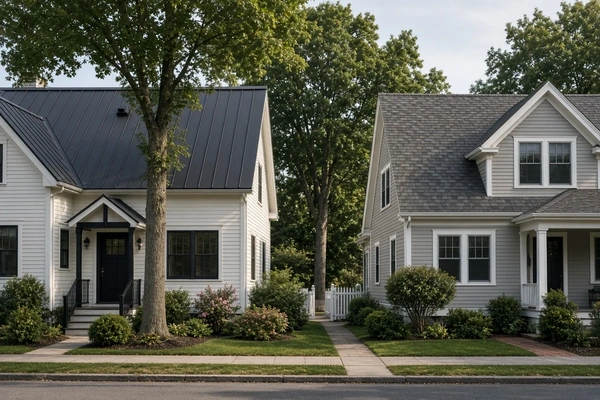
Metal Lasts 2 to 3 Times as Long as Asphalt
Metal outlasts asphalt by 2 to 3 times on our numbers, but it costs more up front. Its cost per year of service is often lower over the life of the roof, since you buy it once. Asphalt’s cost per year rises once you count the replacement cycles.
That math only works if you stay. Metal pays off for homeowners who plan to stay past their next asphalt replacement. If you’re selling in a few years, asphalt is usually the smarter spend, and we’ll say so.
Boston’s numbers back that up. On the 2025 Cost vs Value figures our post on metal roof resale value walks through, metal costs $20,384 more than asphalt and adds $1,288 more at resale. If summer cooling is part of the decision, our energy efficiency post covers what the research says.
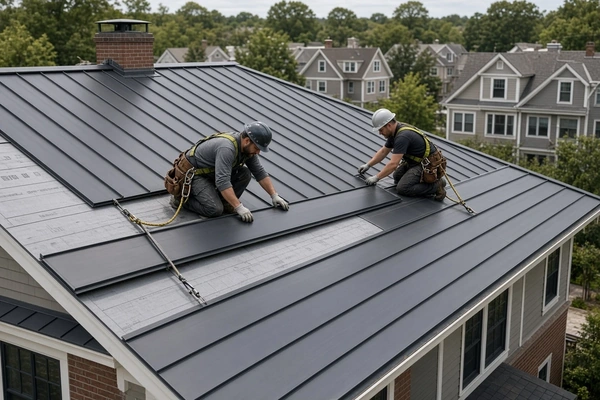
How We Spec a Metal Roof in 2026
At Powersol Roofing, we choose the metal after we’ve measured the roof and checked its exposure. Every estimate is free, and we don’t quote prices sight unseen.
- Measure and specify. We measure the roof, check pitch and exposure, and spec the metal for your street.
- Line-item quote. Panels, underlayment, ice and water barrier, flashing, snow guards and labor are each priced separately, so you can see where the money goes before you commit.
- Tear-off and deck prep. We take the old roof off and prep the deck for the new one.
- Panels, flashing and walkthrough. The panels and flashing go on, and we walk the finished roof with you.
If you’ve been asking “how long does a metal roof last,” the answer for your house starts with your street. Pick the metal for the salt air and the fasteners for the metal, and 40 to 70 years is a fair plan. Book a free estimate or call (617) 631-5435, and we’ll check your exposure and price every line in writing.
FAQs
How long does a metal roof last in Massachusetts?
A properly installed metal roof lasts 40 to 70 years, depending on the metal and its coating. Coated steel typically runs 40 to 60 years, and aluminum often lasts longer near salt water. Exposure changes block by block, so the right metal depends on your street.
How long does a metal roof last near the ocean?
As long as its metal and coating are made for salt spray. Within about a mile of salt water, Powersol quotes aluminum or steel with a marine-grade coating system, both made for coastal exposure. Aluminum often lasts longer than coated steel near salt water.
How long does a standing seam metal roof last?
Powersol rates the standing seam systems it installs at a 40 to 70 year service life. The fasteners are concealed and raised above the water line, so there are no exposed screws to work loose in freeze-thaw cycles. Of the 3 metal systems Powersol installs, standing seam has the longest life.
How long does a metal roof’s finish warranty last?
Manufacturer finish warranties commonly run 30 to 40 years. That’s shorter than the 40 to 70 years Powersol puts on a properly installed metal roof. Covering old shingles with metal can void those finish warranties.
Does a metal roof last longer than asphalt shingles?
Yes. Powersol puts metal at 40 to 70 years and architectural asphalt at 20 to 30, so metal lasts 2 to 3 times as long. Metal costs more up front, so it pays off for owners who plan to stay past their next asphalt replacement.
Can you put a metal roof over shingles?
Sometimes, but Powersol rarely recommends it. Covering old shingles hides the condition of the deck, traps moisture problems and can void finish warranties. Powersol’s metal process starts with a tear-off and deck prep.
What maintenance does a metal roof need?
Powersol lists occasional fastener and sealant checks as the upkeep for metal. Over doors and walkways, snow guards keep sliding snow under control. A photo-documented inspection covers the roof from above and the attic from below.