When a roof is leaking but the shingles look fine, water is getting in through a part you can’t see from the ground. At Powersol Roofing, most leaks we trace across Quincy and the South Shore come from small failures: flashing at chimneys and walls, cracked vent boots, valleys, or flashing a past crew reused or face-nailed. In winter, the cause can be an ice dam, or moisture from inside the house that has nothing to do with the roof.
A roof is a system, and the shingles are only the part you see. The deck, underlayment, flashing, pipe boots and drip edge keep the water out, and none of them can be checked from the driveway.
A roof that leaks while the shingles look fine has failed under or around the shingles. The usual entry points are step flashing, chimney flashing, pipe boots, valleys, roof vents, unsealed shingle tabs and ice dams at the eaves. Attic condensation can also drip through a ceiling with no roof damage at all.
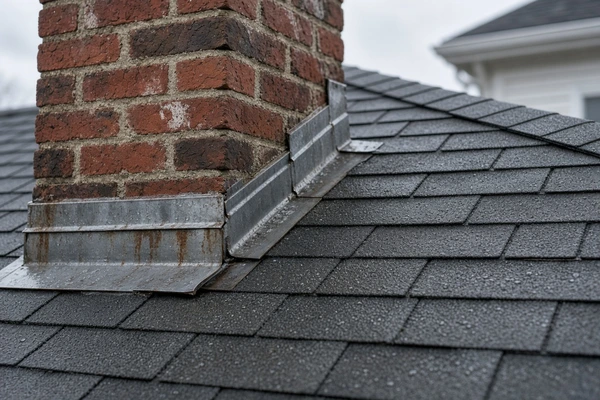
Roof Leaking but Shingles Look Fine: Why It Happens
Shingles shed water across the open slope. Every spot where the roof meets a wall, a chimney, a pipe or another slope depends on flashing you can’t judge from the ground.
That’s why our inspections check flashing at chimneys and walls, vent boots, valleys, shingle sealing and the attic sheathing for stains and soft spots. A ground-level glance isn’t an inspection.
Massachusetts housing adds to the risk. The typical owner-occupied home here is 59 years old, against 42 nationally, according to NAHB’s analysis of 2024 Census Bureau data. A common find when we open up older roofs: flashing that was reused or face-nailed on the last job.
Shingles also age where you can’t see it. In September 2026, the Insurance Institute for Business & Home Safety (IBHS) released a 10-year study of aging shingles. Most products lost wind resistance between years 5 and 10.
The full list lives in our breakdown of roof leak causes in Massachusetts.
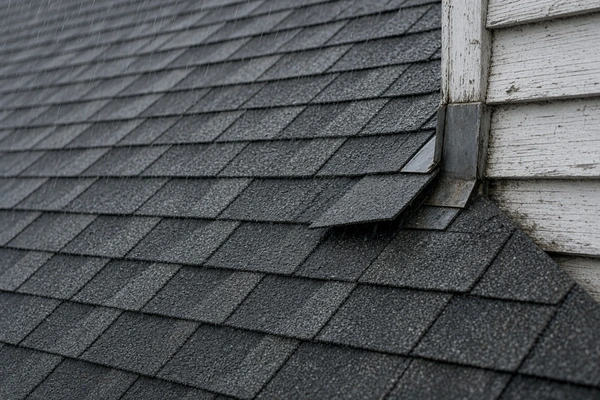
The 2026 Leak Decoder: When It Leaks Points to What Failed
The timing of a leak narrows the source faster than the stain does. Water runs along the rafters and sheathing before it drips, so the stain often shows up feet away from the hole. Timing is part of how we trace leaks, too: matching your leak dates to wind direction and rain type narrows the suspects before we ever set a ladder.
| What you notice | Most likely source | What fixes it |
| Leaks only in wind-driven rain, like a nor’easter | Wall or chimney flashing, a missing kick-out, or shingle tabs the wind gets under | New flashing, a kick-out, resealed or replaced shingles |
| Leaks during a thaw after snow | An ice dam backing water up under the shingles | Air sealing and insulation in the attic; ice barrier at the eaves on the next roof |
| Drips on dry, cold days, never in rain | Moisture from inside: frost on nail tips, condensation, a bath fan venting into the attic | Venting the fan outside and fixing attic ventilation, not new roofing |
| Leaks in steady rain, below a plumbing vent | A split pipe boot, with water running down the vent pipe | A new pipe boot |
| Leaks only in heavy downpours | A valley or a clogged gutter backing water up | Clearing the gutter and re-flashing the valley |
| Leaks near the chimney | Chimney flashing | New chimney flashing |
| Rotting trim where a roof edge meets a wall | A missing kick-out flashing sending water into the wall | A kick-out and new wood behind the trim |
If you can get into the attic during a rain, start there and trace the roof leak uphill along the wet wood. Our roof leak repair visits work the same way: we trace the water back to where it gets in, fix that spot and photograph the source before and after.
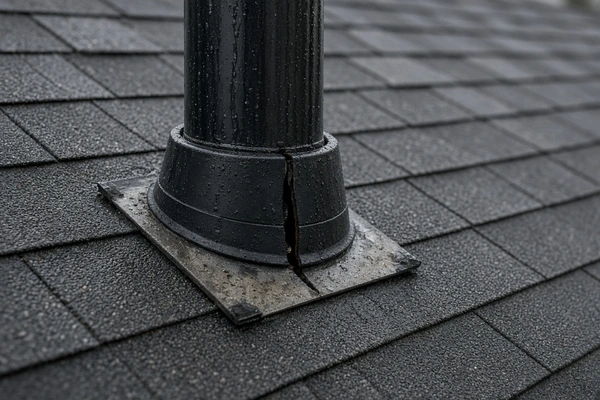
5 Hidden Leak Sources Behind Good-Looking Shingles
Each of these can leak while the shingles look fine from the street.
Step flashing and the missing kick-out
Step flashing is the row of small metal pieces woven into the shingles where a roof runs up a wall. Step flashing that a past crew ran as 1 long strip, instead of individual pieces, leaks too. At the bottom of that wall, a kick-out flashing should turn the water into the gutter.
The Department of Energy’s Building America Solution Center notes that kick-out flashing directs runoff away from the wall. It also warns that vinyl siding, fiber cement and brick “can mask the evidence for years” when the kick-out is missing. That’s how a wall corner can rot for years before anyone sees a stain.
Pipe boots, cracked or reused
Plumbing vents through your roof are sealed with a pipe boot, and a rubber gasket has a shorter life than the shingles around it. Once it splits, water runs down the vent pipe into the ceiling below. On re-roofs, some crews leave the old boot in place. Our post on why roofers reuse pipe boots lists what to ask before you sign.
Shingles that look flat but aren’t sealed
Each architectural shingle has a sealant strip that bonds it to the row below. When that bond lets go, the tab can lie flat on a calm day and lift in a gust. Wind-driven rain from a coastal storm can then get under the tab and reach the underlayment. In its 10-year shingle aging study, IBHS called unsealing “the single greatest driver of wind vulnerability.” A broken seal doesn’t show from the driveway, which is why we check shingle sealing by hand.
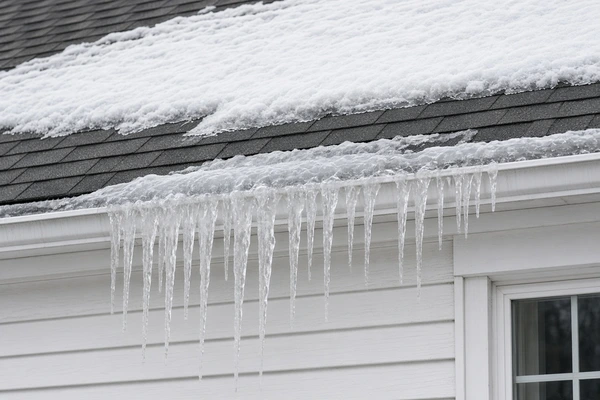
Ice dams and a missing ice barrier
An ice dam forms when heat escapes into the attic and melts snow on the upper roof. The water runs down to the cold eave, refreezes and backs up under the shingles. Here, it usually takes a cold snap after a thaw. University of Minnesota Extension names attic air leaks as a major way that heat reaches the roof, and its first fix is an airtight ceiling.
Massachusetts code requires an ice barrier at the eaves, and the state’s ice barrier guidance sets the minimum at 24 inches inside the exterior wall line. On our installs, GAF WeatherWatch leak barrier runs up from the eaves. It keeps water from a dam out of the house, but it doesn’t stop the dam from forming. That part is covered in what stops ice dams.
What if it isn’t the roof?
If the “leak” shows up on dry, cold days and never during rain, the roof may be fine. Warm, moist air from the house gets into the attic and frosts on the nail tips poking through the deck, then melts on the next mild day. A bathroom fan that dumps moist air into the attic makes it worse. DOE’s Building America Solution Center tells builders to vent bath fans outdoors, not into an attic.
A new roof won’t fix any of this, and we’ll tell you so. The code side is covered in attic ventilation in Massachusetts.
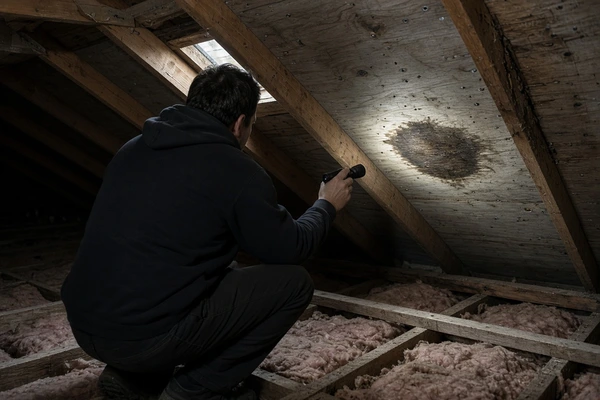
How Do You Find a Leak You Can’t See From Outside?
Start in the attic, ideally while it’s raining, with a flashlight. Look for dark water stains, damp insulation and rusty nail tips. Then follow the trail uphill, because water travels down before it drips. Match the timing to the decoder above, and photograph everything.
Move belongings away from the drip and start drying right away. The EPA’s mold guidance calls for drying water-damaged areas within 24 to 48 hours to prevent mold growth. When we inspect, every finding is photographed and explained in plain English, so you see what we see.
Will a 50-Year Shingle Warranty Cover a Hidden Leak?
Often it won’t. The 50 years on a GAF system warranty is the period for manufacturing defects, and most leaks we trace start at flashing or cracked vent boots. Flashing that was reused or face-nailed is an install problem, and no shingle defect warranty pays for that.
GAF’s warranty comparison chart shows its System Plus warranty, which a GAF Certified contractor can register, includes no workmanship coverage. Silver Pledge adds 10 years of workmanship coverage on Timberline HDZ shingles and needs a Certified Plus or Master Elite contractor. Golden Pledge adds 25 years and needs a Master Elite contractor.
So for a hidden leak, the number that matters is the workmanship term and who stands behind it. Our new roofs come with a 25-year workmanship guarantee plus manufacturer coverage, with the warranty paperwork in your hand. Whoever you hire, get the workmanship term in writing and ask whether the flashing and pipe boots are new.
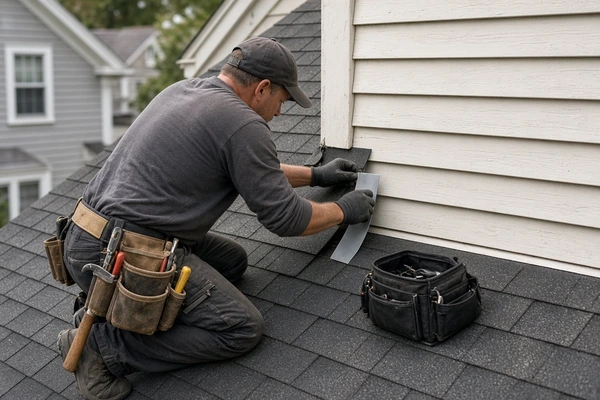
Should You Repair or Replace a Roof That Leaks but Looks Fine?
Most leaks are a repair. A leak at 1 pipe boot or 1 flashing joint usually ends with a repair measured in hours, not a new roof. Replacement starts to make sense, as our leak guide puts it, “when it’s not one spot but many,” or when the decking is soft across the roof.
If a repair solves it, we’ll tell you, even when a full replacement would pay us more. When replacement is the honest call, we’ll show you why with photos. The signs are laid out in our repair or replace guide.
If your roof is leaking but the shingles look fine, write down when it leaks and take photos in the attic and on the ceiling. Then book a roof inspection. We work across Quincy and the South Shore from 100 Hancock St, and our line is answered 24/7. You’ll get every finding photographed, a written summary and any repair quoted line by line.
FAQs
Can wind-driven rain get under shingles that look fine?
Yes. A shingle whose sealant strip has let go can lie flat in calm weather and lift in a gust, and rain blows underneath. IBHS’s 10-year aging study found that unsealing is the single greatest driver of shingle wind vulnerability. Note which way the wind blew when your leak started, because wind direction narrows the suspects.
My roof is leaking but the shingles look fine. Is it an emergency?
Treat it as urgent. The EPA calls for drying water-damaged areas within 24 to 48 hours to prevent mold growth. Contain the water, dry what you can and get the roof looked at within days, not weeks. If water is pouring in during a storm, call our 24/7 line.
Why is my new roof leaking?
A common cause is a detail that was reused or done wrong, like an old pipe boot, face-nailed flashing or step flashing run as 1 long strip. Section R908.5 of the International Residential Code requires existing flashings and vents to be replaced during a re-roof where they’re rusted, damaged or deteriorated. Ask your installer which parts were new.
Does a 50-year warranty cover a roof leaking when the shingles look fine?
Often it doesn’t. The 50-year term on a GAF system warranty covers manufacturing defects, and a leak from reused or face-nailed flashing is a workmanship problem. GAF’s System Plus warranty includes no workmanship coverage. Its Silver Pledge and Golden Pledge warranties add 10 and 25 years of workmanship coverage on Timberline HDZ shingles.
Can a bathroom fan cause a ceiling leak?
Yes, if it vents into the attic. Warm, wet air frosts on the cold roof deck and nail tips, then drips when it melts, which looks like a roof leak. DOE’s Building America Solution Center says bath fans should vent outdoors, not into an attic, crawlspace or the space between floors.
Will roof sealant stop a hidden leak?
Not for long. Roof cement smeared over a suspect spot can send the water somewhere new. The fix is replacing the part that failed, like the flashing or the boot. When we inspect, caulk patches are one of the failure signs we look for.