Metal roofs are more reflective than asphalt. In Massachusetts, that matters less than almost every article on the internet tells you. Those articles are written for Florida, where air conditioning is 28% of household energy use. Nationally it’s about 9%. In Maine it’s 2%. Massachusetts sits far closer to Maine than to Florida, so a percentage off your cooling bill is a percentage of a small number.
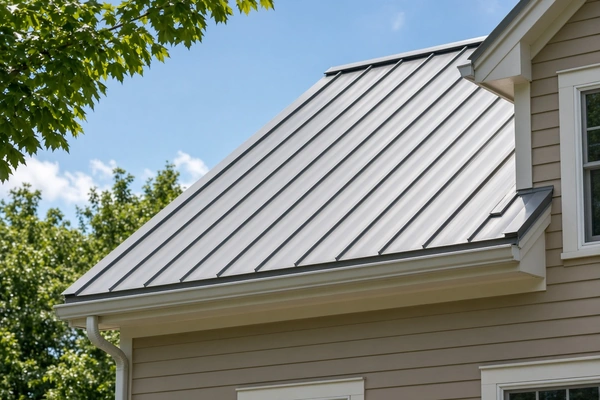
Are Metal Roofs Energy Efficient in Massachusetts?
Metal roofs are energy efficient in Massachusetts, but the savings are small because this is a heating climate, not a cooling one. Reflective roofing cuts cooling costs, and cooling is a minor share of a New England energy bill. The real case for metal here is service life and snow shedding, not the utility bill.
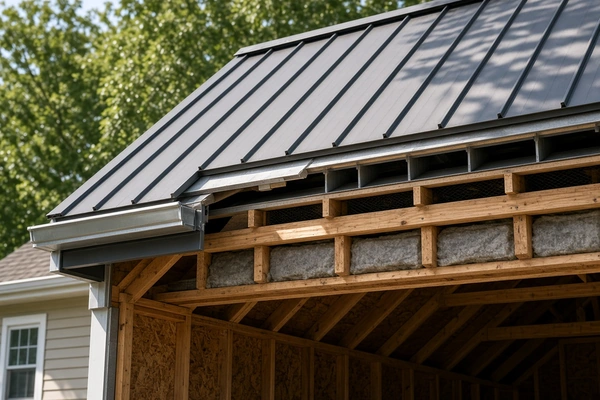
What the Real Research Says About Cooling Savings
The U.S. Department of Energy’s own consumer guide to cool roofs says a cool roof can “shave at least 5 to 20% from the cooling costs of your energy bill,” and cut annual air conditioning energy for a single-story building by up to 15%.
The EPA’s heat island research lands in the same territory: an 11% to 27% cut in peak cooling demand, and a 2.2 to 5.9 degree drop in maximum indoor temperature.
Real numbers. Much smaller numbers. And they’re percentages of your cooling, which in a Quincy or Braintree house is a modest slice of the year.
DOE also says the part the sales pages leave out: “It is rarely economical to replace a mechanically sound roof just to increase its solar reflectance.” If your roof has 8 good years left, a reflective one won’t pay you back for taking it off early.
Metal Roofs and the Massachusetts Winter
Here’s the objection you’d expect, and the one place the data surprised me.
If a reflective roof bounces sunlight away in July, it should bounce away free winter heat in January. DOE flags exactly that risk, warning that a cool roof “may increase the need for heating energy in winter by reflecting sunlight that would otherwise warm the building.” In a state with 5 months of heating season, that’s a fair worry.
The measurements don’t show it. Oak Ridge National Laboratory ran metal roof assemblies against an asphalt shingle control for 4 years. In their Buildings XII study, summer ceiling heat flux dropped from 18.2 watts per square meter under shingles to 7.0 under a vented metal roof. Then from November through January, the attics under the metal assemblies ran warmer than the control, averaging minimums of 10.9 to 14.0 degrees C against 7.9 under the shingles.
The vented air gap that keeps heat out in July also slows heat loss in January. So metal doesn’t punish you in a Massachusetts winter. It just doesn’t save you much in a Massachusetts summer either. Both are true, and nobody says them together.
Does a Metal Roof Qualify for a Tax Credit in 2026?
No. Two separate reasons, and plenty of roofing sites still have this wrong.
Roofing stopped qualifying years ago. The IRS page for the Energy Efficient Home Improvement Credit lists what qualifies as a building envelope component: insulation and air sealing, exterior windows and skylights, and exterior doors. Roofs aren’t on it. Metal roofs came off that list when the law changed for the 2023 tax year.
And the credit itself is finished. Under the July 2025 tax law, the IRS states that the credit “will not be allowed for any property placed in service after December 31, 2025.”
Attic insulation and air sealing are a different story. Those can still qualify for Massachusetts utility incentives, and they’re worth checking before the roof comes off.
What Actually Makes a Massachusetts Roof Cost More
At Powersol Roofing I don’t publish a price per square foot, because the number that matters depends on your house.
A roof replacement in Massachusetts often runs under $10,000 on a smaller, simple home, and $15,000 to $20,000 or more on a bigger or steeper one. What moves it is real work: roof size, pitch, how many old layers come off, rotted decking, chimney and skylight flashing, ventilation, and how hard the house is to get around. Metal sits well above asphalt on the same house.
For a metal quote specifically, I’ll walk your roof and put the scope in writing. The 15 questions worth asking before you sign apply to a metal bid the same as an asphalt one.
The Part That Actually Pays
Look at the timeline, not the thermostat.
| Architectural asphalt (GAF system) | Metal | |
|---|---|---|
| Service life | About 30 years | 40 to 70 years |
| Replacements before year 50 | 2 | 0 to 1 |
| Relative cost, same house | Far less | Well above asphalt |
| Snow shedding | Holds snow | Sheds fast on adequate pitch |
| Cooling savings in MA | Baseline | Small, per DOE’s 5% to 20% range |
| Typical install | 1 to 2 days, our average about a day | Longer, varies by system |
Over 50 years you buy asphalt twice more, or metal once. That’s the argument. Not the cooling line.
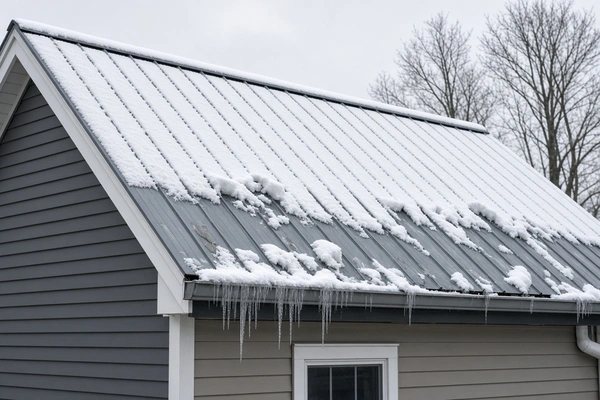
What About Snow and Ice Dams?
Metal sheds snow. It does not stop ice dams, and neither does asphalt, because ice dams come from heat escaping your attic and refreezing at the cold eave. That’s an insulation and ventilation problem sitting underneath whatever material is on top.
I wrote that comparison out properly in metal vs asphalt for snow, and the full fix order in what stops ice dams. Short version: fix the attic first, then pick the material.
When I Tell People Not to Buy Metal
I’d rather lose the job than sell you the wrong one.
Skip metal if you’re moving in under 10 years, because you won’t get the service life back. Skip it if your pitch is too low to shed snow, because you’re paying a premium for a benefit you won’t get. And skip it if you’re buying it for the energy bill, because that’s the weakest reason on the list in this climate.
Buy it if you’re staying put, you want one roof instead of three, or you’re near the water where wind and salt work on everything.
Skip any contractor who leads with 40% energy savings and a tax credit. They either haven’t checked, or they’re counting on you not to.
Asking whether metal roofs are energy efficient in Massachusetts is the wrong first question for most houses. The right one is how long you’re staying. I’ll walk your roof, take photos, and tell you which answer applies to yours. Sometimes all it needs is a roof inspection. Get in touch and we’ll start there.
Frequently Asked Questions
Are metal roofs energy efficient in Massachusetts?
Yes, but the savings are smaller than most roofing sites claim. The U.S. Department of Energy puts cool roof savings at 5% to 20% of cooling costs, and cooling is a minor share of a New England energy bill. Air conditioning is about 9% of household energy use nationally and only 2% in Maine, against 28% in Florida.
Does a metal roof qualify for a federal tax credit in 2026?
No. Roofing is not on the IRS list of eligible building envelope components for the Energy Efficient Home Improvement Credit, and the credit does not apply to any property placed in service after December 31, 2025. Any contractor quoting a roof tax credit in 2026 is working from outdated information.
Are metal roofs colder in winter than asphalt?
No. Oak Ridge National Laboratory measured attics under vented metal assemblies running warmer than attics under asphalt shingles from November through January, with minimums averaging 10.9 to 14.0 degrees C against 7.9 under the shingle control. The vented air gap that blocks summer heat also slows winter heat loss.
Do metal roofs stop ice dams in Massachusetts?
No. Ice dams come from heat escaping the attic and refreezing at the cold eave, which happens underneath whatever material is on top. Metal sheds snow faster on adequate pitch, but the fix is attic insulation and ventilation, not the roof covering.
How long does a metal roof last compared to asphalt?
A metal roof lasts 40 to 70 years. An architectural asphalt roof lasts about 30 years in this climate. Over 50 years of owning a home that means buying asphalt twice more, or metal once, which is the strongest financial argument for metal in Massachusetts.
Is it worth replacing a good roof with metal to save energy?
Usually not. The Department of Energy states that it is rarely economical to replace a mechanically sound roof just to increase its solar reflectance. Metal is a decision for when you are replacing anyway, not a reason to replace early.