Get the roof looked at separately. A roof inspection before buying a house in Massachusetts catches what the general home inspection is allowed to skip, and most buyers have no idea how wide that gap is. Under state regulation 266 CMR 6.04(1)(d)1., a Massachusetts home inspector “shall not be required to” walk on the roof unless, in that inspector’s opinion, walking it “will pose no risk of personal injury or damage to the roofing components.” They can call it from the ground, from a ladder at the eave, or through binoculars, and the report is still valid. Meanwhile, on offers written after October 15, 2025, a Massachusetts seller can no longer make waiving the inspection a condition of the deal. So the question changed. It’s not whether to inspect. It’s whether anybody actually got on the roof.
What Is a Roof Inspection Before Buying a House?
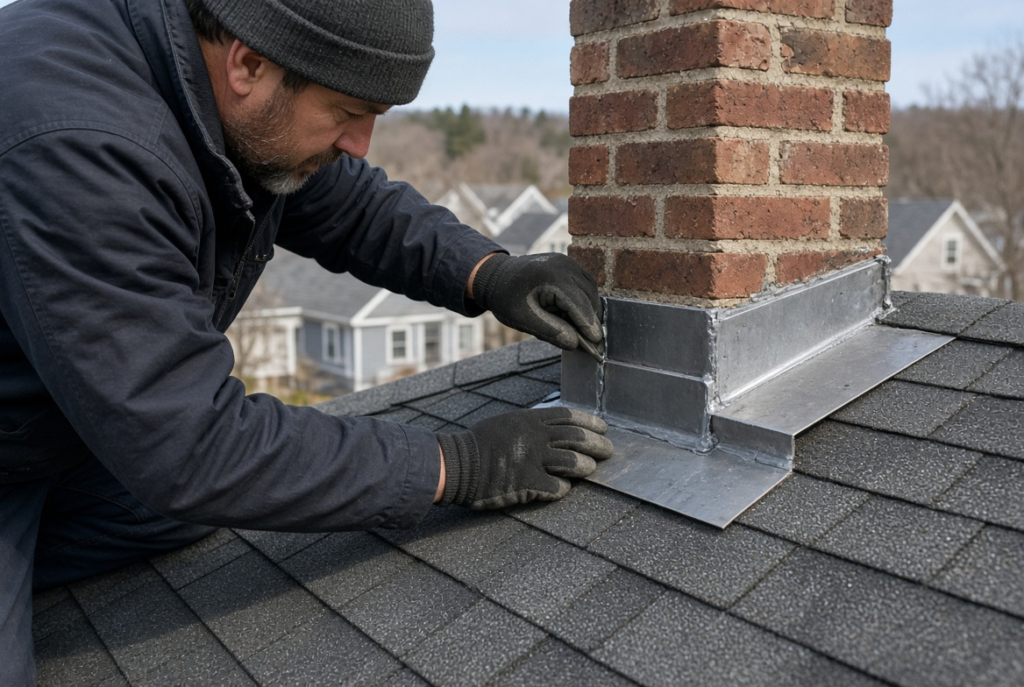
A roof inspection before buying a house is a separate check of the roof by a roofing contractor or certified roof inspector during your inspection period. It goes further than the general home inspection. The roofer gets on the roof, checks flashing, ventilation, decking, and penetrations, then reports what needs repair or replacement before you close.
Do You Need a Roof Inspection Before Buying a House in Massachusetts?
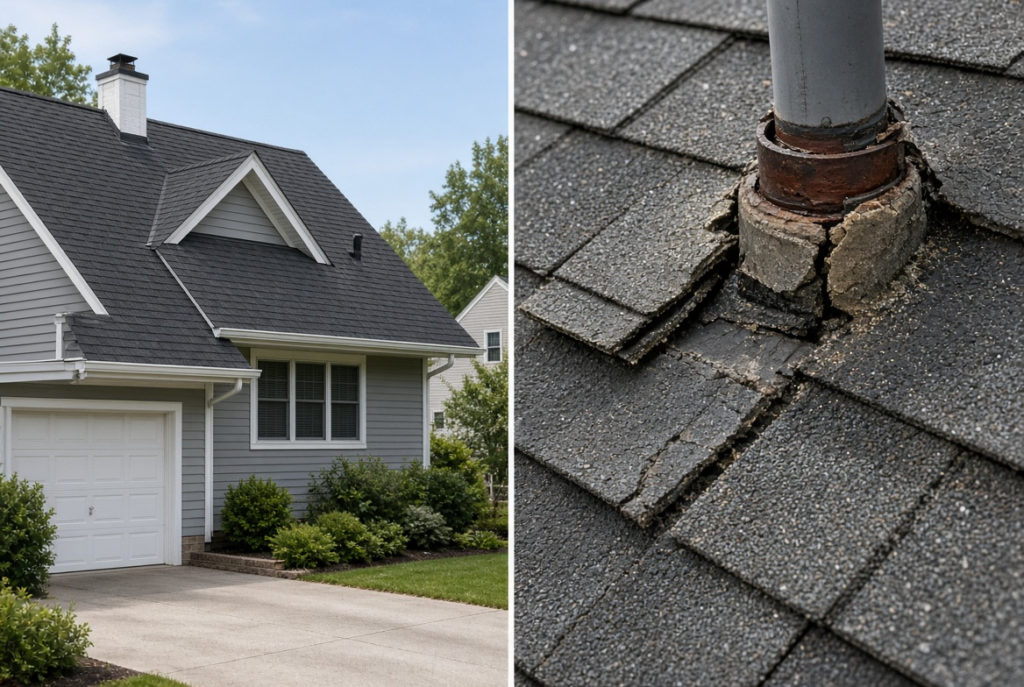
Yes, on almost every resale house, and the reason is regulatory, not sales talk. Your home inspector is required to observe and report on roof coverings, exposed roof drainage systems, flashings, skylights, chimneys, and roof penetrations under 266 CMR 6.04(1)(a). They are not required to walk the roof. Those two facts live in the same regulation, one subsection apart.
There are a few houses where I’d tell you to skip it. New construction still inside a builder’s warranty. A condo where the association owns and maintains the roof. A house where you already have a written scope and a replacement built into your offer. Outside of those, get a second set of eyes on the roof. It’s the part of the exterior you’d least want to be wrong about.
Does a Massachusetts Home Inspector Have to Get on the Roof?
No. 266 CMR 6.04(1)(d)1. says the inspector “shall not be required to” walk on the roof unless they judge it safe for themselves and for the roofing. Steep pitch, wet leaves, frost, brittle old shingles, a third story with no safe ladder set: any of those are a legitimate reason to stay off, and a good inspector will stay off. The judgment is theirs to make, which is exactly why the rest of this matters.
One line in the same regulation works in your favor. Under 266 CMR 6.04(1)(c), the inspector has to note the methods used to observe the roofing and note any signs of previous or active leaks. That line is in your report. Go find it.
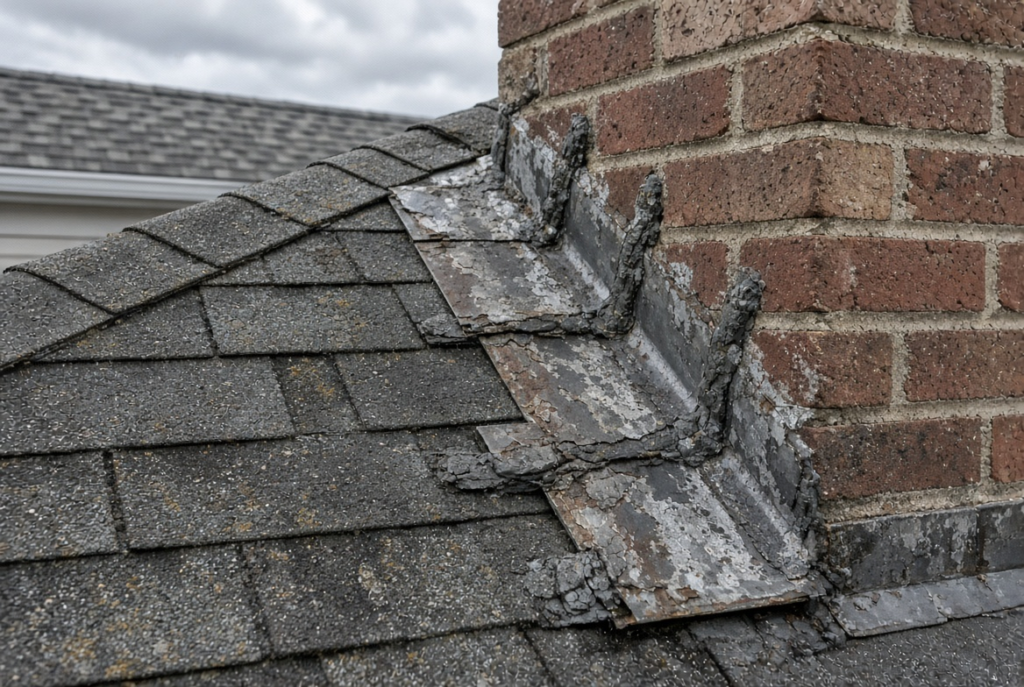
If it says the roof was observed from the ground or from the eave, you don’t have a roof inspection. You have a description of a roof from 30 feet away. Granule loss, nail pops, lifted tabs, a pipe boot cracked all the way around, flashing that was caulked instead of replaced: none of that shows up from the driveway. I’ve seen roofs photograph beautifully from the street and fail every one of those checks up close.

Massachusetts Roof Inspection Rules in 2026, and What the Waiver Law Changed
Massachusetts buyers have a protected inspection window, and it applies to offers or purchase and sale agreements signed after October 15, 2025. Under 760 CMR 74.00, written under the Affordable Homes Act (St. 2024, c. 150), a seller or listing agent can’t condition acceptance of your offer on you giving up a home inspection, and can’t accept an offer whose contract documents would require you to waive, limit, or restrict one. Auctions are carved out. The seller or agent also has to hand you a separate written disclosure, signed by both sides, confirming you get a reasonable opportunity to get an inspection, review it, and walk based on what it says.
It covers one to four unit residential buildings, condo units, and co-op shares. Several sales sit outside it: foreclosures and deeds in lieu, deeds reconveying property to release a debt or lien, sales to a relative as the regulation defines that term, sales to a former spouse under a c. 208 judgment or order, estate transfers to relatives, pre-completion new construction carrying an express written warranty of at least one year, and anything already under agreement on or before October 15, 2025.
The teeth are in 760 CMR 74.05. Skipping that disclosure “shall constitute” an unfair or deceptive act or practice under M.G.L. c. 93A. The other violations “may” be treated that way. Both attach to people acting in a business context, meaning agents and brokers, and the regulation says plainly that it doesn’t put a homeowner in an isolated private sale on the hook.
If your offer is going in now, the window is yours. Use it and put somebody on the roof.
Who Pays for the Roof Inspection, and What You Should Get
The buyer arranges it, inside the inspection period the purchase and sale agreement gives you. Not the seller, and not the listing agent. That matters more than it sounds like it should: you set it up, so the report belongs to you, and you decide what happens with it.
What you should get back is the same every time. Photos of every problem area. A written scope naming the components involved. A plain answer on repair versus replacement. If all you get is a verbal “roof’s got a few years left” and nothing on paper, you got a conversation, not an inspection.
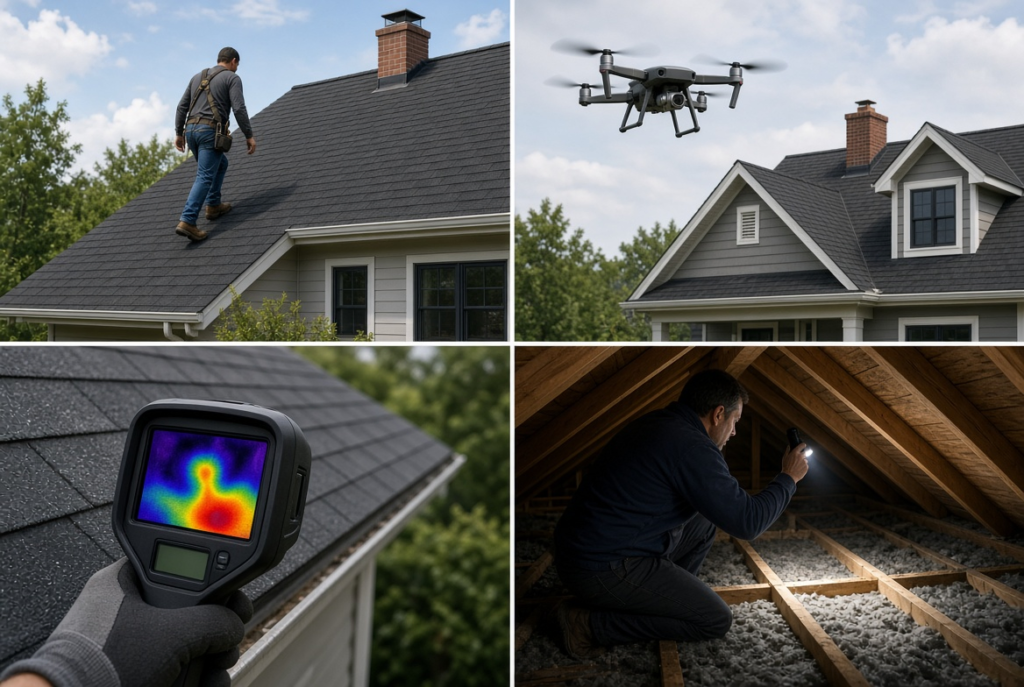
The method they use matters more than anything else here.
| Method | What it finds | What it misses | When it’s the right call |
|---|---|---|---|
| Physical walk-on | Soft or spongy decking, nail pops, lifted tabs, cracked pipe boots, flashing that was caulked instead of replaced | Anything under the sheathing | The default on any asphalt roof a person can safely walk |
| Drone | Overall condition, missing shingles, valley and ridge lines, storm damage patterns, sections nobody can safely reach | Anything you have to touch. A soft deck photographs like a good one | Steep pitch, slate or tile, icy conditions, or a roof too brittle to walk |
| Infrared or thermal | Trapped moisture inside the assembly and active leak paths | Surface condition and component wear | Flat and low slope roofs, and leaks nobody can locate |
| Attic and interior | Staining on the sheathing, daylight at penetrations, wet insulation, ventilation that isn’t moving air | Everything above the deck | Every time. It’s half the inspection |
A drone flight is the right call on a slate roof in January. It’s the wrong call as the only look at a 20 year old asphalt roof, because no camera feels a soft deck. If a roofer offers drone-only on a walkable roof, ask why.
Why the Shingles Are Usually Not the Problem
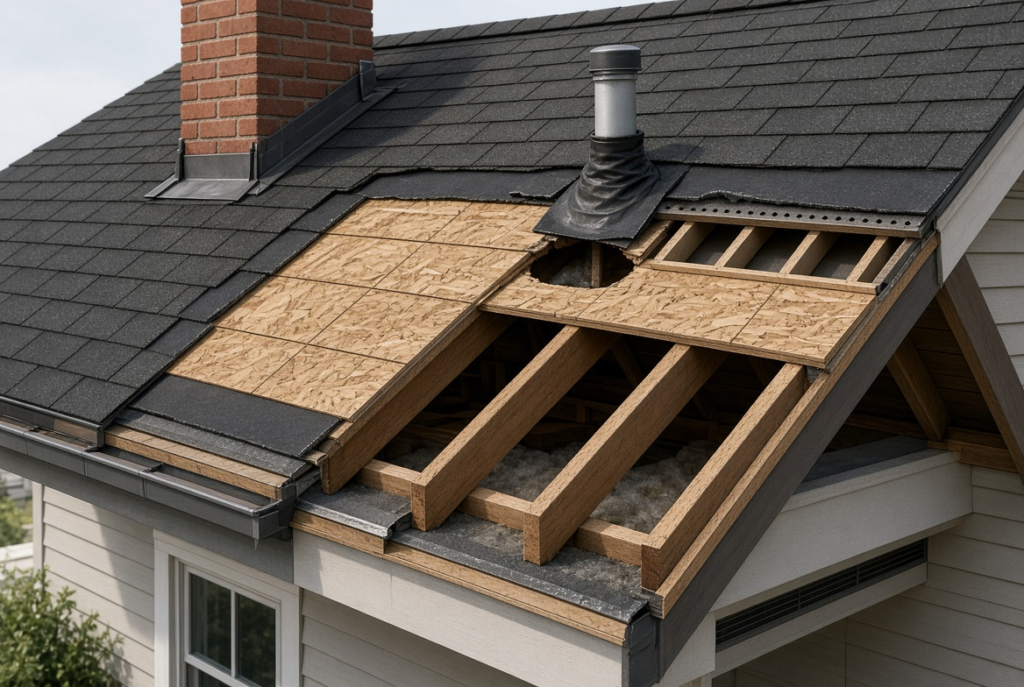
Across the roofs we work on, the failure is rarely the shingle itself. It’s the flashing at the chimney and sidewalls. It’s reused pipe boots that cracked in year eight. It’s bad nail placement from a rushed install. It’s a missing or short ice-and-water barrier at the eaves. It’s ventilation that was never right, cooking the deck from below. And it’s rotted decking nobody talks about until the old roof comes off.
Homeowners tell me “my shingles are lifting” or “there are black stains” or “water’s coming in by the chimney.” The shingle is what you can see. It’s usually the last thing that failed.
That matters for a buyer, because a home inspection report that says “roof covering appears serviceable” is telling you about the one layer visible from a distance. It says nothing about the six things underneath it.
What a Roof Inspector Should Be Looking At
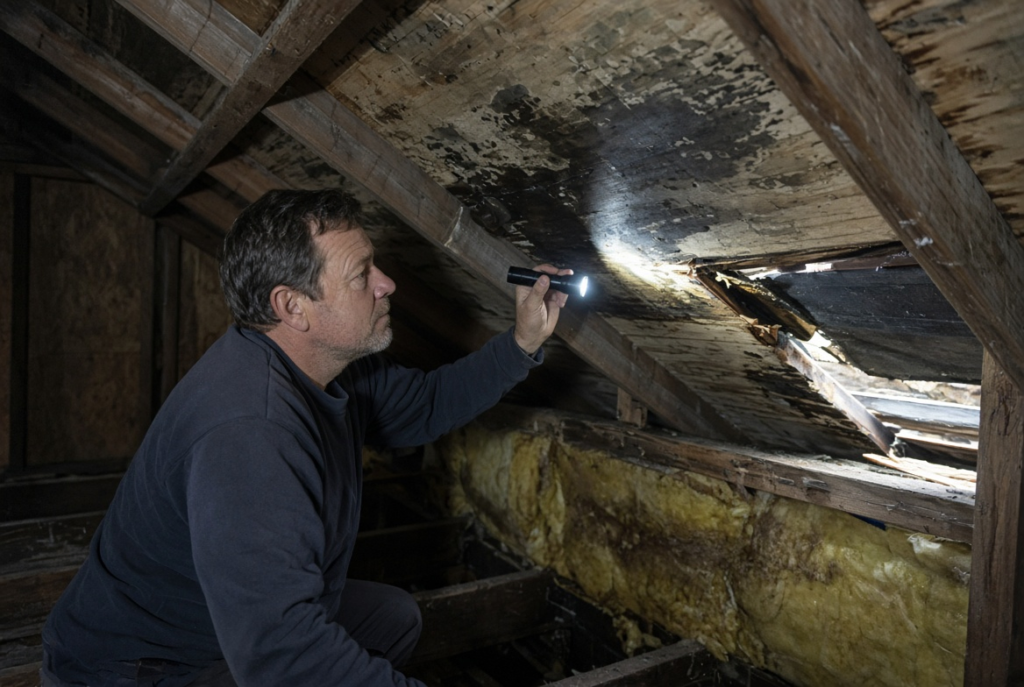
A real inspection covers the roof as a system: covering condition, flashing at every wall and chimney and skylight, valleys, pipe boots, drip edge, ridge and soffit ventilation, gutters and fascia, the decking underfoot, and the attic from the inside for staining, daylight, and wet insulation. Our roof inspection checklist for Massachusetts homes walks through each item in order if you want to follow along during the appointment.
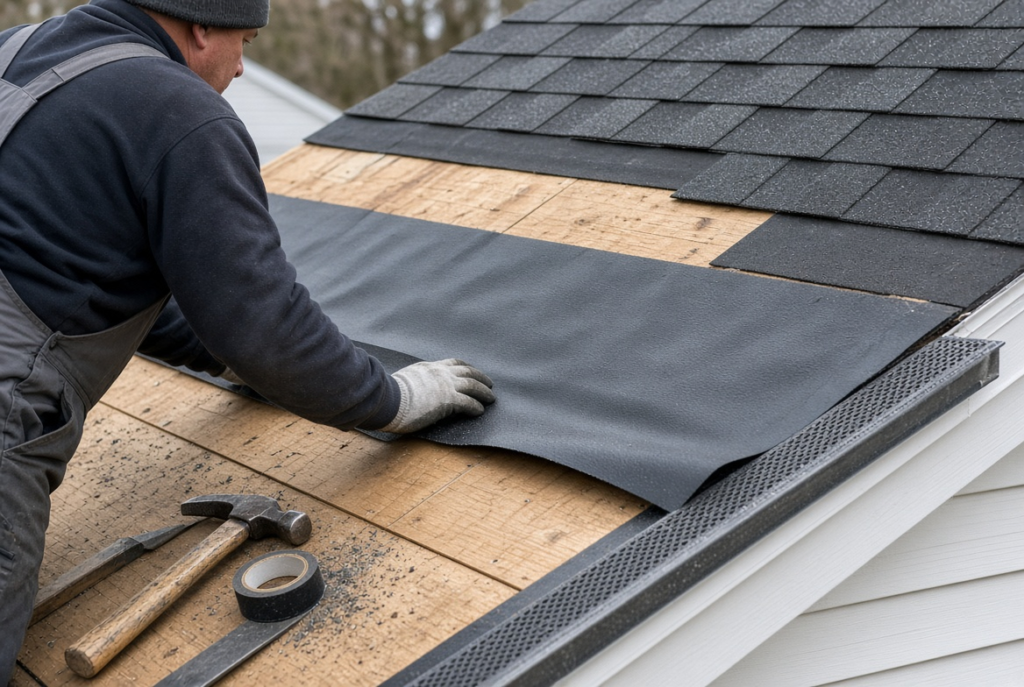
One Massachusetts-specific item belongs on that list, and buyers almost never ask about it. Massachusetts is a designated ice-barrier region, statewide, with no local option. Table R301.2(1) of the Tenth Edition residential code marks ice barrier underlayment required as “YES” for the whole state.
Section R905.1.2, which Massachusetts adopts from the 2021 IRC without amendment, says an asphalt shingle roof needs that barrier running from the lowest edge of every roof surface to a point not less than 24 inches inside the exterior wall line. Read that again, because most people get it backwards. The 24 inches is where the coverage has to end, not how wide the strip is. On a house with a 16 inch overhang, the barrier has to reach 40 inches in from the eave, and more than that once you measure it up the slope. One standard 36 inch roll doesn’t get you there. On roofs pitched 8 in 12 or steeper, it also has to run at least 36 inches measured along the roof slope from the eave edge. The material is two layers of underlayment cemented together or a self-adhering polymer-modified bitumen sheet, which is what most people call ice and water shield. On the roofs we install, that’s GAF WeatherWatch.
If the house has a history of ice dams and the last roof was rushed, that barrier may be short or missing. You won’t see it from the ground, and you won’t see it in a drone photo. Somebody has to look at the eave.
Which Findings Should Change Your Offer?
Some findings belong in the negotiation and some are just a maintenance note. Confusing the two hurts buyers in both directions, and the signs you need a new roof are not the same as the signs you should be asking for a credit at closing.
| Finding | Push it in the deal | Why |
|---|---|---|
| Soft or spongy decking | Yes | Nobody can scope it until the tear-off, and it’s the item that changes the job mid-install |
| Failed or caulked-over flashing | Yes | Chimney and sidewall flashing is where most of the leaks we find start |
| Two or more layers already on the roof | Yes | Tear-off and disposal both go up, and it limits your options |
| Active leak staining in the attic | Yes | Water is already inside. Scope it before you own it |
| No ridge or soffit ventilation | Yes | It shortens the life of whatever roof goes on next |
| Cracked pipe boots | Usually not | Real, but a small repair on its own |
| Moderate granule loss on a 12-year roof | Usually not | Normal aging. Plan for it, don’t fight over it |
| Algae staining | No | Cosmetic on asphalt shingles |
| Missing a few tabs after a storm | Depends | Small fix, but ask whether an insurance claim is already open |
Ask for a written scope. A roofer who hands you a single line on one page and no detail has given you nothing you can compare or negotiate with.
What to Ask the Roofer You Call After the Inspection
Homeowners tend to lead with the wrong question. The ones that actually protect you are these, and I’d want a buyer to ask me every one:
Are you tearing off to the deck or going over? What happens, in writing, if you find rotted wood? What exact shingle and system are you installing, by product name? Who manages the project day to day? Are you insured, and can I see the certificate? How long should it take? And what is not included?
That last one finds more surprises than the other six put together. Our post on questions to ask a roofing contractor goes deeper on how to read the answers.
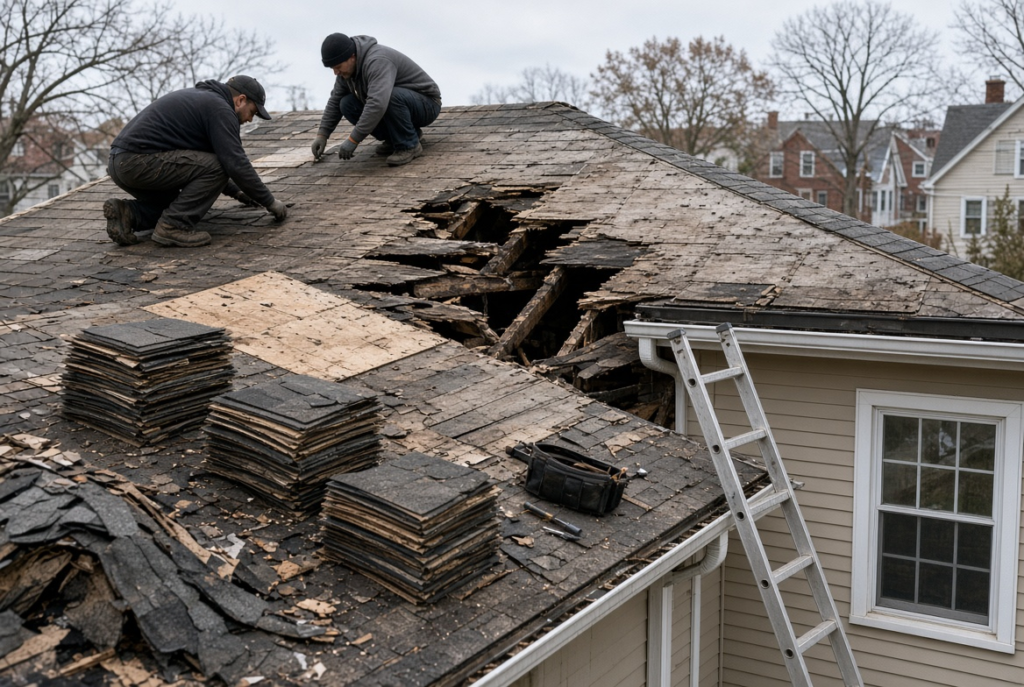
If the inspection comes back mixed, the repair or replace decision usually turns on decking condition and how many layers are up there, not on the age on the disclosure form.
How Long Does a Roof Replacement Take if You End Up Needing One?
Most standard replacements go in over one to two days once material is on site and the weather cooperates, and our average is closer to a single day. That timeline matters during a purchase, because it means a roof finding doesn’t have to blow up your closing. It’s a scope and a credit, not a six-week problem.
We’ve done that work across the South Shore and Greater Boston: a full roof with new gutters and PVC fascia and soffit in Taunton, a roof and gutter and siding package in Randolph, a roof and window project in Dorchester. Different houses, same pattern. The edges and the details are where the leaks live. If you want the full sequence, we broke down how long it takes to install a new roof start to finish.
One more thing on timing. The National Roofing Contractors Association recommends biannual inspections, noting they often turn up cracked, warped, or missing shingles, loose seams, deteriorated flashings, and excessive surface granules. I’d tell a Massachusetts owner spring and after the first hard freeze-thaw stretch, which is the rhythm behind our Massachusetts roof maintenance guide, and I’d tell a buyer once, properly, before you sign. That one appointment decides whose problem the roof becomes.
Powersol Roofing works across Greater Boston, the South Shore, and southeastern Massachusetts. If you want a roof inspection before buying a house in Massachusetts and your window is already running, get in touch and we’ll get you on the calendar with photos and a written scope.
Frequently Asked Questions
Do You Need a Roof Inspection Before Buying a House in Massachusetts?
Yes, on nearly every resale home. Massachusetts home inspectors are required to observe and report on roof coverings, exposed roof drainage systems, flashings, skylights, chimneys, and roof penetrations under 266 CMR 6.04(1)(a), but 266 CMR 6.04(1)(d)1. says they are not required to walk on the roof. A separate roof inspection puts someone on the surface who can check flashing, pipe boots, ventilation, and decking directly.
Does a Home Inspection in Massachusetts Include the Roof?
It includes the roof, but not necessarily from the roof. State regulation requires the inspector to observe roof coverings, exposed roof drainage systems, flashings, skylights, chimneys, and penetrations, and to note the method used to observe them. That method might be from the ground or from a ladder at the eave. Read the methods line in your report before you assume anyone climbed up.
Can a Massachusetts Seller Reject My Offer Because I Want an Inspection?
No, not on offers signed after October 15, 2025. Under 760 CMR 74.00, written under the Affordable Homes Act, a seller or listing agent cannot condition acceptance of an offer on the buyer giving up a home inspection, and cannot accept an offer whose contract documents would require the buyer to waive, limit, or restrict one. Auctions, foreclosures, sales to a relative, and pre-completion new construction carrying an express written warranty of at least one year are among the carve-outs. Failure to provide the required written disclosure shall constitute an unfair or deceptive act or practice under M.G.L. c. 93A when done by someone acting in a business context.
Who Pays for a Roof Inspection Before Buying a House in Massachusetts?
The buyer, in almost every case, arranged during the inspection period the purchase and sale agreement gives you. Not the seller and not the listing agent, which is the point: you set it up, so the report belongs to you and you decide what happens with it. What you should get back is photos of every problem area, a written scope naming the components involved, and a plain answer on repair versus replacement.
What Do Roof Inspectors Find Most Often on Older Massachusetts Homes?
Across the roofs we work on, the failures are usually flashing at chimneys and sidewalls, cracked or reused pipe boots, bad nail placement, missing or short ice-and-water barrier at the eaves, poor ridge and soffit ventilation, and rotted decking. The shingle is what you can see from the street, and it is normally the last component to fail.
Does Massachusetts Require Ice and Water Shield on a Roof?
Yes, statewide. Table R301.2(1) of the Tenth Edition Massachusetts residential code marks ice barrier underlayment as required, and R905.1.2 says the barrier on an asphalt shingle roof must run from the lowest edge of every roof surface to a point not less than 24 inches inside the exterior wall line. On roofs pitched 8 in 12 or steeper it must also extend at least 36 inches measured along the roof slope from the eave edge. The material is two layers of underlayment cemented together or a self-adhering polymer-modified bitumen sheet.