Most of the roof leaks I find in Massachusetts don’t start where homeowners look. They start at the flashing around a chimney, a cracked rubber pipe boot, or an attic that can’t breathe. From the ground, that same roof looks fine. The gap between what you can see and what’s actually failing is the reason a roof inspection checklist is worth doing, and why the one below covers the whole roofing system instead of stopping at the shingles.
Powersol Roofing inspect and replace roofs across Massachusetts, from Dorchester to Taunton, and we do it the same way every time: get up there, take photos, and tell the homeowner the truth. This is the checklist we actually use, plus how often to look, what a New England winter does to a roof, and how to tell a repair from a replacement.
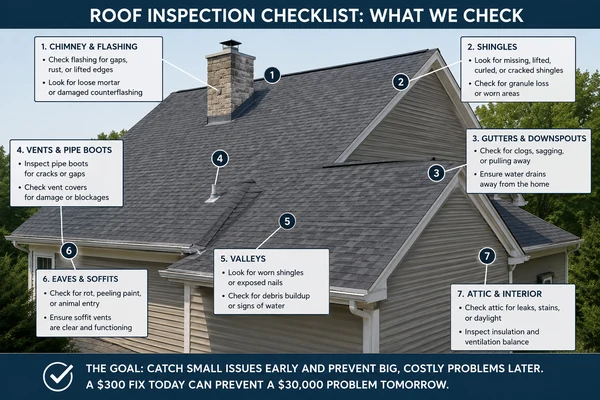
What a Roof Inspection Checklist Actually Covers
A roof inspection checklist is a fixed list of roof parts you check on a set schedule to catch damage while it’s still small. A good one goes past the shingles. It includes the flashing, the vents and pipe boots, the gutters, the roof deck, the attic ventilation, and the ceilings inside your home. The point is to find a $300 problem before it becomes a $30,000 one.
Homeowners tend to check the field of shingles because that’s the part they can see. That’s the part that fails last.
How Often Should You Inspect Your Roof in Massachusetts?
Twice a year, once in spring and once in fall, plus a quick look after any major storm. That’s the schedule the National Roofing Contractors Association recommends, and it’s the one I give every homeowner. The spring check catches what winter did. The fall check gets you ready for the next one.
Massachusetts adds a few extra triggers. After a nor’easter, an ice storm, or the kind of coastal wind we get on the South Shore, walk the perimeter and look for storm damage the next clear day. And if your roof is past 15 years old, treat every inspection as if it matters, because at that age it does.
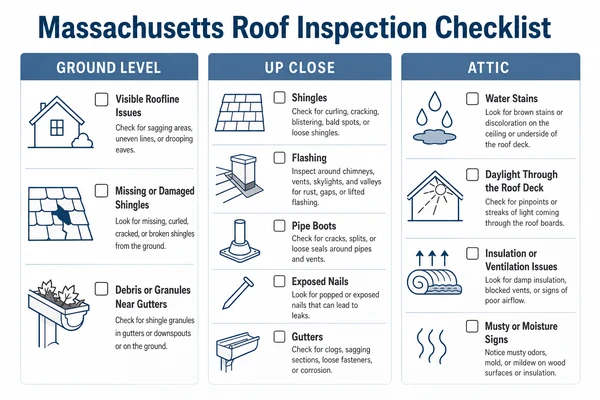
Your Massachusetts Roof Inspection Checklist
Work through this in three passes: from the ground, up close, and inside the attic. Start from the ground with binoculars. If you’re not steady on a ladder, use a drone or call a roofer. We don’t walk steep or wet roofs without fall protection, and neither should you.
From the ground, look for:
- Missing, cracked, or curling shingles, especially along the edges and ridgeline where wind lifts them first.
- Granules collecting in the gutters or at the base of downspouts, which look like coarse black sand.
- A roofline that sags or dips, which can mean a soft deck or trapped moisture underneath.
- Gutters that are loose, pulling away, or clogged, since water backing up rots the edge of the roof.
- Dark streaks or green patches, which are algae and moss holding water against the shingles.
Up close or by drone, check:
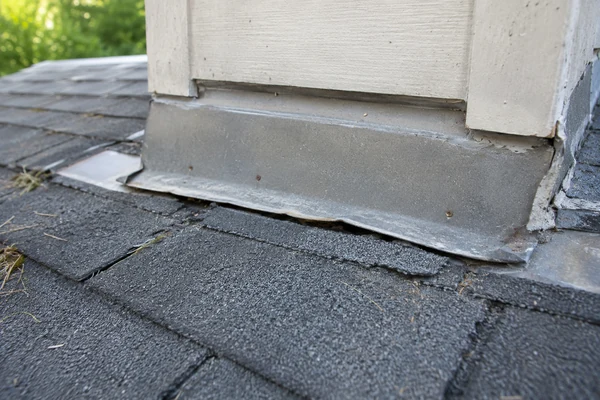
- Flashing at the chimney, in the valleys, and around skylights. Cracked or lifted flashing is the number one leak point I see.
- Pipe boots, the rubber collars around plumbing vents. The rubber dries out and splits, usually around year 10, long before the shingles are done.
- Nails that have popped up or backed out, and any spot where you can see exposed fasteners.
- The ridge cap and any shingles lifting at the corners.
In the attic and inside, look for:
- Water stains or dark rings on the ceiling or the underside of the deck.
- Daylight coming through the roof boards.
- Damp or matted insulation and a musty smell, both signs of a slow leak.
- Blocked soffit vents, which choke the airflow your roof needs.
Write down what you find and date it. Photos from each inspection make it easy to see what’s changing and speed up any future claim or repair decision.
Why Most Roof Leaks Aren’t the Shingles
I’ll disagree with most inspection guides on one point: the field of shingles is rarely where a roof fails. Across the roofs we do in Massachusetts, the water is almost always getting in at the details, the flashing, the valleys, a reused pipe boot, a bad nail line, or a missing ice-and-water barrier at the eaves.
That matters because a homeowner can stare at a clean-looking roof and miss a roof leak that’s already wetting the decking. It also explains why a cheap reroof fails early. If the crew laid new shingles over old flashing and tired pipe boots, they covered the shingle and left the leak. When we do a roof inspection, the flashing and the penetrations get as much attention as the shingles, because that’s where the trouble lives.
The other quiet culprit is ventilation. A hot, sealed attic cooks shingles from underneath and shortens their life. You can’t always see it from a ladder, but you feel it the second you put your head in the attic in July.
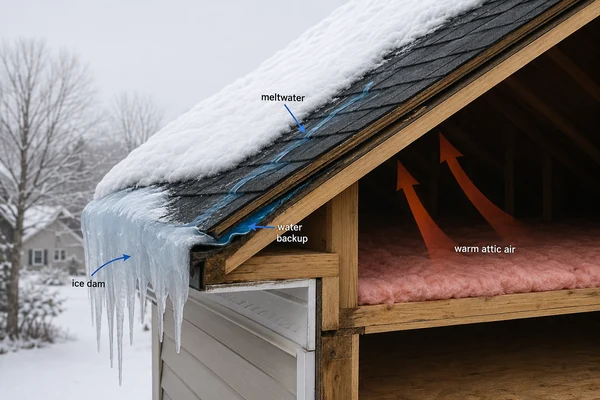
What a Massachusetts Winter Does to Your Roof
Ice dams are the roof problem that defines winter here. Heat leaks into the attic, melts the snow on the upper roof, and the water runs down and refreezes at the cold eaves. That ridge of ice traps more meltwater behind it, and the water works its way back up under the shingles and into the house.
The fix isn’t a bigger roof rake. According to the U.S. Department of Energy’s Building America program, ice dams come down to three things working together: air sealing the attic floor, adding attic insulation to the levels recommended for our climate (R-49 to R-60 in Massachusetts), and balanced ventilation with intake vents at the soffits and exhaust at the ridge. Do one and skip the others and the dam comes back.
Freeze-thaw is the slower version of the same damage. Water slips into a hairline crack, freezes, expands, and widens it, over and over from December to March. That’s why the spring inspection carries the most weight in New England, and why an aging roof that limped through one winter often can’t take another.
How Long Should a Roof Last in New England?
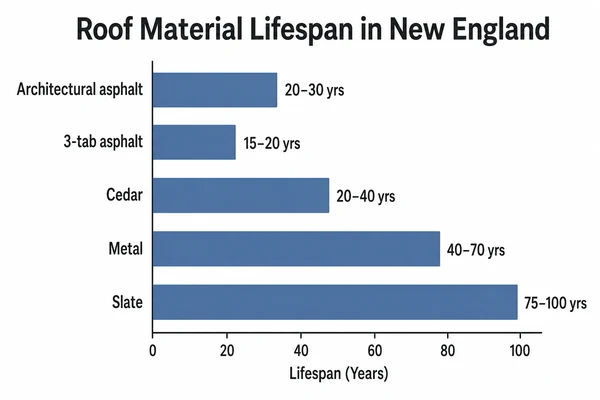
The architectural asphalt shingles on most Massachusetts homes, the kind we install, are generally rated to last 20 to 30 years. In our freeze-thaw climate, plan on the lower half of that, roughly 22 to 25 years, unless the attic is well ventilated, which can add another 5 to 10. We install GAF Timberline HDZ shingles as part of a full GAF system, and the system, the underlayment, flashing, and ventilation, is what actually carries that lifespan, not the shingle alone.
Typical lifespans here, by material:
| Roof material | Typical lifespan in New England | What to watch for |
|---|---|---|
| Architectural asphalt (GAF Timberline HDZ) | 20 to 30 years | Granule loss, curling at edges |
| 3-tab asphalt | 15 to 20 years | Brittleness, bald spots |
| Cedar shake | 20 to 40 years | Rot, moss, warping |
| Standing-seam metal | 40 to 70 years | Loose fasteners, seam separation |
| Slate | 75 to 100 years | Cracked or slipped tiles |
If you’ve seen a claim that asphalt roofs last 50 years, that’s a premium designer product, not the standard architectural shingle on most homes. Match the number to what’s actually on your roof.
Should You Repair or Replace Your Roof?
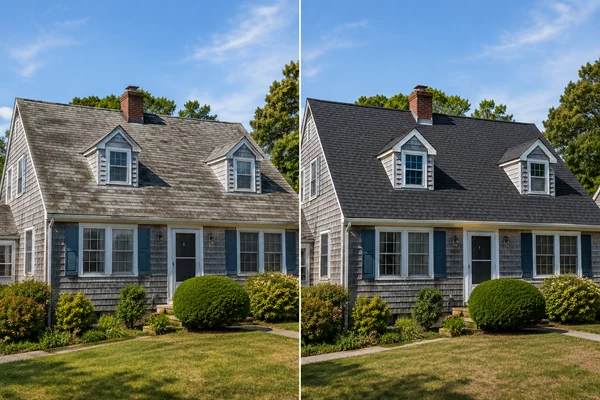
The rule I use on site is simple. If the roof is under 15 years old and the damage is in one spot, it’s usually a roof repair. If it’s past 20, leaking in more than one place, and shedding granules by the gutterful, you’re looking at a roof replacement. Widespread granule loss on a roof past the 20-year mark usually means you’re within 2 to 5 years of replacing it anyway.
We don’t sell fear. If your roof can be repaired, I’ll tell you that, and I’ll show you the photos either way. What I won’t do is patch a roof that’s three winters from failing and let you think you’re covered.
On cost, I won’t post a fake number, because every roof is different. When you’re ready for a real figure, we give you a written scope for a new roof, not a one-line number, so you can compare it honestly against anyone else.
When to Call a Professional (And What It Costs)
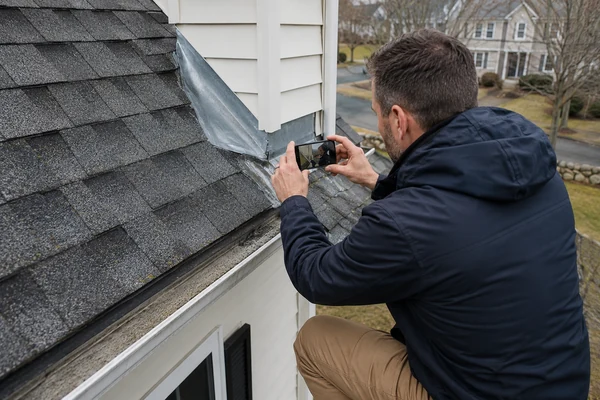
Call a roofer for a full inspection every 2 to 3 years, after any storm that causes visible damage, or as soon as you spot a stain on an interior ceiling. A standard visual inspection can identify common roofing problems, while drone and thermal-imaging inspections provide a more detailed assessment by detecting trapped moisture and soft decking that may not be visible to the eye.
When we inspect, we get on the roof when it’s safe, photograph every problem area, and explain what we found in plain English. You get a written scope and honest options, repair or replace, not a scare tactic. Most standard replacements we do install in 1 to 2 days once the material is on site, and our average is a single day.
A roof inspection checklist works because it makes you look past the shingles at the parts that actually leak. Do it twice a year, write down what you see, and when something looks off, talk to a roofer who’ll show you the photos before quoting you a dollar.
Frequently Asked Questions
How often should you do a roof inspection checklist in Massachusetts?
Run your roof inspection checklist twice a year, in spring and fall, plus a quick check after any major storm. That matches the National Roofing Contractors Association’s twice-yearly guidance. In New England, the spring check matters most because it catches ice-dam and freeze-thaw damage from winter.
What should be on a roof inspection checklist?
A complete roof inspection checklist covers shingles, flashing, valleys, pipe boots, gutters, the roof deck, attic ventilation, and interior ceilings. Don’t stop at the shingles. Most leaks start at the flashing and penetrations, which is where you should look hardest.
Can I inspect my own roof?
Yes, from the ground and inside the attic. Use binoculars, check the gutters for granules, and look for ceiling stains and daylight through the deck. Don’t walk a steep or wet roof. If you can’t see the flashing clearly, use a drone or call a roofer.
How long does an asphalt shingle roof last in New England?
Architectural asphalt shingles generally last 20 to 30 years, closer to 22 to 25 in a Massachusetts freeze-thaw climate. Good attic ventilation can add 5 to 10 years. Standard 3-tab shingles last less, about 15 to 20 years.
Do I need a roof inspection after a storm?
Yes. After a nor’easter, hail, or high wind, inspect for lifted or missing shingles, bent flashing, and gutter damage the next clear day. Catching storm damage early protects your home and supports an insurance claim if you file one.
Should I repair or replace my roof?
Repair if the roof is under 15 years old and the damage is isolated. Replace if it’s past 20, leaking in more than one place, and losing granules widely, which usually signals you’re within 2 to 5 years of a full replacement regardless.