Home / Roofers in Worcester, MA / Roofing Services / Emergency Roof Repair (24/7)
Emergency Roof Repair In Worcester, MA (24/7)
Water coming in right now? Call, and a person answers, at 2pm or 2am, on holidays and mid-storm. We tarp and stabilize the leak first, photograph exactly what failed, then schedule the permanent repair for a dry deck in daylight. Under Massachusetts code the work can start tonight and the permit goes in the next working business day.
What happens when you call
From Your First Call to a Dry Ceiling
A person answers and triages
You describe what you see, we tell you what to do in the next 10 minutes to protect the house, and the visit is quoted before anyone climbs a ladder. If it can hold until 7am, we say that instead of sending a truck. No callback queue, no voicemail maze.
Tarp, seal, stabilize
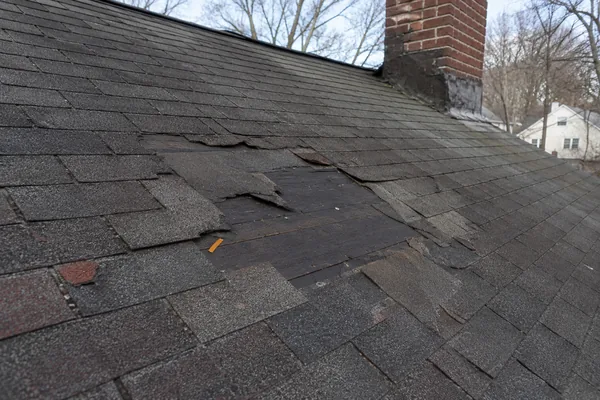
We stop the water at the entry point, then photograph exactly what failed: the lifted course, the split pipe boot, the failed flashing, the ice-packed eave. Anything unsafe overhead is made safe. The permit application goes in the next working business day, and we file it.
Permanent fix, on a dry deck
You get the photographs of what failed and an itemized scope for the real repair, done in daylight on a dry roof. If insurance is involved the documentation is already written. You decide the next step with a dry ceiling, not a dripping one.
Before you dial
The 2am Test: Call Now, or Bucket It Until 7?
This is the rule we run on the phone. Anything marked call-now needs somebody tonight. Anything marked hold will usually keep until daylight with a container under it. If you match rows in both groups, treat it as a call-now.
| What you can see or hear | Verdict | Why |
|---|---|---|
| Water dripping steadily, or running | Call now | The path is open and the volume only goes up while it rains |
| The ceiling is bulging or sagging | Call now | That is pooled water held by paint. Drain it over a bucket before it lets go |
| Water within about 3 feet of a light, a fan, or the panel | Call now | Kill that circuit first. This is the row on the list that can hurt somebody |
| Daylight visible through the deck from the attic | Call now | There is a hole. Everything that lands on the roof tonight is coming in |
| Water audible inside a wall | Call now | It has left the ceiling and is in the framing, where you cannot see what it is doing |
| A limb or debris resting on the roof | Call now | Load the roof was not sized for, and it moves in wind. Do not stand under it |
| Wind still gusting, material still lifting | Call now | Each gust takes more. A course half off tonight is fully off by morning |
| A stain that has not grown in the last hour | Hold | Photograph it and mark the edge in pencil. If the line is inside the stain by 7am, that is new information |
| Slow drip into an unfinished basement or garage, nothing more forecast | Hold | A bucket does the job overnight. Calling a crew out for this is waste and we will say so |
| Ice dam leak that stops when the temperature drops | Hold, but call | It stopped because the melt stopped, and it restarts at the next thaw. Nothing done on an iced roof at night is safe or effective |
Not sure which row you are on? That is what the phone call is for, and the triage costs nothing.
You Do Not Have to Wait for a Permit. That Is in the Code.
Massachusetts Residential Code 780 CMR 51.00, section R105.2.1, covers emergency repairs. It states that the permit application “shall be submitted within the next working business day to the building official.” Work to stop active water entry starts now. The paperwork follows in the morning.
This is the most useful thing a Worcester homeowner can know at 11pm, and it appears on almost no roofing page in the state. People sit under a dripping ceiling on a Friday night believing nothing can legally happen until City Hall opens Monday. The section exists precisely so that is not true. Leaving a roof open for 3 days to wait for a form is the outcome it was written to prevent.
| Stage | What happens | Permit |
|---|---|---|
| Tonight | Tarp, seal, stabilize, isolate power, photograph the cause | None needed to begin. R105.2.1 |
| Next working business day | Application filed with Worcester Inspectional Services, 25 Meade Street, 508-799-1198 | Application submitted |
| The permanent repair | Scheduled on a dry deck in daylight, inspected as normal | Normal permitted work |
We file it. You do not need to stand in line at 25 Meade Street for work we did at midnight. And nobody should be asking you to sign a contract at 2am to make it happen.
Source: 780 CMR 51.00 R105.2.1, Massachusetts Residential Code, 10th edition, amended effective 11 October 2024. Applications go to the City of Worcester Department of Inspectional Services, 25 Meade Street, 508-799-1198.
Why this page is written this way
Three Questions Nobody Was Answering
On the evening of Tuesday 19 May 2026, a line of storms came through Worcester County and tore part of the roof off a National Guard building on Lincoln Street, leaving it in the road. A tree came down on a house on Copperfield Road, more came down on homes in Spencer, and Worcester Fire ran about a dozen storm-damage calls that night.
The calls that came in were not confused about roofing. People had already spent 20 minutes reading roofing websites and still could not answer 3 things: is this an emergency or can it hold until morning, what actually happens on the first visit, and can somebody legally start work tonight without a permit.
Every page they had read said 24 hours a day, fast response, we work with your insurance, free inspection. Not one answered the 3 questions. So this page answers them, in that order, before it says anything about us.
Storm details as reported by Boston 25 News, 19 and 20 May 2026.
A Winter Emergency in Worcester Is a Different Job
Most emergency roofing pages describe a summer emergency: something tore, we cover it, done. A large share of Worcester’s emergencies do not work like that, and pretending otherwise is how people get hurt.
A tarp needs 2 things to function. A surface it can be fastened to, and enough slope and cleanliness to shed water off the edges rather than pond in the middle. A roof carrying snow and ice offers neither until the snow comes off, and clearing snow off a pitched roof in the dark is the most hazardous part of the whole job.
Worcester is a high-load location by code: a 50 psf ground snow load and a 117 mph design wind speed in Table R301.2(2) of the Massachusetts Residential Code. A loaded roof in February is already carrying weight the structure was sized for. Adding a person and a ladder is a judgement call, not a formality. Cold changes the materials too. GAF puts the shingle sealing threshold at 40 F, so nothing new that goes down below that is bonding tonight, and shingles that would flex in September crack when they are lifted.
The winter of 2026 made the point at scale. Worcester has taken 67.1 inches of snow in calendar 2026 through 21 August, against a 1991 to 2020 NOAA normal of 72.9 inches at the Worcester Regional Airport station, and most of it fell inside 10 weeks. That is the other thing a Worcester winter does. It does not send one house looking for a roofer, it sends the whole county looking in the same fortnight, which is why the honest answer on a February call is sometimes a queue.
So winter response is staged rather than instant. Sometimes we clear and stabilize across 2 visits. Sometimes the honest answer at 2am is that nothing anyone does on the roof tonight will be safe or effective, and the right move is managing the water inside until first light. We say that on the phone rather than send somebody to stand in your driveway and charge you for the trip.
The call we get most in February
If There Is No Hole, a Tarp Will Not Help You
Many of the winter calls we take are ice dams, and an ice dam is not a hole in the roof. Covering the roof does nothing about it.
Meltwater runs down, hits the ridge of ice sitting on the cold overhang, and backs up behind it. Shingles shed water moving downhill. They cannot hold back water sitting still and being pushed uphill, so it goes under the courses and into the house, usually appearing at an exterior wall or a ceiling edge rather than mid-room.
The immediate work is clearing the dam and the snow feeding it with low-pressure steam, without taking the shingles off in the process. If somebody arrives with a hammer, a chisel, or a bag of salt pucks, send them away. Each of those strips granules and buys you a bigger problem in April.
The actual fix is not on the roof at all. It is the attic heat that melted the snow, which makes it a ventilation and insulation job. That is why a house with an ice dam this year usually had one last year too. Not sure whether you have a dam, a wind-lifted course, or something else? That is what leak tracing is for, once the water has stopped.
The Tarp Has a Clock on It
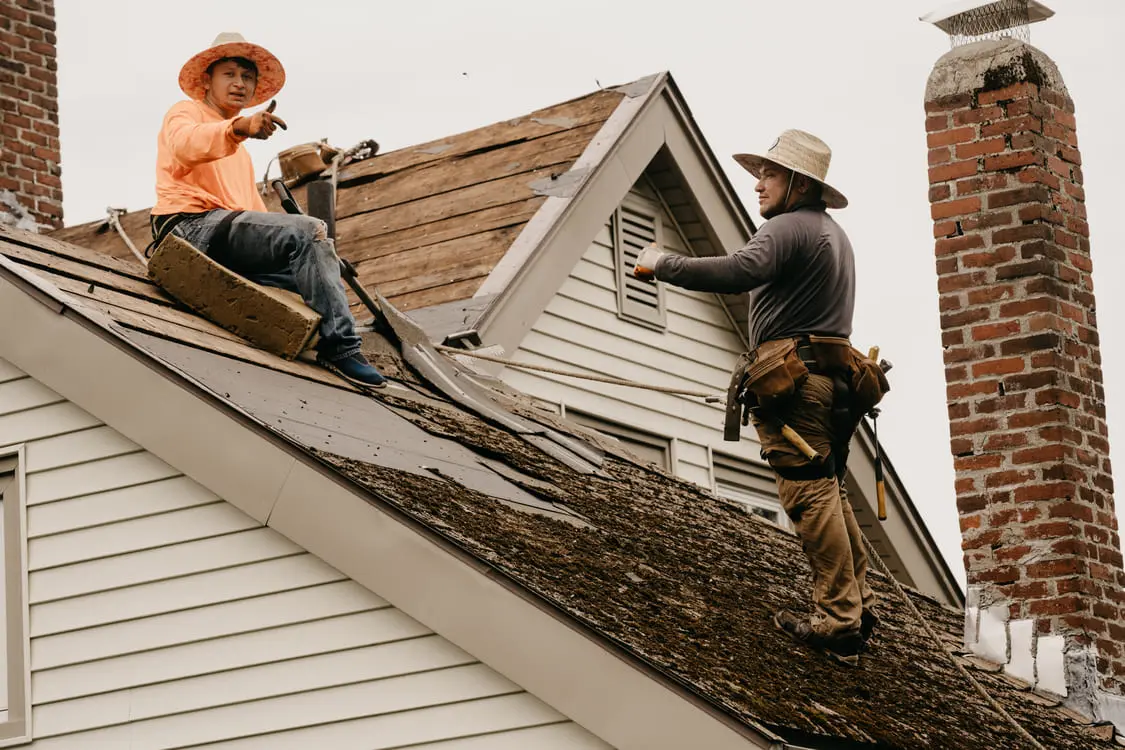
We re-tension a tarp at 30 days and will not leave one past 90. That is our rule, not a code rule, and it is worth knowing which is which.
No Massachusetts regulation and no Worcester ordinance sets a number of days for temporary weather protection. Plenty of contractor websites imply one exists. It does not, and we are not going to invent a rule to manufacture urgency.
The limit is physical. Fasteners work loose under wind cycling. Poly degrades in ultraviolet light, faster on a south slope. A tarp that has taken a full winter of gusts is holding by habit rather than by tension, and the failure is not gradual. It goes at 3am in the next storm, usually onto the ceiling you already had repaired.
So when we tarp a roof you get a date for the permanent repair before we leave, and if insurance is the reason it has to wait, the 30 day re-tension gets scheduled at the same time. Nobody should be looking at blue poly in July.
Our limits, in advance
What We Will Not Do
Emergency work is the easiest place in this trade to take advantage of somebody, because the customer is frightened and it is dark. Here is where our limits sit, so you can hold us to them.
We will not walk an iced pitched roof at night. Not for you, not for anyone. If it cannot be done safely we say so and tell you what to do inside instead.
We will not tarp above roughly 35 mph sustained wind. A tarp that lifts is a sail with your shingles attached. Waiting for the front to pass is the difference between a repair and a bigger repair.
We will not quote a replacement at 2am. Nobody can assess a roof properly in the dark in the rain, and a contract signed by a homeowner watching water come through a ceiling is not a contract anyone should want.
We will not tell you to file a claim we do not think is there. If the damage is real we photograph it and hand you the file. If what you have is a roof that got old, we say that instead.
Insurance: The Emergency Work and the Permanent Repair Are 2 Different Conversations
Most policies expect you to take reasonable steps to stop further damage after a loss. An emergency tarp is that step, which is why carriers usually treat it separately from the permanent repair.
The Massachusetts Division of Insurance puts the coverage line plainly: “Generally damage to both the exterior and interior of a home resulting from weight of ice and snow or ice dams is covered under a homeowners policy. However, only the area damaged in the loss will be covered. Further damage sustained due to wear and tear or neglect will not be covered.”
Read that second sentence twice. The area damaged in the loss is covered. The additional area that got wet over the next 4 days because nobody stopped the water is where the argument starts. That is a better reason to call tonight than any amount of urgency language.
What helps a claim, in order: photographs taken during the event before anything is moved; the itemised, dated emergency invoice; a dated record of the roof from before the storm, which is what a documented photo inspection is for; and prompt notice to the carrier.
We photograph the cause, the work and the finished stabilization, and hand you the file. We do not promise an approval, and any roofer who does is telling you something they cannot know. If the damage turns out to be a symptom of a roof at the end of its life, we show you that with photographs too, and it becomes a replacement conversation with the tarp already protecting the house while you decide. For how the documentation works on a wind or hail claim, see storm damage roof repair.
Source: Massachusetts Division of Insurance, homeowners insurance FAQ.
While you wait
What To Do, and What Not To Do
The minutes before the crew arrives matter. Protect the inside of the house and let the roof wait for people with harnesses.
Do this now
- Move furniture and electronics out from under the leak, then put a container down
- Photograph everything now, before anything is moved or cleaned up
- Cut the power to that area at the breaker if water is near a fixture or an outlet
- If a ceiling bulge forms, pierce it with a screwdriver over a bucket so it drains instead of bursting
Please don’t
- Go on the roof, especially in wind, rain, or ice
- Use light fixtures or outlets that water has reached
- Sign anything handed to you by somebody who knocked on your door after the storm
- Throw away damaged items before they are photographed
Where we cover
Worcester and Worcester County
The emergency line covers Worcester and the surrounding towns in Worcester County. If you are outside it, say so on the call. We will tell you straight rather than send a truck 2 hours for a job somebody nearer should be taking tonight.
Powersol Roofing is owned by Manuel “Manny” Reynoso and has worked out of 100 Hancock St, Quincy, MA 02171 since 2020. (617) 631-5435. Emergency line answered 24/7, office hours Monday to Sunday 9:00am to 6:00pm. More on Powersol Roofing in Worcester and how we work.
Straight answers
Frequently Asked Questions
Do I need a permit before emergency roof work can start in Worcester?
No. Under 780 CMR 51.00 R105.2.1, emergency repairs can begin before a permit exists, as long as the application reaches the building official within the next working business day. In practice: we stabilize tonight, we file at 25 Meade Street in the morning, and you sign nothing at 2am. If nobody files, the work stays unpermitted, which surfaces later at resale or inside a claim. That is the part worth getting right, and it is the part a storm chaser skips.
What does an emergency roof visit cost?
The emergency visit is quoted before anyone climbs a ladder, whatever the hour. You will know the number when you call, not after. What moves it: how many planes the damage crosses, whether it sits above a valley or a chimney, the pitch, whether the roof is slate, how far the anchor points are from the damage, and whether snow has to come off before anything can be fastened. Several of those cannot be judged from a photograph, which is why we ask questions on the phone.
How fast can you actually get to me?
Across Worcester and Worcester County our median time from call to arrival is 2 hours 15 minutes in daylight and 3 hours 30 minutes overnight. During a regional storm event that number stops meaning anything, because every roofer in the county is dispatching at once. On those nights you get an honest window on the phone, and sometimes the honest window is the following morning.
Can this wait until morning?
Sometimes. A steady drip, a bulging ceiling, water within 3 feet of a fixture or panel, daylight through the deck, water audible inside a wall, a limb on the roof, or wind still lifting material are all call-now. A dry stain that has not grown in an hour, or a slow drip into an unfinished basement with nothing more forecast, will usually hold until 7am with a bucket under it. Call either way. We would rather talk you out of a call-out than take one you did not need.
Is the emergency line really answered 24/7?
Yes. (617) 631-5435 reaches a person at night, at weekends and during storms, not an answering service and not a national referral desk. You get a straight answer on that call about what is happening and whether the roof is safe to be on, including when the answer is that nothing anyone does on the roof tonight will help.
My ceiling is leaking but there is no hole in the roof. What is happening?
Usually an ice dam. Meltwater backs up behind a ridge of ice at the eave and travels up under the shingles, which shed water running down but cannot hold water sitting still. A tarp does nothing, because there is no hole. Clearing the dam with low-pressure steam is the immediate work. The attic heat that caused it is the real fix.
How long can a tarp stay on the roof?
We re-tension at 30 days and will not leave one past 90. That is our rule, not a code rule, and no Massachusetts or Worcester regulation sets a number. The limit is physical: fasteners work loose, poly degrades in ultraviolet light, and a tarp that has taken a full winter is holding by habit rather than tension. When it fails, it fails all at once, in the next storm.
Will homeowners insurance cover an emergency roof repair?
Sudden damage such as wind or a fallen limb often is. Wear and age are not. The Massachusetts Division of Insurance states that damage from the weight of ice and snow or from ice dams is generally covered, that only the area damaged in the loss is covered, and that further damage from wear and tear or neglect is not. Keep the itemised emergency invoice, photograph everything before cleanup, and give the carrier prompt notice. We hand you the documentation. We do not promise an approval.
It is a two-family, or I rent. Who calls and who pays?
Whoever owns the roof deck is responsible for the emergency work, which on a Worcester two-family or three-decker is the owner, not the tenant. If you rent, call the owner first and us second, and photograph your own belongings for your renters policy. In a condo the roof is almost always common area under the association master policy, while the ceiling and everything below it sits with the unit owner, so both usually end up filing. We work on the owner’s authorisation and photograph the whole thing for both claims.
Someone knocked on my door after the storm offering to fix my roof. Should I use them?
The Attorney General’s guidance is to be extra cautious if a contractor solicits business by telephone or by knocking on the door, to obtain a written contract or estimate describing the exact work and the price, and to be wary of anyone demanding full payment up front. Home Improvement Contractor registration applies to most 1 and 2 family residential work, and a Construction Supervisor License is required where the work is structural. Check the registration on the state Office of Consumer Affairs and Business Regulation lookup before you sign anything.