Yes, you can repair just part of a roof, and plenty of the time you should. If a storm tore six shingles off the back slope and the rest of the roof is sound, replacing the whole thing is a waste of your money. We tell homeowners that all the time, even when a bigger job would pay us more.
But “can you” and “should you” are two different questions. A partial repair only holds up when the roof around it is still doing its job. When it isn’t, a patch buys you a few months and hides the real problem. This is how we sort it out on Massachusetts roofs, and what we’d want you to check before you pay anyone to patch anything.
A partial roof repair, sometimes called a spot repair, fixes one problem area instead of replacing the whole roof. It usually means swapping a few damaged shingles, resealing flashing at a chimney or vent, or stopping a small leak on one slope. The rest of the roof stays where it is.
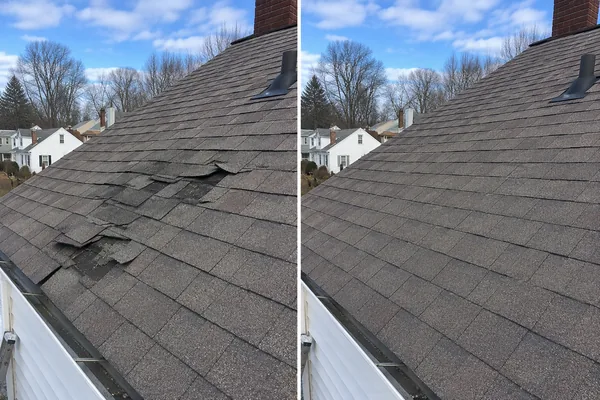
So Can You Really Fix Just One Section Of A Roof?
Yes, if the damage is contained and the roof around it still has life left. The catch is that roofs rarely fail in a tidy little square. A single cracked pipe boot or a few wind-lifted shingles on a ten-year-old roof is a clean partial roof repair. A leak that shows up in three spots after every heavy rain is telling you something bigger.
The honest test we use: would this repair still make sense in two years, or are we just delaying a call you’ll have to make anyway?
When Repairing Part Of A Roof Is The Right Call
Repair, don’t replace, when the damage is young, local, and dry underneath. That covers most of these:
- The roof is under about 15 years old and the shingles still flex instead of cracking.
- The damage came from one event, like a Nor’easter or a fallen branch, not slow age.
- It’s limited to one slope or one detail, like a vent or a small valley.
- The decking under the damage is solid, with no soft or spongy wood.
- You’re not seeing water stains inside or in the attic.
Architectural asphalt shingles are built to last around 30 years, according to InterNACHI’s life expectancy chart. If your roof is well inside that window and the rest checks out, a spot repair can carry it the rest of the way.
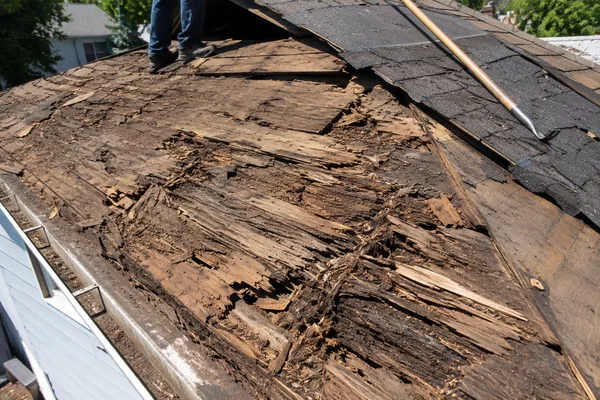
When A Patch Is Just Wasting Your Money
Skip the patch when the roof is old, the damage is spreading, or water has already gotten in. Warning signs we see on older Massachusetts homes:
- The roof is past 20 years. Shingle maker Owens Corning tells homeowners to start planning for replacement around the 20-year mark, even before problems show.
- Granules are washing into the gutters and bald spots are showing on the shingles.
- More than about a third of the roof is damaged. Once you pass roughly 30 percent, a 2026 This Old House cost analysis notes it’s usually time to replace instead of patch.
- It’s already been patched two or three times.
- There’s rotted decking or active leaking inside.
Patching an aging roof is like putting a fresh tire on a bent rim. The new part is fine. Everything around it isn’t.
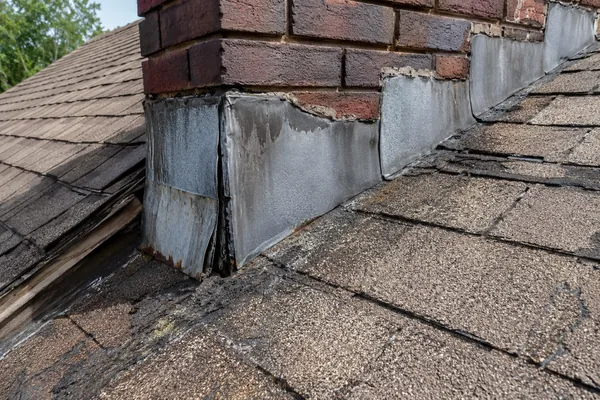
The Shingle Usually Isn’t The Real Problem
The shingle is what you see. It’s rarely where the leak starts.
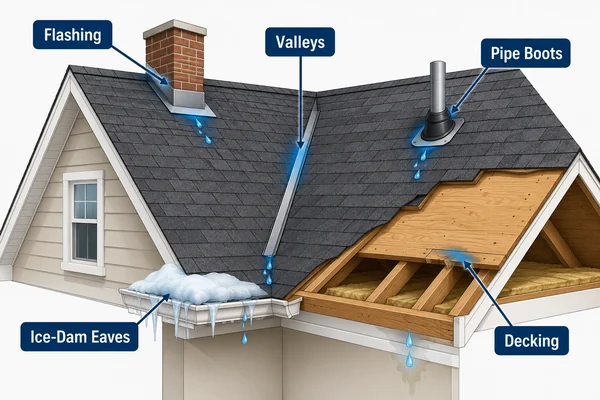
Across the roofs we work on, the water is almost always coming from somewhere else: old flashing at a chimney, a reused pipe boot from the last install, nails driven in the wrong spot, a missing ice-and-water barrier, or rotted decking hiding in a valley. InterNACHI makes the same point about flashing, that the metal itself lasts but its connections are what fail, so they need checking every season.
In Massachusetts, ice dams make this worse. Snow melts, refreezes at the cold eave, and pushes water back up under the shingles. That’s not a shingle problem. That’s the full roofing system failing at the edge, and no amount of new shingles fixes it if the leak barrier underneath was never there. When someone calls about a leak around the chimney, the flashing is the first thing we pull back, not the shingles.
This is the part a quick patch misses. Replace the visible shingle, leave the bad flashing, and you’ve spent money to move the leak six inches.
Will The New Shingles Match The Old Ones?
Probably not, and any roofer who promises a perfect match hasn’t been doing it long.
Shingles fade in the sun and shed granules as they age, so a bundle of the “same” color off the shelf comes out lighter and cleaner than the ten-year-old shingles around it. Manufacturers also discontinue colors, so an older roof may not have an exact match made anymore. On a back slope nobody sees from the street, that’s fine. On the front face of the house, a patch can stand out for years. We’d rather tell you that before we do it than after.
What a Partial Roof Repair Costs in 2026
The cost of a partial roof repair depends on what is damaged, where the problem is located, and how difficult the area is to access. Common repairs include:
- Replacing damaged flashing around a chimney or wall
- Repairing a roof valley
- Fixing a leaking skylight
- Replacing a small section of damaged or missing shingles
Two factors often make roof repairs more complex in New England: weather and access. Coastal winds on the South Shore, heavy ice loads, steep older rooflines, and higher urban labor costs can all increase the scope of the work.
A professional inspection is often worthwhile before approving a repair. It helps identify the actual source of the leak and prevents money from being spent on a temporary patch that does not solve the underlying problem.
Does A Repair Affect Your Roof Warranty?
It can, in two ways, and both catch people off guard.
First, a manufacturer’s system warranty usually assumes the whole roof went on as one matched system. Mixing shingle brands or lines on a repair, or a sloppy install, can put that coverage at risk. Second, the workmanship warranty from whoever did the original roof may not cover another company’s patch. We install full GAF systems, so we keep repairs consistent with what the warranty expects. Before you let anyone patch a roof that’s still under warranty, ask how the repair affects your coverage.
Repair, One Slope, Or Full Replacement
Three real options, not two, and most homeowners forget the middle one.
If one side of the roof took the weather for years, or a storm hit one slope hard while the others held up, you can replace that single slope instead of patching it or redoing the entire roof. It’s a middle path that a lot of pages skip. Here’s how the three compare.
The rule most of us use, and the one Bob Vila’s repair-or-replace guidance lands on too, is simple: small and recent leans repair, old and widespread leans replace. When you’re genuinely on the fence, weigh a full roof replacement against what you’d spend patching the same roof twice more, and read our take on replacing the whole roof before you decide.
The Question To Ask Before You Patch Anything
The real question isn’t repair or replace. It’s whether anyone has actually looked at the whole system, not just the shingle that’s bugging you. Storm season makes this urgent, because storm damage on one slope can hide a flashing or decking problem that a patch will paper right over.
A good inspection tells you where the water is really going and how much roof you have left. Once you know that, repairing part of your roof is either an easy yes or an obvious no. If you want a straight read, book a roof inspection and we’ll show you photos of what we find, then tell you honestly whether a repair will hold. We’ve done exactly that on roofs in Taunton, Randolph, and Dorchester, and plenty of times the answer was “you don’t need us yet.”
Common Questions About Repairing Part Of A Roof
Can you repair just part of a roof?
Yes. You can repair just part of a roof when the damage is limited to one area and the rest of the roof is still sound. A spot repair replaces a few shingles, reseals flashing, or stops one leak. It’s the right move on a younger roof and the wrong move once the roof is worn out underneath.
Will a roof repair match my existing shingles?
Usually not perfectly. Older shingles fade and lose granules, so new ones look lighter and cleaner, and some colors are discontinued. On a hidden back slope that’s fine. On the front of the house, a patch can be visible for years, which is worth knowing before you approve it.
When should you replace a roof instead of repairing part of it?
Replace instead of repairing part of a roof when it’s past about 20 years, worn across more than roughly 30 percent of its surface, leaking inside, or already patched several times. Owens Corning advises planning for replacement around the 20-year mark even before problems appear.
Can you replace just one slope of a roof?
Yes. Replacing a single slope is a real middle option between a spot repair and a full replacement. It makes sense when one side is worn out or storm-hit while the others are fine. The tradeoff is that the new slope won’t match the aged shingles on the rest of the roof.
Does repairing part of a roof void the warranty?
It can. A manufacturer’s system warranty assumes a matched, correctly installed roof, so mismatched materials or a poor repair can jeopardize it, and the original workmanship warranty may not cover another company’s patch. Ask how any repair affects your coverage before the work starts.
Are roof repairs covered by homeowners insurance in Massachusetts?
Sometimes. Sudden storm, wind, or hail damage is often covered, while slow wear and age are not. You’re responsible for your deductible, and approval depends on your policy and the adjuster. We document damage with photos and can meet the adjuster, but we never promise a claim will be approved.