On a Massachusetts roof, a real inspection checks nine things: the shingles, the flashing, the pipe boots, the valleys, the gutters and drip edge, the wood decking underneath, the attic and its ventilation, any sign of water inside the house, and the roof’s age. What a roofer looks for is the pattern behind the damage. One bad patch usually means a repair. Wear spread across the whole roof usually means it’s time to replace. Below is what we check on a roof inspection, what you can catch from the ground yourself, and how we make the repair-or-replace call.
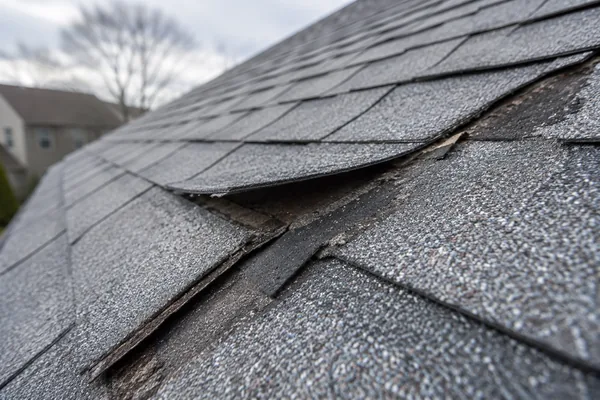
What Does A Roof Inspection Actually Cover?
A roof inspection is a close look at every part of your roof system, inside and out, to find damage and measure how much life is left. A real one covers the surface, the flashing, the structure below, and the attic, then ends with a written recommendation: repair, replace, or wait.
This is the run we make on a pitched shingle roof, the most common type on Massachusetts homes:
- Shingles: cracked, curled, or lifted shingles, and bare spots where the granules have worn off.
- Flashing: the metal around chimneys, skylights, and walls, where most leaks actually start.
- Pipe boots: the rubber collars around vent pipes, which crack and leak long before the shingles fail.
- Valleys: the lines where two roof planes meet and carry the most water off the roof.
- Gutters and drip edge: whether water is leaving the roof or backing up under the edge.
- Decking: soft spots underfoot that mean the plywood below has taken on water.
- Attic and ventilation: daylight, damp insulation, mold, or trapped heat.
- Water signs inside: stains on ceilings, in corners, or around the chimney.
- Age: how the roof’s years compare with what the material should give you.
Then comes the pattern. If everything points to one spot, say a cracked pipe boot over a single ceiling stain, that’s a roof repair. If we’re finding worn shingles, failed flashing, and soft decking across the whole roof, a patch just moves the leak somewhere else.
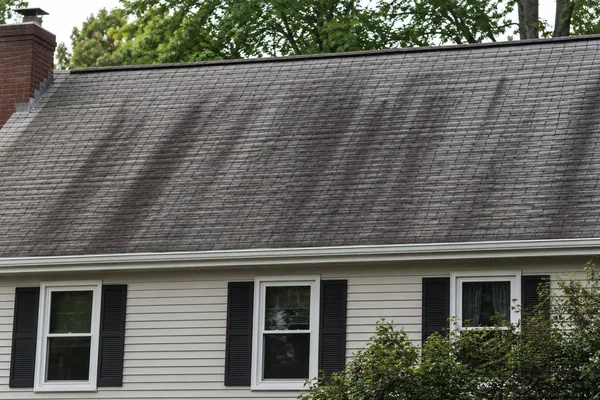
What You Can See From The Ground
You don’t need to climb up to catch the early warnings. From the driveway, look for shingles that are lifting or curling at the edges, dark streaks or black stains (that’s algae, common on north-facing New England roofs), and grit that looks like coarse sand collecting in the gutters. That grit is shingle granules, and a lot of it means the shingles are wearing out.
Inside, watch for a ceiling stain that keeps coming back, a soft or spongy spot in the roofline, or water showing up near the chimney after a storm. Homeowners tell us “my shingles are lifting” or “there’s water by the chimney” far more often than they say flashing or decking. Those plain descriptions are usually right, and they’re enough to book a look.
One honest caveat: from the ground, a roof can look fine and still hide a real problem. That’s the whole reason a close inspection exists.
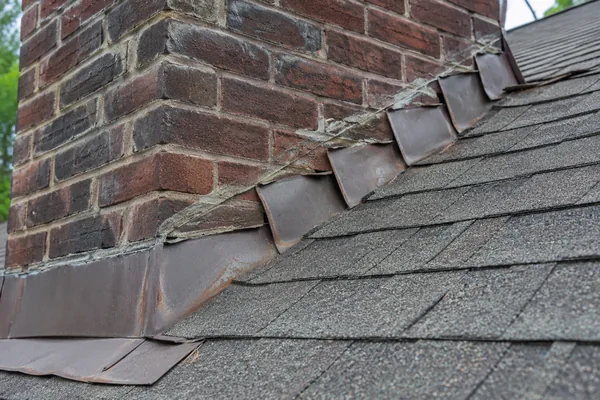
What We Find Up Close That The Driveway Hides
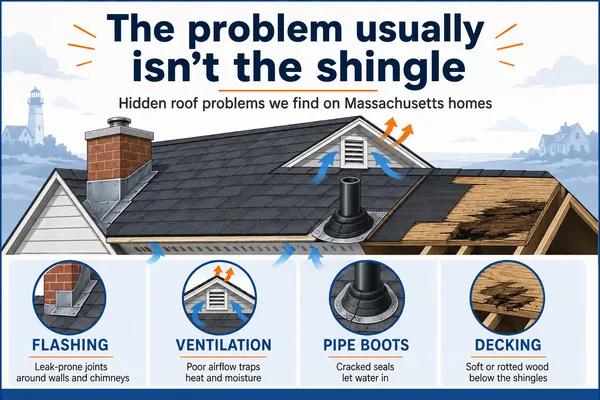
Across the roofs we replace, the problem usually isn’t the shingle. It’s the flashing, the ventilation, a reused pipe boot, bad nail placement, a missing ice-and-water barrier, or decking that quietly rotted for years. A homeowner can’t see any of that, and a rushed inspection skips it.
Two culprits show up on New England roofs again and again. First, bad flashing at chimneys and walls, where a past crew caulked over the problem instead of replacing the metal. Second, poor attic ventilation, which bakes shingles from underneath in summer and feeds ice dams in winter. Get the ventilation wrong and you shorten the life of a brand-new roof.
When we tear off an old roof, we check the deck before anything new goes down. If the plywood is soft or rotted, we replace it, and we show you the photos first. Nobody likes a surprise. But hiding rot under new shingles is how a small job turns into a big bill in five years.
Repair Or Replace? How We Decide
We don’t sell fear. If your roof can be repaired, we’ll say so. The call comes down to five things, and you can follow the same logic we do: whether the damage sits in one area or spreads across the roof, how much water has reached the decking and insulation, whether the structure underneath is sound, how old the roof is against its expected life, and how well the last install was done.
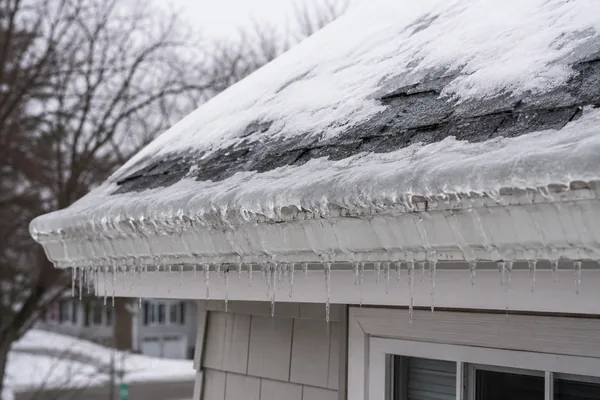
Most single leaks are fixable. Once the decking is wet across a wide area or the roof is near the end of its life, a full roof replacement costs less than paying to fix the same roof twice. We lay out the whole decision in plain terms in our guide on whether to repair or replace your roof.
How Long Should Your Roof Last In Massachusetts?
Age frames everything else. A well-kept roof in the middle of its life is usually worth repairing. An aging roof with a history of neglect usually isn’t, because the small problems no one fixed have already spread.
Here’s what the common materials give you, and where the Massachusetts climate cuts into it. These are typical ranges from industry sources like This Old House and shingle maker GAF; your roof depends on install quality, ventilation, and how many winters it has taken.
We install GAF Timberline HDZ architectural shingles as part of a full GAF roofing system, which is built to hold up to New England wind and ice. If your home has a flat roof or a metal roof, the checks shift, but the goal is the same: find the water before it finds the wood.
What A Roof Inspection Costs, And How Often You Need One
Most homeowners hire a professional to inspect their roof regularly, especially after severe weather or when signs of damage appear. Drone and infrared inspections may be used when a more detailed assessment is needed.
Compared with the cost of a full roof replacement, routine inspections are a practical preventive measure. An inspection can identify damaged shingles, flashing problems, moisture intrusion, and other issues while they are still manageable repairs.
Storm And Insurance Inspections
After a wind or hail event, we inspect for storm damage, take photos, and tell you honestly whether it’s real damage or normal wear. If you open an insurance claim, we document what we find and meet the adjuster. We won’t promise the carrier will approve anything, and we won’t tell you to file if the damage isn’t there. You’re responsible for your deductible and for anything the carrier won’t cover. No “free roof” talk. That’s not how we work.
What Makes A Powersol Inspection Different
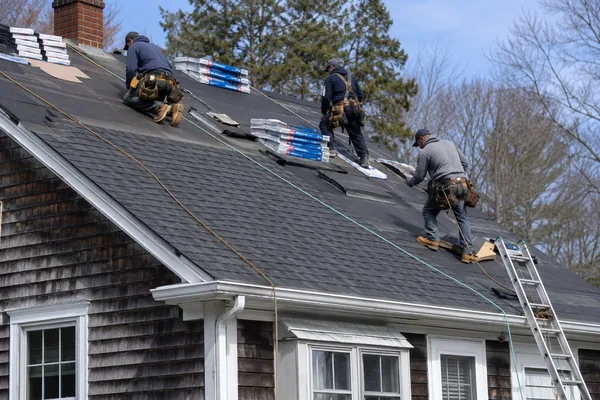
We’ve been on Massachusetts roofs since 2020, working in Taunton, Randolph, Dorchester, and across the South Shore. Two things you’ll notice. We photograph everything and explain it in plain words, so you see exactly what we see. And we check the whole system: the deck, underlayment, flashing, ventilation, drip edge, pipe boots, and ridge cap. The shingles are just the part you can see.
Most of our replacements go on in one to two days once the material is delivered and the weather holds, and our average install is a single day. We also coordinate with solar when your roof needs to work with panels, and we size attic ventilation correctly so the new roof reaches its full life instead of cooking from the inside.
Frequently Asked Questions
What does a roofer look for during a roof inspection?
A roofer looks for damage and its pattern across nine areas: shingles, flashing, pipe boots, valleys, gutters and drip edge, decking, attic and ventilation, interior water signs, and the roof’s age. Isolated damage points to a repair. Widespread wear points to a replacement.
How much does a roof inspection cost in Massachusetts?
Most homeowners pay between $125 and $378, with an average near $249 (2026 Angi cost data). Some roofers fold a basic inspection into a free estimate. Ask what’s included, and whether you get dated photos and a written recommendation.
How often should I have my roof inspected?
At least once a year, and after any major storm. Roofs over ten years old should be checked yearly. In Massachusetts, add a look after nor’easters, heavy wind, or hail.
Can I inspect my own roof?
You can spot a lot from the ground: lifted shingles, black algae streaks, granules in the gutters, and ceiling stains inside. Stay off the roof itself. A professional finds the hidden problems, like failing flashing or soft decking, that you can’t see from the driveway.
How do you decide between a roof repair and a replacement?
We look at whether the damage is isolated or widespread, how much water reached the decking, whether the structure is sound, the roof’s age, and the quality of the last install. One leak is usually a repair. A wet, worn, or aging roof is usually a replacement.
What happens if you find rotted decking after tear-off?
We show you photos, replace the bad wood, and explain the added cost before we go further. Rotted decking is common on older roofs, and it’s the reason a written scope beats a quick phone number.
How long does a roof replacement take?
Most standard replacements take one to two days once material is on site and the weather holds. Our average is a single day.
Get your roof looked at
If your shingles are lifting, there’s a stain on the ceiling, or you just want to know how much life your roof has left, book an inspection with Powersol. We’ll get on the roof, take photos, and give you an honest repair-or-replace answer, even when the answer is that you’re fine for now. Contact us to schedule.