A roof inspection report should include 9 things: the roof covering and its age, dated photos of every defect, a written note of anything the inspector couldn’t see, findings sorted by urgency, the attic and ventilation, the flashing and roof penetrations, the drainage, a repair-or-replace call with the reasoning behind it, and a scope of work you can hand to a second contractor without explaining anything.
Most reports handed to Massachusetts homeowners include 4 or 5 of those.
Here’s what a real one contains.

What Is A Roof Inspection Report?
A roof inspection report is the written record of an inspection. It isn’t a contract, and it isn’t the paperwork you sign to buy a roof.
A roof inspection report is a written document that records the condition of a roof on a specific date. It names the roof covering and its approximate age, lists every defect found with photographs, states which areas the inspector could not access, ranks the findings by urgency, and recommends repair, replacement, or monitoring.
That last part matters. A report that only recommends replacement isn’t a report. It’s a proposal wearing a report’s clothes. The document should be useful to you even if you never hire the company that wrote it.
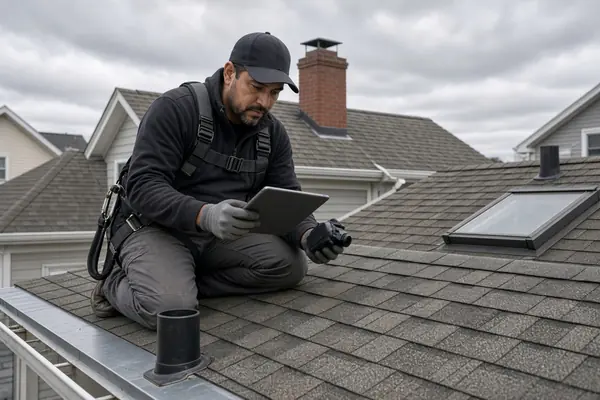
The 9 Things A Real Roof Inspection Report Includes
Run whatever you were handed against this list. If it scores under 7, ask for the rest before you sign anything.
| # | What the report must contain | Why it matters | Yours? |
|---|---|---|---|
| 1 | Roof covering type, layer count, and approximate age | Layer count decides whether you can legally reroof over the old one | |
| 2 | Date, time on site, and the weather that day | A roof read in driving rain reads differently than one read in October sun | |
| 3 | Dated photos of every defect, labeled by location | Without location labels the photos could be anyone’s roof | |
| 4 | A written list of what the inspector could NOT access | The most honest section in any report, and the one most often missing | |
| 5 | Attic findings: moisture, daylight, insulation depth, ventilation | Half of what kills a Massachusetts roof shows up from underneath | |
| 6 | Flashing, valleys, pipe boots, chimney, skylights | The edges and penetrations leak long before the field of the roof does | |
| 7 | Gutters, downspouts, drip edge, ice barrier at the eaves | This is the section that decides how your January goes | |
| 8 | Findings ranked urgent, recommended, or monitor | An unranked list of 30 defects tells you nothing about what to do Monday | |
| 9 | A repair-or-replace call with the reasoning written out | “Needs replacement” is a conclusion. You need the argument behind it |
Items 2, 4, and 8 are the ones almost nobody includes. They’re also the 3 that make the report usable by someone other than the person who wrote it.
On our own roof inspections we rank every finding now, soon, or fine, and the homeowner gets a photo record of every one. That’s row 8 and row 3. The point of ranking isn’t to sound organized. It’s so you can read the report and know what has to happen this month and what can wait until spring.
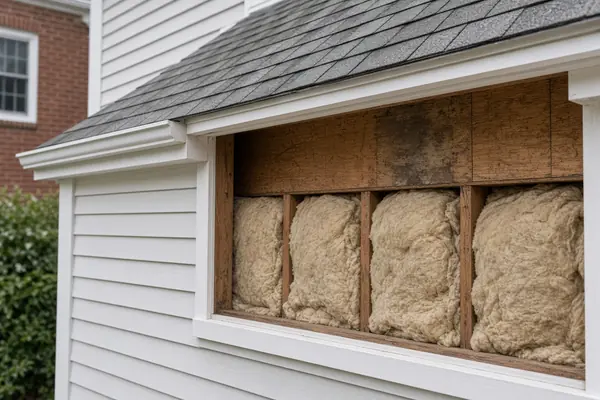
Is The Roof Page Of A Home Inspection Report The Same Thing?
No, and Massachusetts law is specific about why.
Home inspectors here are licensed and work to a published standard. Under the Massachusetts standards of practice for home inspectors, 266 CMR 6.04, the inspector must observe and report on roof coverings, exposed roof drainage systems, flashings, skylights, chimneys, and roof penetrations. They must identify the roof covering material, the drainage system, and the chimney materials.
Now read what the same regulation says they don’t have to do.
They don’t have to walk on the roof if, in their opinion, walking on it risks injury or damage to the roofing. They don’t have to look at attached accessories, which the regulation lists as solar systems, antennae, satellite dishes, and lightning arrestors. They don’t have to enter the attic if it isn’t readily accessible, if access is obstructed, if entry could damage the property, or if something up there looks dangerous. And they don’t have to walk on framing members covered in insulation.
InterNACHI’s standards, which many inspectors nationally work to, go one step further. That standard says the inspector is not required to predict the roof’s service life.
So a compliant home inspection can produce a roof section that reads “roof appears serviceable,” written by somebody who never left the ground and never opened the attic hatch. That’s not a defect in the inspector. It’s the scope they’re licensed to work inside.
If you’re buying, you still want the home inspection. You just want a roof inspection on top of it, and you want it before you close.
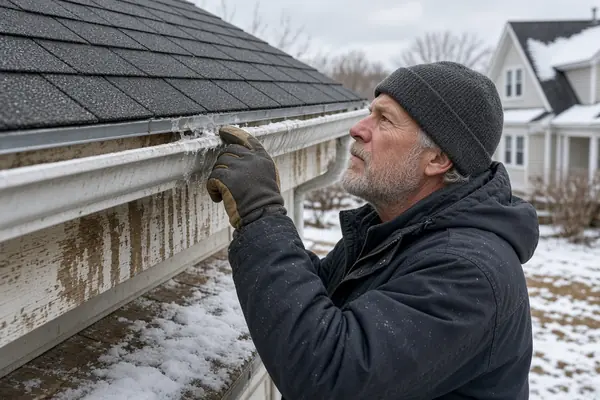
What A Massachusetts Report Has To Cover That A Florida Report Never Will
Your report needs an eave section. Most templates copied off the internet don’t have one.
Massachusetts requires an ice barrier under asphalt shingles. The state’s own FAQ on the ice barrier requirement in 780 CMR calls for either 2 layers of underlayment cemented together or a self-adhering polymer-modified bitumen sheet, running at least 24 inches horizontally inside the building from the lowest roof edges. On roofs pitched 8 in 12 or steeper, that goes to 36 inches from the eave edge. Detached accessory structures with no conditioned floor area are exempt.
Here’s the problem with the report you were handed. Nobody can see the ice barrier from the ground, and nobody can see it from the roof surface either. It’s under the shingles. What an inspector can do is read the evidence: staining at the top plate in the attic, water marks on the sheathing 2 feet up from the eave, rot in the fascia, ice dams that come back every winter in the same 3 spots. If your report mentions none of that, the inspector skipped the single most Massachusetts-specific failure mode there is.
The Division of Insurance told homeowners in February 2025 to get a professional evaluation of their home’s insulation and ventilation as winter prep. That evaluation belongs in your roof report, not in a separate conversation.
Same for snow load, freeze-thaw cycling on nail pops, and vent boots that split in the cold. A Florida template covers hurricane uplift and algae. Useful there. Useless in Weymouth in February.
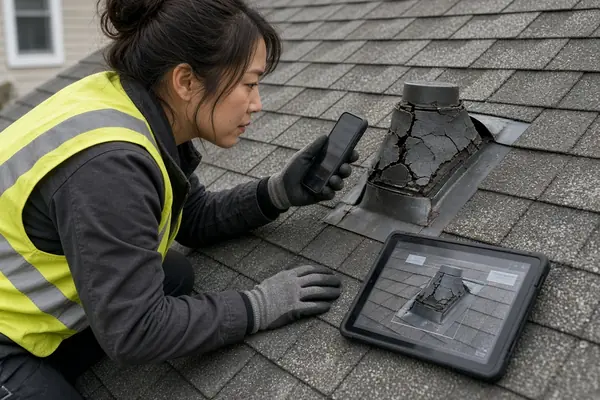
Photo Count Is The Fastest Way To Judge A Report
Count the photos. Then count the defects the report claims. If those 2 numbers aren’t close, the report is a summary, not evidence.
There’s no correct number, because a simple ranch and a cut-up Victorian with 4 dormers aren’t the same job. The rule is coverage, not volume. Every defect named in the text should have a photo, and every photo should say where on the roof it was taken. A picture of a cracked vent boot with no location is worth nothing to the next contractor, the adjuster, or you in 3 years.
Photos also settle arguments. When a homeowner tells me a roof is 8 years old and I’m looking at granule loss that reads like 20, the photo is the conversation. Not my opinion against theirs.

Will Your Insurance Company Accept A Roofer’s Report?
Sometimes, and it depends more on how the report is built than on who signed it.
Adjusters want dates, locations, photographs, and a cause. “Wind damage” is an opinion. “8 tabs lifted along the west-facing slope, creased at the nail line, photographed 03/14/2026, consistent with the wind event on 03/11” is documentation. We walk through how to document roof damage for an insurance claim in Massachusetts separately, and the short version is that the report is the claim’s spine.
One warning, and this one is live right now.
On November 5, 2025, the Massachusetts Division of Insurance published a consumer advisory about roof-related insurance notices. Homeowners were getting mailers from something calling itself “Home Coverage Risk Alert.” The mailers listed the property address and claimed the home had been flagged over roof age or condition. They warned the insurer might raise the premium, non-renew, or class the property as high risk. Then they offered a roof inspection report and a referral to “insurance company certified contractors.”
The Division’s position is direct. Carriers can take underwriting action based on your home’s condition, but they follow strict rules doing it. Non-renewal takes at least 45 days notice, and the notice comes from your insurance company or your agent. Not from an unaffiliated third party you’ve never heard of.
If a letter about your roof shows up from a company that isn’t your carrier, call your agent before you call the number on the letter.
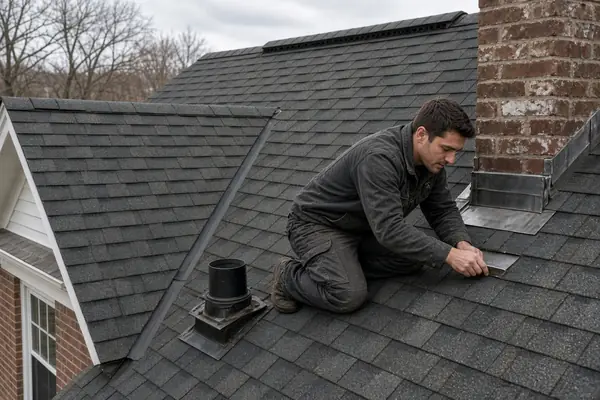
What We See On Massachusetts Roofs
Across the roofs we work on, the problem usually isn’t the shingle.
It’s the flashing. It’s ventilation that was never right. It’s a vent boot somebody reused on the last reroof. It’s a valley cut wrong. Nails driven high or overdriven. No ice and water barrier where there should have been. And decking nobody mentions until the old roof comes off and the stain pattern shows up.
Homeowners almost never call it that. They call and say the shingles are lifting, there are black stains, the wood feels soft, water’s coming in by the chimney, the corner’s rotting. Those are the right symptoms described in the right words. A report that answers them in roofing vocabulary, with no translation, has failed at its actual job.
This is also why what a roofer actually looks at during the inspection matters as much as the document that comes out of it. We read the roof surface, the flashing at chimneys, walls and skylights, the vent boots, ridge caps, valleys, drip edge, gutters and drainage from above. Then we go inside and read the attic sheathing, the ventilation balance, and the ice dam signs from underneath. A report built on only the first half is half a report.
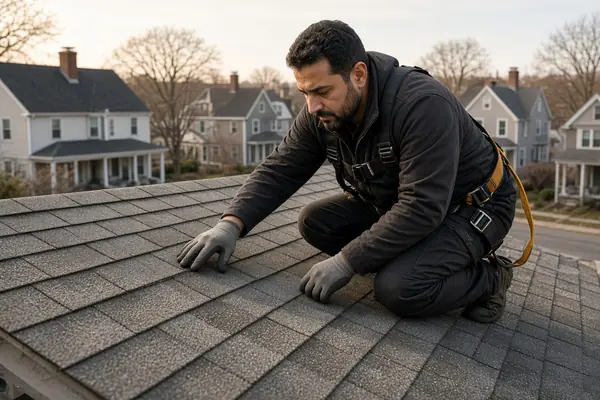
Does Your Report Say How Many Years Your Roof Has Left?
If it gives you a single number with no reasoning behind it, be skeptical of it.
Neither the Massachusetts home inspector regulation nor the InterNACHI standard requires anyone to predict remaining service life, and there’s a reason for that. Remaining life on an asphalt roof depends on the shingle line, the install quality, the ventilation, the pitch, the exposure, and how many freeze-thaw cycles it’s absorbed. 2 roofs the same age on the same street can be 6 years apart in real condition.
What a report can honestly say is this. The covering is a 3-tab or architectural shingle. It appears to be roughly this old. Here’s the granule loss, the sealing condition, and what the attic shows. Based on those 4 things, here’s my read.
That’s a defensible estimate. “You have 2 years left” with nothing behind it is a sales line.

What To Do When 2 Roofers’ Reports Disagree
Compare the evidence, not the conclusions.
Put both reports side by side and ask 3 questions. Did both inspectors get on the roof, or did one shoot it from a ladder at the gutter line? Did both open the attic? Does each photo have a location attached to it?
Most disagreements I’ve seen collapse once you do that. One report has 30 located photos and an attic section. The other has 4 photos and a number. They aren’t 2 opinions about the same roof. They’re 2 different amounts of looking.
If both reports are thorough and still disagree, that’s a real difference in judgment, usually about whether the roof is a repair or a replacement. Then you’re choosing between 2 honest reads, which is a much better position to be in.
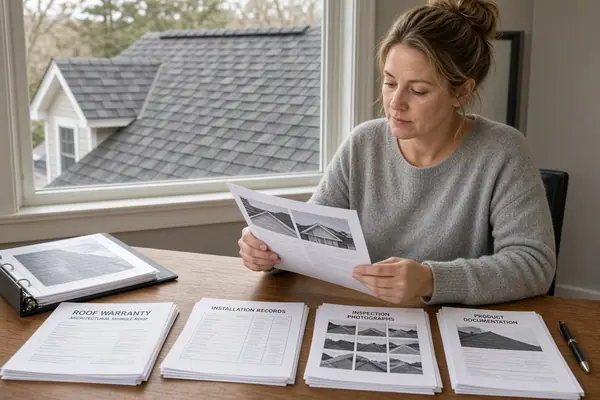
What Your Warranty Needs From Your Paperwork
Keep the report. Your warranty may ask for records you can’t recreate later.
We install the complete GAF roofing system: WeatherWatch ice and water leak barrier, FeltBuster synthetic underlayment, Pro-Start starter strips, Timberline HDZ architectural shingles, and Cobra ridge vent. Under GAF’s shingle and accessory limited warranty, document RESWT160L, you have to notify GAF within 30 days of noticing a problem, and you’ll be asked to prove the date your shingles were installed and that you owned the property then. You may also have to supply photographs and product samples yourself.
The same warranty excludes damage caused by inadequate ventilation. Which brings it back around. The ventilation section of your inspection report isn’t filler. It’s the document that shows what the attic looked like before anything went wrong.
We back new roofs with a 25-year guarantee on top of the manufacturer warranties, and we keep the install records. Most homeowners don’t, and 12 years later that’s the difference between a warranty claim and a conversation.
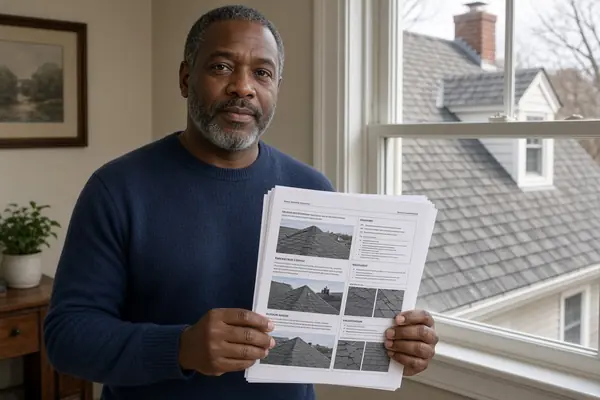
What A Real Inspection Should Leave You Holding
Ask before anyone climbs the ladder: do I get a written report with photos, and do I get it whether or not I hire you?
That question does more work than any other. If the answer stalls, you already know. The test isn’t how thorough the inspector sounds on the roof. It’s whether you walk away holding something you could hand to a different contractor, an adjuster, or a buyer’s agent without explaining it first.
What you should get is the roof surface and the attic both covered, a photo record of every finding, each finding ranked, and documentation you can share. If the report is a verbal summary and a scribble on a clipboard, you didn’t get an inspection.

Your First Week After The Report
Read the “could not access” section first. Then read the urgent items. Then stop.
Don’t let anyone tell you the roof has to be decided this week unless water is coming in. If it is, we’ll come out and look. If it isn’t, take the report to a second roofer and compare the evidence. Get the photo files saved somewhere that isn’t your email. Note the inspection date, because a report from 14 months and 2 winters ago isn’t describing your roof anymore.
A roof inspection report is worth exactly as much as what you can do with it. If yours scores 7 or better on the list at the top of this page, you’re holding something useful. If it scores 3, you’re holding an advertisement, and you should go get the real thing.
Contact Powersol and we’ll put one in writing.
Frequently Asked Questions
What does a roof inspection report include?
A roof inspection report includes the roof covering type and approximate age, the date and weather at inspection, dated photos of every defect, a list of areas the inspector could not access, attic and ventilation findings, the condition of flashing and roof penetrations, drainage and ice barrier notes, findings ranked by urgency, and a repair-or-replace recommendation with the reasoning written out. Reports that skip the “could not access” section and the urgency ranking are the most common failures.
Is a roof inspection report the same as a home inspection report?
No. Under 266 CMR 6.04, a licensed Massachusetts home inspector must observe roof coverings, drainage, flashings, skylights, chimneys, and penetrations, but is not required to walk on the roof if doing so risks injury or damage, and is not required to enter an attic that isn’t readily accessible. A dedicated roof inspection report covers what that scope permits an inspector to leave out.
Will my insurance company accept a roof inspection report from a roofer?
Often, if the report is built as evidence rather than as a sales document. Adjusters look for the inspection date, photographs tied to specific roof locations, and a stated cause of damage. Note that the Massachusetts Division of Insurance warned homeowners on November 5, 2025 about third-party mailers offering roof inspection reports while falsely implying they come from your carrier.
How many photos should a roof inspection report have?
Enough that every defect named in the text has a matching image, and every image says where on the roof it was taken. There’s no fixed number, because a simple ranch and a cut-up Victorian with 4 dormers need different coverage. A report with 12 claims and 4 photos is a summary, not documentation.
Does a roof inspection report say how many years my roof has left?
It can give a reasoned estimate, but treat a single number with no supporting detail as a sales line. Neither the Massachusetts home inspector regulation nor the InterNACHI standards of practice require anyone to predict remaining service life. A defensible estimate cites granule loss, sealing condition, ventilation, and attic evidence.
Does a roof inspection report expire?
There’s no formal expiry, but the practical shelf life in Massachusetts is short. A report written before a winter doesn’t describe the roof after it. Freeze-thaw cycling, ice dams, and wind events all change the condition. If your report is more than a year old, or a hard winter has passed since, get it redone before you rely on it for a claim or a sale.
What should a Massachusetts roof inspection report say about ice and water barrier?
It should address the eaves directly. Massachusetts requires an ice barrier extending at least 24 inches horizontally inside the building from the lowest roof edges, or 36 inches from the eave edge on roofs pitched 8 in 12 or steeper. The barrier itself sits under the shingles and can’t be seen, so the report should cite the evidence instead: attic staining near the top plate, water marks on the sheathing above the eave, fascia rot, and repeat ice dams.