The biggest threat to your yard during a roof replacement isn’t a falling shingle. It’s time. The longer a crew is on your house, the longer your grass sits under tarps, the more foot traffic crosses your beds, and the more chances a nail has to land in the lawn. So the fastest way to protect your yard during a roof replacement in Massachusetts is to hire a crew that works clean and gets off your house quickly. Most of our roofs go on in about a day once the material is delivered and the weather holds. Here’s what real property protection looks like, what you should handle before the crew shows up, and what your contract needs to say so a wrecked flower bed doesn’t become your problem.
Protecting your yard during a roof replacement means covering plants, beds, and hardscape with tarps and plywood, placing the dumpster to spare your driveway and lawn, and running a magnetic nail sweep before anyone leaves. In Massachusetts, that protection and cleanup plan belongs in your written contract, not just in a promise made in the driveway.
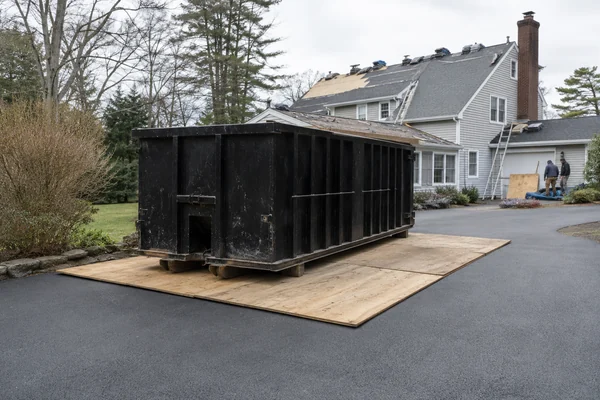
What Actually Damages Your Yard During a Roof Replacement
Four things cause almost all of it: falling debris, dropped nails, foot traffic, and heavy equipment parked in one spot too long. A tear-off sends down old shingles, felt, and loose granules that crush and stain plants below. Nails scatter, and a few always find the grass. Crews walk the same path to the ladder a hundred times a day, and that lane through your beds gets compacted. Then there’s the dumpster or dump truck, which can crack a driveway edge, leak oil, or rut a lawn if it sits wrong.
Older Massachusetts homes make this trickier. On a tight Dorchester or Boston three-decker lot, the dumpster and the ladders share a few feet with your neighbor’s fence and your only garden strip. On a bigger South Shore property in Bridgewater or Taunton, you’ve got more lawn and mature plantings to shield. The plan should match the lot, not a one-size template. This is also why an aging roof that’s overdue tends to shed more brittle debris during tear-off, which means more to catch and clean.
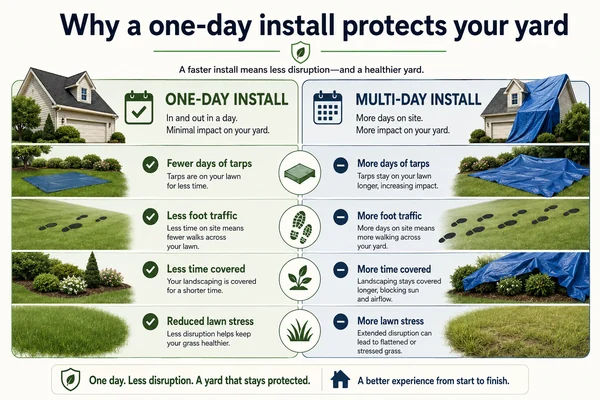
Does a Faster Roof Install Really Protect Your Landscaping?
Yes, and it’s the factor most homeowners never think to ask about. Grass and plants don’t like being covered. University of Maryland Extension notes that turf left under cover will die off over a matter of weeks, and on a hot, sunny day the heat trapped under a tarp climbs fast enough to yellow and stress a lawn in far less time. A roof job doesn’t run for weeks, but a job that drags across three or four days in July does damage that a one-day job never gets the chance to.
That’s the quiet advantage of a clean, fast crew. Fewer days of tarps on the grass, fewer days of boots through the beds, and less time a dumpster sits on the driveway. Our average install is one day, and most standard replacements finish in one to two days once material is on site and the weather cooperates. The shingles matter, and so does how a roof works as a full system, but the calendar is what your garden feels. If you want the background on how a roof system works, the short version is that the deck, underlayment, flashing, and shingles all go on in sequence, which is why a well-run crew can dry-in a house in a single day.
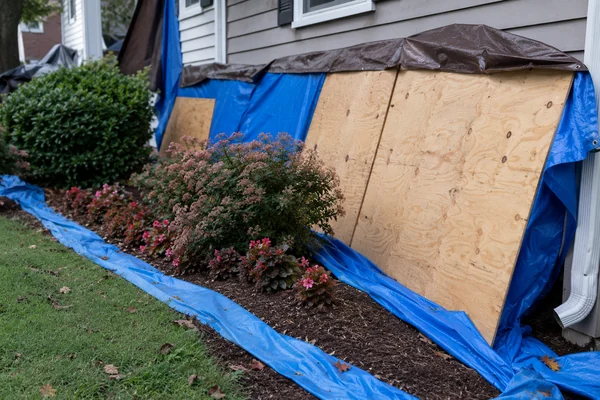
How Massachusetts Roofers Should Protect Your Plants, Beds, and Hardscape
A good crew shields your property before the first shingle comes off. That means tarps and plywood over flower beds, shrubs, and anything growing against the house, plus coverage over windows, the AC condenser, a deck, or a pool. Plywood beats a tarp alone over shrubs and the AC unit, because a sheet of plywood sheds a dropped bundle or a chunk of old decking that a thin tarp would let through.
The debris a tear-off drops is the same GAF material that goes back up: leak barrier, FeltBuster synthetic underlayment, starter strip, and ridge cap. It’s heavier than it looks coming off the roof, so the covering underneath has to actually take an impact. During a full roof replacement, the protection goes down first, stays down through tear-off and install, and comes up only during the final cleanup. Windows get covered where the roofline sheds toward them. Gutters get checked, since a careless crew bends them hauling debris.
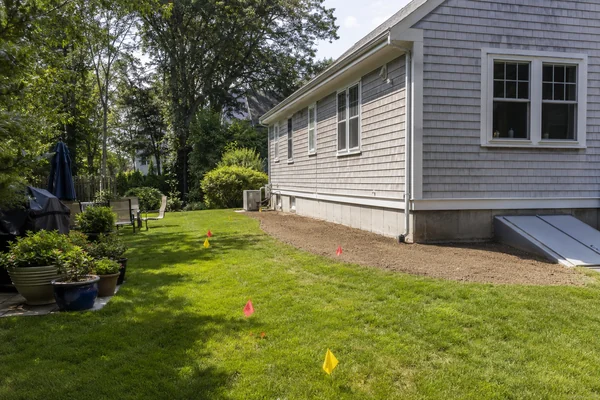
What Should You Move Before the Crew Arrives?
Start about 48 hours out, and give the crew a clear 15-foot working zone around the house. The split is simple: you handle the loose, movable, and fragile things, and your roofer handles the fixed landscaping and the cleanup.
| Before the crew arrives | Who handles it |
|---|---|
| Move cars out of the driveway and off the street beside the house | You |
| Move potted plants, patio furniture, the grill, wind chimes, and solar lights | You |
| Flag sprinkler heads and low-voltage path lights so nobody steps on them | You |
| Mow the lawn so dropped nails are easier to see and sweep | You |
| Take down mirrors and wall art that vibration could shake loose indoors | You |
| Tarp and plywood over beds, shrubs, windows, and the AC condenser | Powersol |
| Place the dumpster on boards to spare the driveway and lawn | Powersol |
| Magnetic nail sweep across the grounds before the final walkthrough | Powersol |
Mowing the day before does double duty. Short grass lets the crew spot stray metal, and it lets a nail magnet get close enough to grip what’s there.
Do Roofers Really Get All the Nails Out of the Lawn?
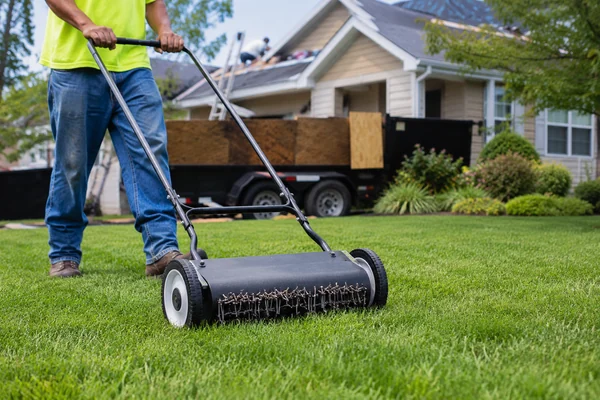
A good crew runs a magnetic sweep, but no honest roofer promises to find every last nail. We don’t sell fear, and we won’t sell a fairy tale either. What we do is run a rolling magnet across the lawn, the beds, the driveway, and the walkways before the final walkthrough, then take photos of the finished property. A mowed lawn makes that sweep far more reliable, which is the real reason to cut the grass first.
Most roofers won’t mention this honest homeowner move. Run your own magnet over the yard a week later, especially where kids play or where you go barefoot. Rain and mowing can lift a buried nail to the surface days after the job. It costs you ten minutes and a hardware-store magnet.
What Your Massachusetts Roofing Contract Must Say About Your Property
In Massachusetts, this isn’t a handshake. Any home improvement job over $1,000 has to have a written contract under the state’s Home Improvement Contractor law (Chapter 142A), and the contractor’s HIC registration number has to be on it. That contract is exactly where your property protection and cleanup plan should live: what gets covered, where the dumpster goes, and that a nail sweep and a final walkthrough are part of the job.
Before you sign, check the contractor’s registration on the state’s site. It’s free and it takes a minute. Registration also gives you real backup: the state’s Guaranty Fund can reimburse a homeowner up to $25,000 for an unpaid judgment against a registered contractor, and HIC violations can count as unfair or deceptive acts under Chapter 93A, which can mean multiple damages and attorney’s fees. That’s your recourse if a crew trashes your yard and walks away.
This is where a lot of online advice gets it backward. One popular article claims that if your roofer skips yard protection, it means you overpaid. That’s not how it works. Protection and cleanup aren’t a luxury upsell that shows up in a higher price. In Massachusetts they belong in the written scope regardless of price. The real tell isn’t what you paid. It’s whether the protection plan is on paper.
Red Flags That a Roofer Will Leave Your Yard a Mess
If a roofer won’t put the protection and cleanup plan in writing, that’s your answer. A few more warning signs: they can’t say where the dumpster will sit, they never mention a nail sweep, they’re vague about who fixes a damaged bed or a cracked driveway, they can’t show photos of a finished property, or they aren’t HIC registered. Storm-chasers knocking after a windstorm are the highest risk here, because they’re gone before you notice the ruts in the lawn.
The green flags are just as clear. A written scope, a named crew, a dumpster plan, a magnet sweep, and before-and-after photos. If you’re weighing whether the roof can be repaired instead of replaced, a straight answer to that question is another good sign. A roofer willing to talk you out of a full replacement is a roofer willing to protect your yard.
How Powersol Protects Your Yard During a Massachusetts Roof Replacement
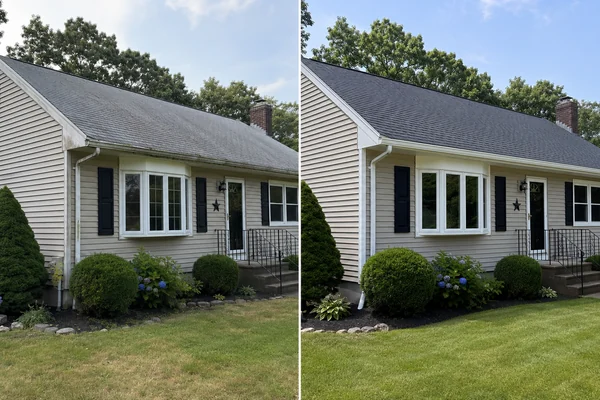
We treat the yard as part of the job, not an afterthought. It starts with a roof inspection and photos, then a written scope that spells out the work and the protection. Before install, we tell you when material is arriving, what to clear from the driveway, and where the dumpster goes. We cover the beds, shrubs, windows, and AC unit, tear off to the deck, check for rotted wood, and install the full GAF system. Then we sweep with the magnet, take final photos, and walk the property with you.
One example: a Taunton project where the homeowner needed the roof, the gutters, and the fascia and soffit changed to PVC. The edges of the roof mattered as much as the shingles, and so did keeping the driveway and plantings clear while three parts of the exterior came together. In Randolph we did a roof, gutters, and siding package, and in Dorchester a roof and windows job on a tight city lot where dumpster placement took real planning. Different lots, same rule: leave the yard the way we found it.
If your roof took storm or wind damage, the property protection still applies, and we’ll document what we see for your insurance without promising an outcome nobody can promise. You can meet the people who’ll be on your roof on our team page.
Judge a roofer by the lawn, the driveway, and the written scope, not the sales pitch. The roof is the part you’ll stop noticing in a week. The yard is the part you’ll live in every day after the crew leaves, which is the whole reason protecting your yard during a roof replacement deserves a real plan. When you’re ready, ask us for a written estimate and we’ll show you exactly how we’ll treat your property.
Frequently Asked Questions
Will roofers damage my landscaping during a roof replacement?
They can if they don’t plan for it. Falling debris, dropped nails, and foot traffic are the usual culprits. A crew that tarps and plywoods your beds, places the dumpster on boards, and runs a magnetic nail sweep before leaving keeps damage to near zero. Get that plan in writing before you sign.
How long does a roof replacement take in Massachusetts?
Most standard replacements go on in one to two days once the material is delivered and the weather holds, and our average is a single day. A shorter job protects your yard, because your grass spends less time under tarps and your driveway spends less time under a dumpster.
Should I mow my lawn before the roofers come?
Yes. Cut it the day before. Short grass lets the crew spot stray nails and lets the magnetic sweep get close enough to grab metal it would otherwise miss over long grass.
Who is responsible if a roofer damages my yard in Massachusetts?
The contractor is, and a registered Home Improvement Contractor is easier to hold accountable. The state’s Guaranty Fund can reimburse a homeowner up to $25,000 for an unpaid judgment against a registered contractor, and property protection written into your contract gives you clear grounds if something gets wrecked.
How do I protect my AC unit and garden during a roof replacement?
Cover the AC condenser and shrubs with plywood, which sheds impact better than a tarp alone, and move potted plants and delicate containers out of the 15-foot work zone yourself. Your roofer should handle the fixed landscaping and hardscape closest to the house.
Do I need the yard protection plan in my roofing contract?
In Massachusetts, any job over $1,000 requires a written contract with the contractor’s HIC registration number, so add the protection and cleanup terms there. It costs nothing and it turns a verbal promise into something you can enforce.
What should I do after the roofers leave to protect my yard?
Run your own magnet over the lawn and walkways about a week later, since rain and mowing can surface a buried nail. Check that beds and shrubs look undisturbed, and compare against the crew’s final photos.