Quick answer: Stop the water from the inside first. Put a bucket under the drip, move what you can out of the way, and if the ceiling is bulging, drain it through a small hole over a bucket before it bursts. Stay off the roof, especially in wind, rain, or ice. Photograph everything for your claim. Then call a licensed, local roofer who answers 24/7. Powersol’s emergency roof repair line answers at (617) 631-5435, days, nights, weekends, and during nor’easters.
The water dripping into your bucket is the smallest part of your problem. It’s the water you can’t see, the sheet running along a rafter and soaking into the top plate of a wall, that turns a fast tarp-and-seal into a torn-out ceiling and a wall full of ruined insulation. In Quincy that call comes hardest two ways. A nor’easter drives rain sideways under lifted shingles. Or the February thaw arrives and an ice dam that’s been building for a week finally pushes water back under the roof. Either way, the next ten minutes matter more than the next ten days. Here’s exactly what to do, in order, before anyone touches a ladder.
Most of this you do from the dry side of the ceiling.
What Is Emergency Roof Repair?
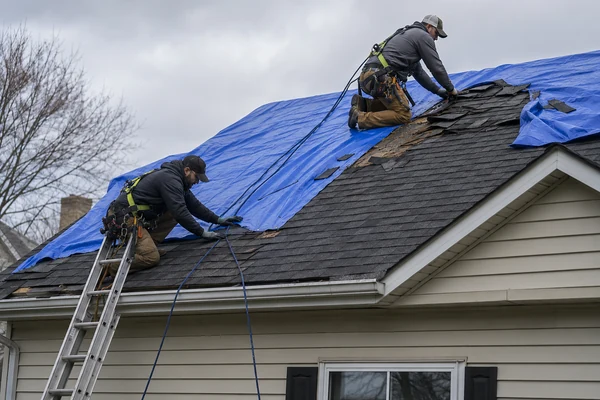
Emergency roof repair is fast, temporary work that stops water or weather from getting into a house right now, usually by tarping and sealing the failure point, so the permanent repair can wait for a dry deck and daylight. It’s triage, not the final fix. The job is to stop the damage clock, not to rebuild a roof at 2am. A good crew stabilizes the leak first and quotes the real repair second.
What Counts as a Roofing Emergency, and What Can Wait Until Morning?
Here’s the test I give people on the phone: is water or weather getting into the house right now, or is something overhead unsafe? If yes, it can’t wait for business hours. Water that has found a path doesn’t pause overnight. It follows the framing, soaks the insulation, and works toward drywall and wiring.
These are the calls we drop everything for across Quincy and the South Shore:
- Water actively coming into the living space
- Shingles or flashing torn off with weather still coming
- A tree limb or debris through the roof deck
- Ice-dam water backing up under shingles and into a wall or ceiling
- A ceiling that’s sagging or bulging from trapped water
- Flat-roof ponding that has started coming through
Some things can hold a few hours. A slow drip into an unfinished basement corner, with a bucket under it and no weather still driving in, can usually wait for daylight. A small stain that isn’t spreading and isn’t near a light can wait. When you’re not sure, call and describe it. The triage costs nothing, and an honest roofer will tell you if it can wait.
First, Contain the Water Inside
Containment is step one. Not the roof, not even the photos. The water already inside.
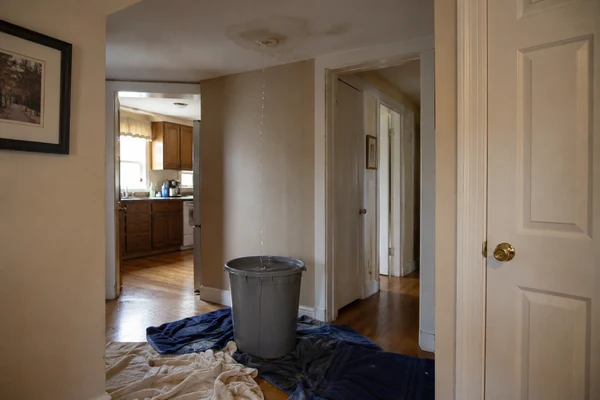
Put a bucket, a stockpot, or a trash can under the drip, and lay a plastic sheet or old towels around it to catch the splash. If the drip is fast, set a second container nearby so you can swap without flooding the floor. Move furniture, electronics, and rugs out of the path.
If the ceiling is bulging, a soft belly of drywall holding water, pierce it. Poke a small hole at the lowest point with a screwdriver and let it drain into a bucket. I know it feels wrong to put a hole in your own ceiling. Do it anyway. A controlled drain is a small patch. A ceiling that lets go on its own takes the drywall, the mess, and sometimes the light fixture with it.
Then kill the power to any room where water is near outlets, fixtures, or recessed lights. Wet electrical is how a roof leak becomes a house fire. Don’t flip on a light that water has reached.
Stay Off the Roof, Even for a Quick Look
I have to be the one who says it. Don’t go up there. Not for a look, not for a photo, not to throw a tarp yourself.
A wet asphalt roof sheds loose granules that roll under your boots like ball bearings. A snow-covered or iced roof in a Massachusetts January is worse, and a nor’easter adds wind that can put you off the edge before you know it. A fall from a single-story Quincy colonial onto a frozen driveway ends careers and worse. There’s a reason we do permanent roofing on a dry deck in daylight with harnesses, not in the dark in the rain. The roof will still be there when the weather clears. Let it wait.
If a tarp is needed before then, that’s the call we answer.
Why the First Hour Matters More Than the First Day
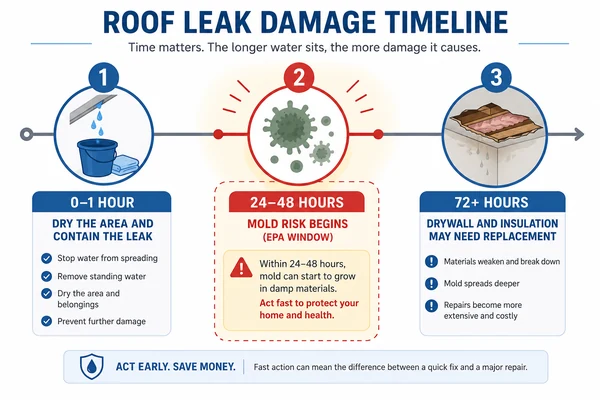
The damage you can see is the overflow. The damage that costs you is quiet and out of sight. Water tracks along joists, pools on the top plate of a wall, and wicks into insulation that then loses its value and holds moisture against the wood.
Here’s the number worth remembering. The EPA says wet building materials that aren’t dried within 24 to 48 hours will, in most cases, start growing mold. Drywall that takes one hour of water can dry out and be fine. Drywall that sits wet for a day sags, and in a few days it crumbles and gets cut out. In winter it’s worse, because water trapped in the roof assembly freezes at night and pries the materials apart as it expands. That’s the difference between drying a corner of the attic and rebuilding a ceiling, and it’s decided in the first hours, not the first week. Stopping the water fast is the whole game.
Ice Dams Are the Winter Emergency the Guides Skip
If your ceiling starts leaking in January or February with no rain in the forecast, it’s probably an ice dam, and it is an emergency once water is coming in. This is the one most out-of-state guides ignore, and it’s the leak I get called for most all winter.
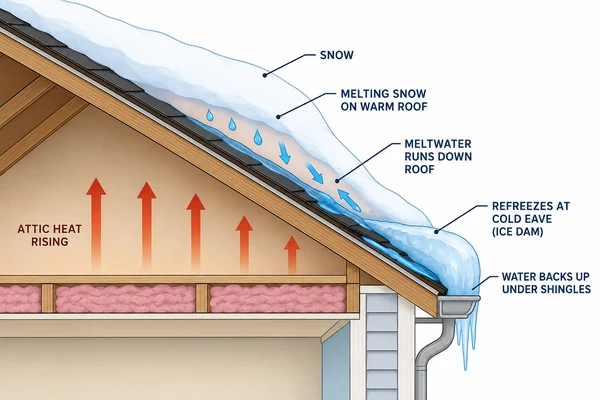
Here’s how it happens, straight from the state’s own explainer. Heat escaping into your attic warms the roof and melts the snow on it. That meltwater runs down to the cold overhang at the eave and refreezes. The ridge of ice grows, and it forces the next round of meltwater back up under your shingles, where it drips into the wall and ceiling. The Massachusetts guidance on ice dams lays out the same three ingredients: snow on the roof, heat leaking up through it, and outdoor temperatures below freezing. We get all three on the South Shore for weeks at a time.
What to do when an ice dam is leaking: get containers under the interior drips, and if you can safely reach the roof edge from the ground, pull snow off the lower part of the roof with a roof rake to slow the melt. Do not climb up and chip at the ice with a hammer or an axe. You’ll put a hole in the roof you’re trying to save, and you’ll be standing on ice to do it. Call, and let a crew clear the dam and stop the water the right way. Once it’s dry, the real fix is usually attic insulation and ventilation so it doesn’t happen again next winter.
Document Everything for Your Insurance Claim
This is the step people skip and regret. Before you clean up or throw anything out, take photos and video. A lot of them.
Inside: wide shots of each affected room, close-ups of every stain and drip and bulge, the water sitting in your buckets, and each damaged item next to its brand or model label if you can see it. Shoot a slow 30-second video narrating what you see. Outside, from the ground only, get the roof from each side and anything visibly wrong, plus downed branches or debris that shows the storm.
Massachusetts homeowners policies include coverage for reasonable emergency repairs you make to prevent further damage, and the state’s Division of Insurance tells homeowners to keep records and receipts for any temporary work. So save your receipts for tarps, buckets, fans, and a hotel if the house is unlivable. The line adjusters draw is sudden versus gradual: a storm, a fallen limb, or wind-torn shingles is usually covered, while slow wear and age usually isn’t. Photos taken during or right after the event are what push a borderline call to the covered side. When the damage is storm-related, our documentation of the cause and the emergency work becomes the dated evidence your insurer asks for, which is the same paperwork that supports a full storm damage repair claim.
What an Emergency Tarp Actually Does, and What a Real One Looks Like
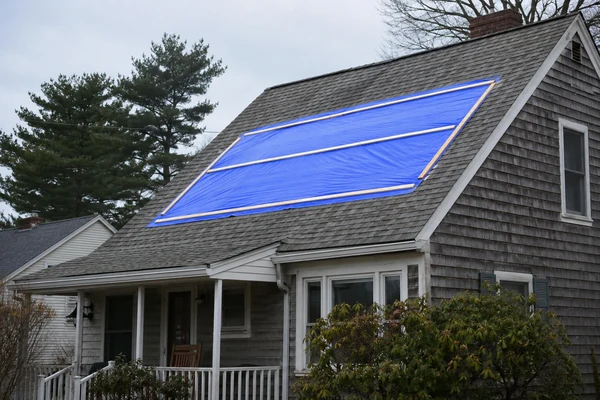
A tarp is a temporary fix, and it’s the correct one. It isn’t a patch job to be embarrassed about. It’s the right engineering answer to an active leak in bad weather, because roofing work should never be done on a wet deck in the dark.
A proper emergency tarp is anchored above the damage, lapped so water sheds down over it instead of under it, and fastened so nor’easter wind can’t peel it off. A loose tarp thrown over the hole and weighted with a couple of bricks is worse than nothing. It traps water and tears off in the first gust. Done right, a tarp keeps a house dry for the days or weeks until the permanent roof repair can happen on a dry deck. That breathing room is the entire point. It takes the pressure clock off the real decision.
What Does Emergency Roof Repair Cost in Massachusetts?
Straight answer. I won’t put a price table on this page, because anyone who quotes your roof before seeing it is guessing. The cost of an emergency visit depends on what failed, how bad it is, how the crew reaches it, the pitch and height, the roof material, and yes, the hour of the night. A torn-shingle reseal and a punched-through deck aren’t the same job.
What I will promise is how the number gets set. We quote the emergency visit before anyone climbs a ladder, so you know the cost when you call, not after the work is done. Get that in writing from any roofer, even in a real emergency. If someone tells you they’ll “figure it out after,” that’s your sign to hang up. Chasing the cheapest phone number in a panic is how people end up paying twice.
How Do You Tell an Emergency Roofer From a Storm Chaser?
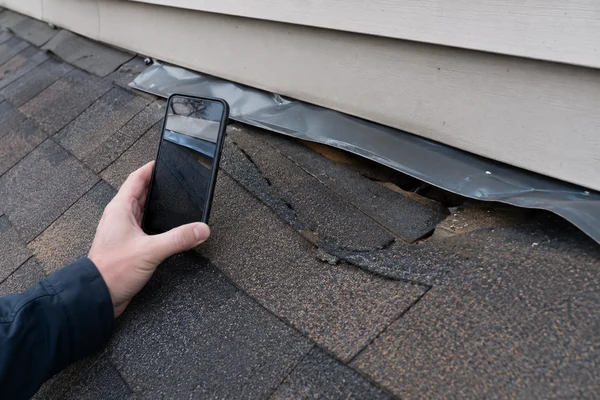
After every big storm, the door-knockers show up. Some are fine. Some are out-of-state crews with a magnetic sign on the truck who’ll be three states away by spring. Here’s how to tell the difference before you sign anything.
Check the license, it takes a minute and it’s free. In Massachusetts, the contractor on your roof should be registered as a Home Improvement Contractor, and structural roof work generally calls for a Construction Supervisor License. You can look up both on Mass.gov, and the state’s contractor registration lookup is public and free. The HIC program also backs a Guaranty Fund that can reimburse eligible homeowners when a registered contractor leaves a judgment unpaid, which is protection you only get with a properly registered company.
Then ask one question: where are you based? We’re at 100 Hancock St in Quincy, so the person who answers your call and the crew that shows up work the same streets you live on. The company that tarps your roof at midnight is the same one that quotes the permanent repair, honors the work, and answers the phone next winter. A storm chaser can’t say that. Don’t sign a contract or an assignment-of-benefits form from anyone who knocked on your door during the storm. Read everything, verify the license, and call a local roofer for comparison.
What NOT to Do During an Active Leak
Every one of these shows up in my service calls:
- Don’t climb a wet, snowy, or iced roof. Not for a look, not for a photo.
- Don’t chip at an ice dam with a hammer or axe. You’ll hole the roof and you’re standing on ice.
- Don’t use a light switch or outlet that water has reached.
- Don’t smear roofing tar or caulk on a wet surface. It won’t bond, and it fails in the next storm.
- Don’t punch a hole in a ceiling that isn’t bulging. Only drain one that’s already holding water.
- Don’t throw out wet materials before you photograph them. The adjuster needs to see the damage.
- Don’t sign anything from a crew that showed up uninvited after the storm.
After the Emergency, Repair or Replace
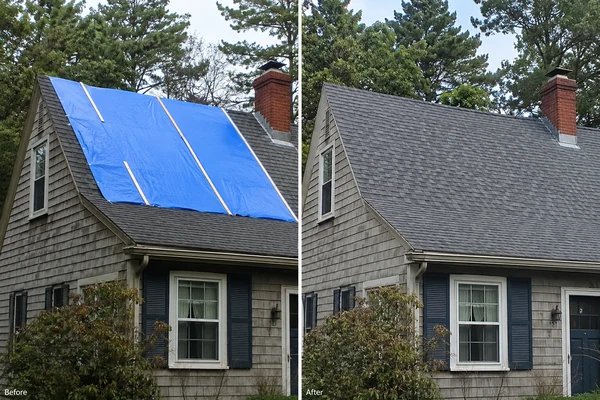
Once the water’s stopped and the tarp is up, you have time to think, which is exactly what the tarp bought you. Usually three questions come up in the next week or two.
Repair or replace. A single failure on a younger roof is a repair. The same leak on a roof near the end of its life is a roof replacement conversation, and we’ll show you which one you’re looking at with photos, not pressure. One storm rarely opens just one spot, so a post-storm roof inspection catches the flashing or valley that hasn’t started leaking yet. That matters, because the failures I see over and over aren’t the shingle field. It’s the flashing, the pipe boots, the valleys, and the rotted decking nobody knew about until the old roof came off. If your leak turns out to be a chronic roof problem rather than a one-time hit, that’s worth knowing before you spend on a patch.
Whatever comes next, the order stays the same. Stop the water, document the cause, then decide with a dry ceiling over your head. If it’s coming in right now, send us the details or call the emergency line and we’ll talk you through the first ten minutes on the phone. The homeowners who come out of a leak with a small repair instead of a gutted room are the ones who stopped the water fast, took the photos, and called a roofer who’ll still be here next winter. That’s the whole difference, and it’s yours to make in the first hour. Call Powersol’s emergency roof repair line at (617) 631-5435.
Frequently Asked Questions
Is emergency roof repair really available 24/7 in Quincy?
Yes. Powersol’s emergency line, (617) 631-5435, reaches a real person around the clock, including nights, weekends, and during nor’easters, which is when roofs actually fail. We’re based at 100 Hancock St in Quincy and serve the South Shore, so the crew that answers is already nearby.
What should I do while I wait for the crew?
Move belongings out from under the leak, put a container and towels down, and if the ceiling is bulging, drain it through a small hole over a bucket. Stop using any light or outlet that water has reached, and stay off the roof, especially in wind, rain, or ice. Take photos of the water inside if you can do it safely, since the EPA says wet materials start growing mold within 24 to 48 hours and your documentation helps the claim.
Can a roof leak wait until morning?
Sometimes, and an honest roofer will tell you. A slow drip into an unfinished basement corner with a bucket under it can often hold until daylight. Water near wiring, a spreading ceiling stain, or weather still coming through an opening cannot. Call and describe what you see; the triage costs nothing.
Will homeowners insurance cover emergency roof repair?
Sudden storm damage often is covered, while wear and age generally are not. Massachusetts policies include coverage for reasonable emergency repairs you make to prevent further damage, and the state’s Division of Insurance tells homeowners to keep receipts for temporary work. Photograph everything before cleanup, because that evidence is what decides borderline claims.
Do ice dams count as a roofing emergency?
Once water is coming into the house, yes. An ice dam forms when heat escaping into the attic melts snow that refreezes at the cold eave and forces water back under the shingles. Get buckets under the interior drips and, if you can reach it from the ground, rake snow off the lower roof. Don’t climb up and chip at the ice, and call a crew to clear the dam safely.
Is a tarp a real fix or just a stopgap?
A tarp is temporary, and it’s the correct temporary answer. Installed right, it’s anchored above the damage, lapped so water sheds over it, and secured so nor’easter wind can’t lift it, and it keeps a home dry for the days or weeks until the permanent repair can be done on a dry deck. A loose tarp held down with bricks is worse than none, because it traps water and tears off in the wind.
How do I avoid a storm chaser after a big storm?
Check the contractor’s Massachusetts license for free on Mass.gov, where Home Improvement Contractor registrations and Construction Supervisor Licenses are both public. Hire a local company that stays after the storm to honor the work, and never sign a contract or an assignment-of-benefits form from someone who knocked on your door uninvited.