Plan on replacing a commercial flat roof in Massachusetts every 20 to 30 years. That’s the range we give owners for an EPDM or TPO roof that went on right and got maintained. But the real answer to “how often should you replace a commercial roof” depends on 1 thing you can’t see from the parking lot: whether the insulation under the membrane is still dry. While it’s dry, you have more options. Once it’s wet, the building code narrows them.
Commercial roof replacement means removing the membrane and every layer under it down to the deck, then building a new system: insulation, cover board, membrane and flashing. On a flat roof in Massachusetts, plan on a replacement every 20 to 30 years. Fannie Mae’s lender tables budget for 20. Wet insulation moves the date up.
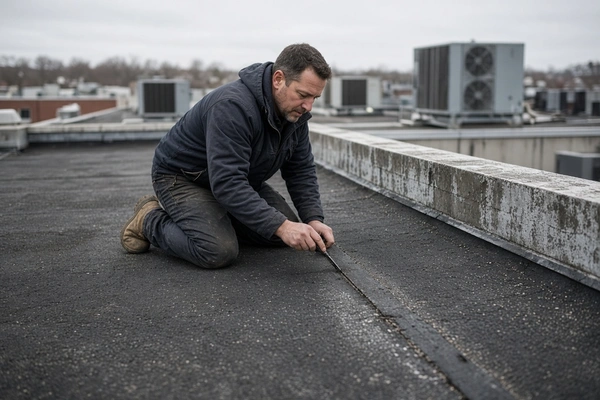
How Often Should You Replace a Commercial Roof? 3 Sources for 2026
Budget for 20 years and expect 20 to 30 with good care. The number you’ll read depends on who publishes it.
| Source | Who it speaks for | Lifespan figure | What it assumes |
| Fannie Mae property condition tables (Form 4099.F, 2019) | Lenders on apartment buildings | 20 years for EPDM, TPO and built-up roofs; 40 for metal | A planning average that the inspector adjusts for the roof in front of them |
| EPDM Roofing Association (March 2026) | Companies that make EPDM | At least 38 years for EPDM | A roof that’s “properly designed, installed, and maintained” |
| Powersol Roofing | The crew that works on your roof | 20 to 30 years for EPDM or TPO | Installed right and maintained; a neglected roof can fail about 10 years early at the drains and seams |
The 38 comes from the companies that make the membrane, and their figure of at least 38 years assumes everything went right. Their 2025 survey of 569 roofing pros found 16% had seen EPDM roofs over 45 years old still working. The survey counts roofs that lasted. Roofs that failed early don’t show up in it.
The 20 is a lender’s planning average. Our 20 to 30 assumes the roof went on right and gets maintained.
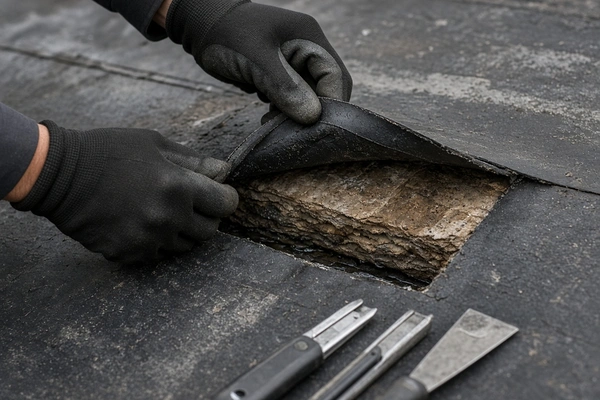
Why Wet Insulation Is the Real Deadline
Once water gets into the insulation, patching the membrane on top won’t fix the roof. The wet boards have to come out.
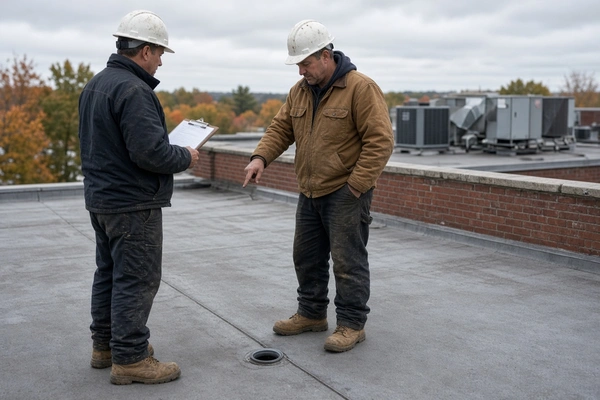
So our first step on any flat roof is a moisture check. We test for trapped moisture below the membrane and tell you in writing which situation you have:
- Dry insulation and deck: the roof can often be repaired section by section.
- Wet layers underneath: a new surface hides the problem for a season. The wet material comes out, and we repair the deck while the roof is open.
What the Code Allows While the Roof Is Still Dry
A dry roof with 1 layer may qualify for a recover: a new membrane installed over the old one, with no tear-off and no insulation upgrade.
Massachusetts has used the 10th edition of the state building code as its only building code since the end of June 2025. It’s built on the 2021 International Building Code, and the state’s amendments to the roofing chapter leave the reroofing rules in Section 1512 alone.
Under Section 1512, a new roof can go over an existing one when it’s installed per the new roof maker’s instructions. It can’t go over:
- a roof that’s water-soaked or so deteriorated it can’t support new roofing
- slate, clay, cement or asbestos-cement tile
- a roof that already has 2 or more layers of roofing
A recover also gets a pass from the energy code’s insulation rules, as long as the building’s energy use doesn’t go up. Mass Save’s code FAQ for existing commercial buildings spells that out.
The catch: every recover adds a layer. A roof that’s been recovered once already has 2, so the next roof comes off down to the deck no matter how dry it is. Houses hit the same 2-layer limit under the residential code, and our roof overlay post covers that side.
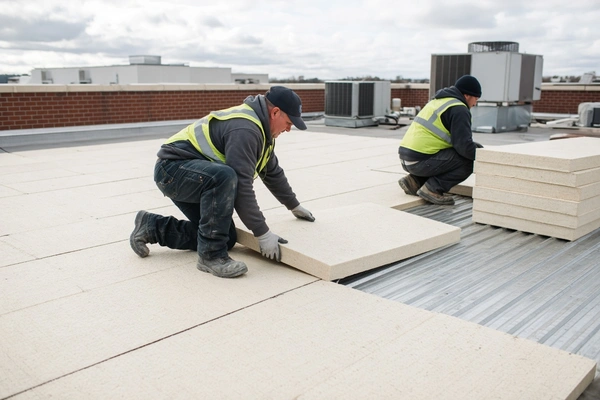
What the Code Requires Once It Comes Off
In Massachusetts, a tear-off on a roof with insulation above the deck has to come back with at least R-30. The new roof also can’t hold less insulation than the old one.
Under Section 1512, a replacement includes removing every layer down to the roof deck. From there, the energy code treats the roof like new work. Our 5-layer systems put the insulation on top of the deck. If your old roof was built that way too, the new roof has to meet the code’s new-construction level.
PIMA, the association of polyiso insulation makers, puts the Massachusetts minimum at R-30 for insulation that sits on top of the roof deck. Most Massachusetts cities and towns have adopted the stretch energy code too, so check with your building department before you sign.
When the new insulation is thicker than the old, the roof surface rises. Parapet flashing, curbs under rooftop units and the threshold of any door onto the roof have to work at the new height, and those details belong on your quote. We build the polyiso to current Massachusetts energy code and taper it so water runs to the drains instead of sitting.
Should You Squeeze More Winters Out of a Leaking Roof?
Not if the insulation is already wet. Patching the membrane won’t fix wet layers underneath, and a water-soaked roof can’t take a recover.
This is where we disagree with the usual advice to stretch a roof as long as you can. Stretching makes sense while the roof is dry. Once it’s wet, you lose the recover under Section 1512, and the tear-off brings the R-30 requirement with it. A neglected roof can fail about 10 years early, and it starts at the drains and seams.
If the moisture check comes back dry, the report says so in writing.
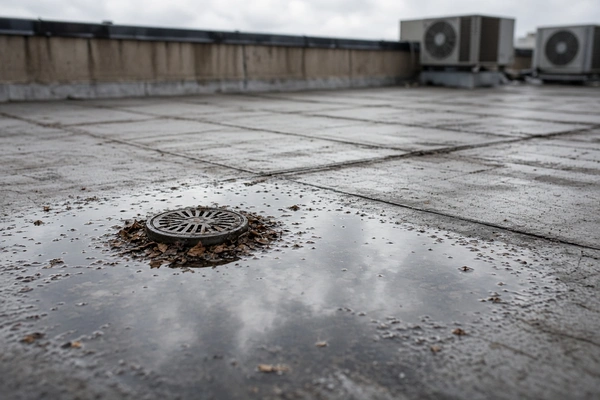
Signs a Commercial Roof Is Near the End
The clearest sign is wet insulation under the membrane. The others show up on top:
- Ponding. NRCA defines ponding as water still on the roof more than 48 hours after rain, under conditions that should dry it.
- Seams opening up. Every seam is a future leak if it was rushed.
- Flashing pulling away at walls and penetrations.
- Edge metal or termination bars working loose, which lets wind lift the perimeter.
- Repeat leaks, or a third patch in the same area.
- 2 layers already on the roof, which rules out another recover.
- More than 20 years on the roof, the age Fannie Mae’s lender tables plan around.
Massachusetts adds freeze-thaw cycles and nor’easters on top of normal wear. Clogged drains are the big winter risk on a flat roof, which is why our fall visit includes clearing them. If leaks keep coming back, our post on why flat roofs leak traces the usual causes.
Where each building type fails first
A restaurant roof dies at the grease exhaust; a garage roof dies at the drains. Our first visit starts with how the building is used.
- Storefronts: sign penetrations and party walls.
- Offices and mixed-use buildings: curbs under HVAC units and foot traffic on the roof.
- Garages and light industrial: big open spans, where 1 clogged drain can pond water fast.
- Restaurants: grease from exhaust fans breaks down the membrane. We add sacrificial protection at the fans and check those roofs more often.
- Multifamily and condos: boards need paperwork for reserve planning, so our reports are written for the board packet.
Repair, Maintain or Replace: The 3 Paths We Quote
We quote 1 of 3 paths: a repair, a maintenance program or a replacement. The moisture check tells us which.
| What we find | What we recommend | What it includes |
| An active leak, dry insulation around it | Repair | Leak tracing, seam and flashing repair, drain work; same-day response for active leaks; photos before and after |
| An aging roof that’s still dry, 1 layer | Maintenance program; a recover may also qualify where code and the membrane maker allow | Spring and fall visits plus checks after major storms; drains cleared; seams and flashings checked; a photo report after every visit |
| Wet insulation in sections | Replace the wet sections at a minimum | Wet material removed; deck repaired while it’s open |
| Wet across the roof, or 2 layers already on it | Full replacement, staged in sections | Tear-off to the deck; tapered polyiso to current code; cover board; new EPDM or TPO; no section left open overnight |
If water is coming in right now, call for emergency roof repair. We respond the same day on active leaks. For owners weighing a recoat instead, our flat roof maintenance guide sorts maintain, recoat and replace by age and moisture.
Every layer gets its own line on our quotes, with the manufacturer, the thickness and the attachment method named. When a lower bid leaves a layer off, thins it or reuses it, the gap shows up right there.
Your business keeps running during the work. That’s how we run commercial roofing in Quincy and the South Shore: in sections, with the crane and deliveries timed around your hours, and with entrances, loading docks and HVAC service kept open.
How Do You Budget Before It’s Urgent?
Use 20 years as the planning date, the same figure in Fannie Mae’s lender tables, and let condition reports move it.
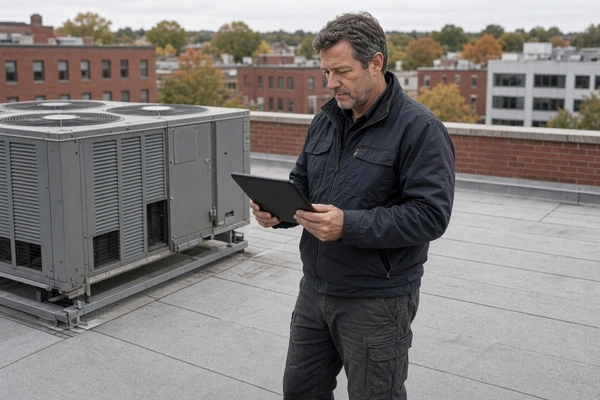
NRCA recommends inspecting roofs at least twice a year, preferably in spring and fall, plus after severe weather. Our maintenance visits follow that schedule. A roof inspection gives you a baseline if you don’t have one yet.
Every Powersol Roofing condition report includes a replacement horizon: a realistic timeframe, not a sales date, so owners and boards can set reserves early. Each report also carries dated photos of the roof’s condition, the record you’ll want if you ever file a storm claim.
Commercial Roof Replacement Questions
How often should you replace a commercial roof in Massachusetts?
Plan on every 20 to 30 years for an EPDM or TPO roof that was installed right and maintained. Fannie Mae’s property condition tables budget 20 years for EPDM, TPO and built-up roofs. Wet insulation moves the date up, because a water-soaked roof can’t take a recover.
How often should you replace a commercial roof’s insulation?
Only when it’s wet or when the roof comes off. Dry insulation can stay under a repair or a recover. Once the roof is torn off to the deck, Massachusetts requires at least R-30 above it. The new roof also can’t have less insulation than the old one.
Can you put a new commercial roof over the old one?
Sometimes. Massachusetts follows Section 1512 of the 2021 International Building Code. It allows a recover installed per the new roof maker’s instructions, but not over a water-soaked or deteriorated roof, slate or tile, or a roof that already has 2 or more layers. A recover also skips the energy code’s insulation upgrade, as long as the building’s energy use doesn’t go up.
How often should a commercial roof be inspected?
NRCA recommends at least twice a year, preferably in spring and fall, plus after severe weather. Our maintenance program follows that schedule and ends every visit with a photo report.
What counts as ponding on a flat roof?
NRCA defines ponding as water that stays on the roof more than 48 hours after rain under conditions that should dry it. It points to a drainage or slope problem. On replacements, we taper the insulation so water runs to the drains.
Can a business stay open during a commercial roof replacement?
Usually, yes. We replace roofs in sections, so no section is left open overnight. Crane lifts and deliveries are timed around your hours, and entrances, loading docks and HVAC service stay open. Tenants and staff get notice before the loud work starts.
The real answer to “how often should you replace a commercial roof” for your building is in the roof itself. Call Powersol at (617) 631-5435 or request a roof assessment. We’ll check for trapped moisture, photograph what we find and put a replacement horizon in writing.