A roofing emergency is roof damage that lets water or weather into your home right now, or makes something overhead unsafe. In Massachusetts, that usually means a leak near wiring, a ceiling bulging with water, shingles torn off in a storm, a tree limb through the roof, ice dam water inside a wall, or a roof sagging under snow.
If any of those is happening, call tonight. If a bucket can catch a slow drip and the water is nowhere near wiring, it can usually wait for daylight, but not for next week. The EPA says wet materials should be dried within 24 to 48 hours to keep mold from growing. Everything else can wait for a daytime inspection.
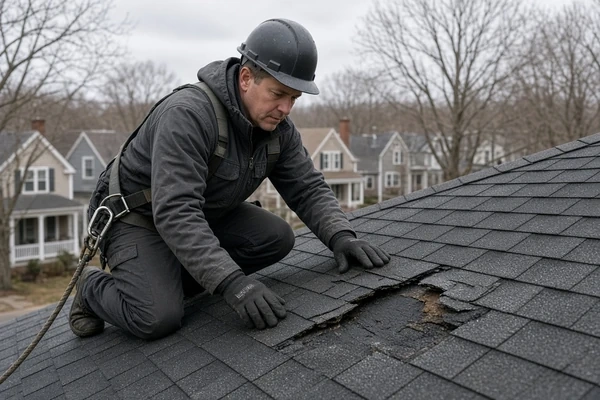
Roofing Emergency Triage Chart for Massachusetts Homes
Sort what you’re seeing into 1 of 3 tiers: Now (call any hour), Soon (call within 48 hours) or Fine for now (book a daytime inspection). They’re the same now, soon and fine verdicts our inspection reports use.
| What you see | Tier | What to do first | Source |
| Water dripping near a light, outlet or electrical panel | Now | Stay away from it. Cut power at the main breaker only from a dry spot. | CDC |
| A ceiling bubble holding water | Now | Bucket under it. Drain it if it’s away from light fixtures. | Powersol |
| A ceiling or roof that sags, creaks or pops, or doors that suddenly stick | Now: call 911 first | Leave without touching light switches. Call from outside. | MEMA |
| Shingles or flashing torn off, with rain or snow still coming | Now | Move belongings, catch the water, take photos. | Powersol |
| A tree limb through the roof deck | Now | Stay out of that room. Report downed wires to the power company. | CDC |
| Ice dam water coming through a wall or ceiling | Now | Don’t climb up or chip at the ice. | Mass.gov |
| A flat roof with ponding water coming through | Now | Catch the water and clear the room below. | Powersol |
| A slow drip a bucket can catch, far from wiring | Soon | Bucket, towels, photos. Start drying. | EPA |
| Hail 1 inch or larger or gusts of 58 mph or more, with no leak | Soon | Photograph what you can see from the ground. | NWS |
| 1 or 2 missing shingles, curling, granules in the gutter, black streaks or moss | Fine for now | Book an inspection. | Powersol |
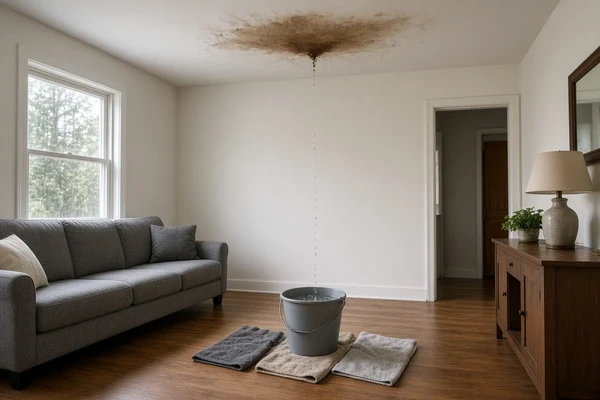
Is a Roof Leak an Emergency?
A roof leak is an emergency when water is near wiring, spreading across a ceiling or coming through an opening the storm made. A slow drip into a bucket, far from anything electrical, is a Soon call that can usually hold until morning.
Water near wiring comes first
If water reaches a light fixture, outlet or the electrical panel, the roof is your second problem. Don’t touch anything wet. The CDC’s guidance for wet electrical systems is to turn off power at the main breaker or fuse, but never to step into standing water to reach it. If you can’t get to the panel from a dry spot, stay away from it and tell the person who answers our line. Keep that power off until an electrician has checked it.
The 48-hour drying clock
Every leak starts a clock. The drip you see is the overflow. By the time it shows on the ceiling, water has usually soaked the insulation and run along the framing, and the EPA’s 24 to 48 hour drying window is already counting down. That’s why a drip that can wait until morning can’t wait until next week.
Most leaks we see start at chimney or wall flashing, a cracked vent boot, lifted or missing shingles, or an ice dam at the eave. The whole roof wearing out is rarely the cause. Water also travels, so the stain is rarely right under the spot where it gets in. That’s why our roof leak repair work starts at the stain and traces the water back to where it gets in.
On a flat roof, ponding water that starts coming through the ceiling is the same tonight call.
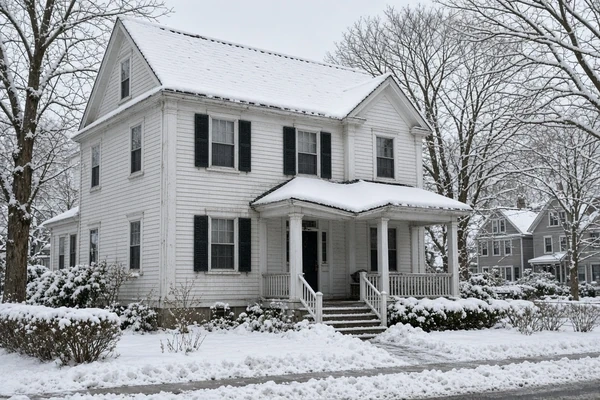
Warning Signs a Roof Could Collapse
Sagging, creaking and doors that suddenly stick mean you leave the house first and call a roofer second. MEMA, the Massachusetts Emergency Management Agency, says to leave immediately without touching light switches and call 911 from outside.
Its list of warning signs includes:
- A sagging roof or severe leaks
- Cracked or split wood, or bends and ripples in supports
- Cracks in walls or masonry
- Doors that pop open, or doors and windows that are hard to open
- Creaking, cracking or popping sounds
FEMA gives the same order for snow-loaded roofs: evacuate, then call a qualified design professional, which means a structural engineer as well as a roofer. On any emergency visit, our crew’s first job is checking that nothing overhead is unsafe.
How much snow is too much for a roof?
There’s no single safe depth, because snow weight changes with the snow. In FEMA’s snow load guide, 1 foot of fresh snow weighs about 3 pounds per square foot when it’s light and dry, and up to 21 pounds when it’s wet and heavy. That’s 7 times the load from the same foot of snow. Ice adds a little under 5 pounds per square foot for every inch.
If you clear snow yourself, follow MEMA’s advice: use a snow rake from the ground on a pitched roof, skip the ladder, and leave 2 to 3 inches instead of scraping down to the shingles. For anything you can’t reach from the ground, FEMA’s guide says snow removal should be done by a licensed, insured roofing contractor.
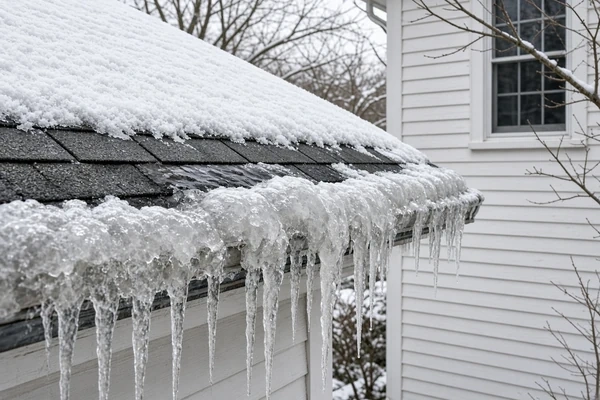
Ice Dam Leaks Are the Massachusetts Winter Emergency
An ice dam becomes an emergency when meltwater backs up under the shingles and shows up inside a wall or ceiling. A ridge of ice along the gutter with nothing coming inside is a repair to schedule for daylight.
The state’s ice dam guidance on Mass.gov explains the cause. Most ice dams form when heat leaking into the attic warms the underside of the roof sheathing. Snow melts, runs down to the cold eave and refreezes into a ridge that holds back the next melt.
The same guidance is blunt about removal. Don’t get on the roof, and don’t chip at the ice from the ground. Falling ice can be fatal.
On an emergency visit, we photograph the ice-packed eave, stop the water where it’s getting in, and leave the permanent fix for a dry deck. The long-term fix usually starts inside the house. The state’s guidance points to air sealing and attic insulation first.
Wind, Hail and Fallen Trees
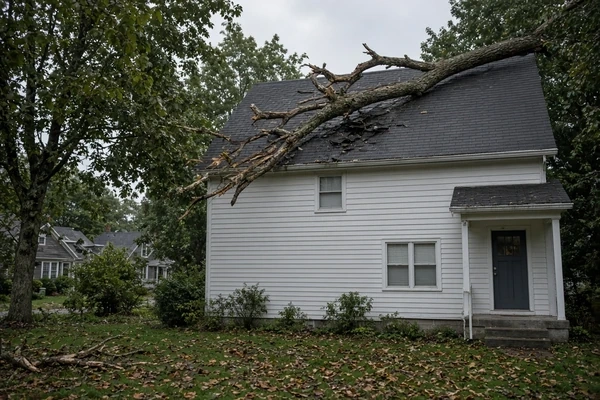
Storm damage is an emergency when the storm left an opening: shingles or flashing torn off with rain still coming, or a limb through the roof deck. Dented gutters or bruised shingles with a dry attic can wait 1 or 2 days.
If a tree comes through, get everyone out of that side of the house. If a power line came down with it, stay away, report it to the power company as the CDC advises, and call 911 if anyone is hurt. Don’t climb up to cut the limb free. We take dated photos of every damaged area before we tarp, and those photos are the start of any storm damage repair and any claim.
Hail or high wind with no leak
Hail or wind with a dry ceiling isn’t an emergency, but it shouldn’t wait weeks either. The National Weather Service office for Boston lists its severe thunderstorm criteria as hail 1 inch or larger or wind gusts of 58 mph or more. After a storm like that, photograph what you can see from the ground and call within 48 hours to get the roof checked.
If you file a claim, we hand your adjuster the documentation to back it, and we’ll do an on-site walkthrough with your adjuster if you ask.
What to Do While You Wait for the Roofer
Protect people first, then your things, then the evidence. Here’s the order we give callers:
- Keep everyone away from water near lights, outlets and the panel.
- Move furniture and electronics out from under the leak.
- Set a bucket under the drip with towels around it.
- Photograph the water and the damage before you clean anything.
- Hold on to damaged items until your adjuster sees them.
- Stay off the roof, especially in wind, rain or ice.
Steps 4 and 5 come from the Massachusetts Division of Insurance. Its disaster guide tells homeowners to make temporary repairs as soon as possible to prevent more damage, photograph damage before cleanup, keep receipts and keep damaged items until the insurance company’s representative has seen them.
Draining a ceiling bubble safely
If water pools in a bubble in the paint or drywall, pierce the lowest point with a screwdriver over a bucket so it drains instead of bursting. Stand to the side, and skip it if the bubble is near a light fixture. If the whole ceiling is sagging or cracking, don’t touch it. Get out of the room.

What Can Wait for a Scheduled Inspection
If nothing is getting in and nothing overhead is unsafe, it can wait for a daytime visit. These still deserve a look:
- 1 or 2 missing shingles with a dry attic
- Curling shingles or granules collecting in the gutters
- Black streaks or moss
- Branches resting on the roof
- A vent boot that looks cracked but isn’t leaking yet
A roof inspection from our crew checks shingle condition and granule loss, flashing at chimneys, walls and skylights, vent boots, valleys, drip edge, attic stains or soft spots, and signs of past ice dams. Those are the slow problems an old roof hides until a storm turns them into a tonight call.
An Emergency Calls for a Tarp, Not a Contract
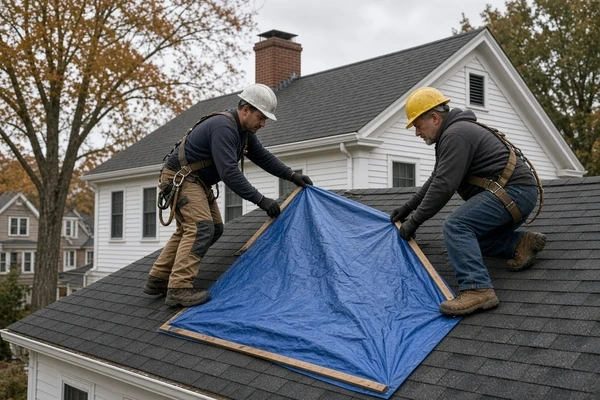
The only work that has to happen tonight is a temporary repair. The bigger job can wait until the roof is dry, the photos are reviewed and your adjuster has seen the damage.
The state’s own guidance supports that order. The Division of Insurance says most homeowner’s policies cover materials and reasonable labor for temporary and emergency repairs. It also says the fastest way through a claim is having your contractor and the adjuster meet at the house at the same time. Nothing in that process needs a signature in your driveway at midnight.
Massachusetts rules protect you when you slow down. Mass.gov’s guide to home improvement contracts says:
- Any contract over $1,000 must be in writing.
- The deposit can’t be more than 1/3 of the total price, except for special-order materials.
- If you sign at home, you can cancel until midnight of the 3rd business day.
- The contractor’s registration number has to be on the first page.
- If you hire an unregistered contractor, you can’t use the state’s Guaranty Fund.
That fund matters. The state’s Home Improvement Contractor program says it can pay eligible homeowners up to $25,000 on unpaid judgments against contractors.
Our own emergency visits end with a tarp, photos and an itemized quote. The tarp buys you time, so there’s no pressure clock. On insurance, sudden storm damage is often covered, and wear and age generally aren’t. Either way, our dated photos are the evidence your insurance company will ask for. If a crew with a magnetic sign on the truck knocks after a storm and wants a signature on the spot, say no and check their registration first.
What Happens When You Call Powersol at 2 a.m.
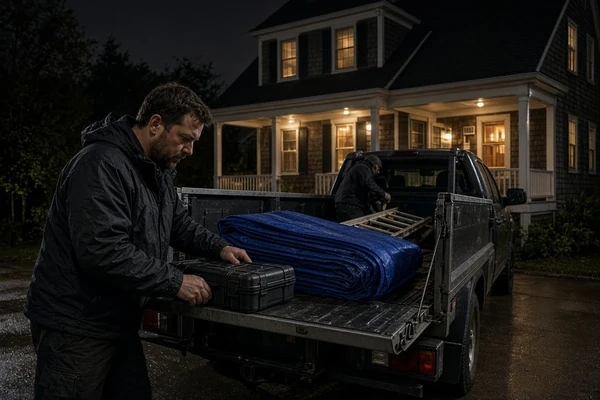
A real person answers, asks what you’re seeing and tells you what to do until the crew gets there. The triage costs nothing, and the visit is quoted before anyone climbs a ladder, whatever the hour.
On site, the crew checks that nothing overhead is unsafe, stops the water where it’s getting in with a tarp and emergency sealing, and photographs the cause, whether that’s a lifted shingle, a split pipe boot, failed flashing or an ice-packed eave. The tarp is anchored above the damage and lapped so water sheds over it. It’s a temporary fix, and we never pretend it’s the permanent one.
The permanent repair happens later, on a dry deck in daylight. The same photos become the itemized quote, so you never pay for a second visit to find what the first one already saw.
If a repair solves it, we’ll say so, even when a replacement would pay us more. If the photos show the roof is near the end of its life, we’ll show you that too, and replacing the roof becomes the conversation. Most standard replacements take 1 to 2 days once material is on site and the weather holds.
Our crews work Quincy, Dorchester, Randolph, Stoughton, Brockton, Bridgewater and the rest of the South Shore.
Roofing Emergency Questions Homeowners Ask Us
Can a roofing emergency wait until morning?
Sometimes. A slow drip that a bucket can catch, nowhere near wiring, can usually hold until daylight. Water near a light or outlet, a spreading ceiling stain or an opening from the storm can’t wait. If you’re not sure which one you have, call anyway, because the triage costs nothing.
Does homeowners insurance cover a roofing emergency in Massachusetts?
Sudden storm damage often is covered, and wear and age generally aren’t. The Massachusetts Division of Insurance says most homeowner’s policies cover materials and reasonable labor for temporary and emergency repairs, and that cost counts against your coverage limit. Keep the receipt and your photos, because they’re the evidence your insurance company will ask for.
How fast does mold grow after a roof leak?
The EPA says drying wet materials within 24 to 48 hours usually keeps mold from growing. If mold has already spread, size matters. Under about 10 square feet, the EPA says most homeowners can handle the cleanup themselves, and past that it points to its remediation guide for larger jobs.
Should I tarp my roof myself?
No. MEMA’s winter safety advice is to skip the ladder in icy conditions, and a wet roof at night isn’t much safer. A tarp that holds has to be anchored above the damage and lapped so water sheds off it. Catch the water inside and leave the roof to a crew.
How do I check if a roofer is registered in Massachusetts?
Search the contractor’s name in the state’s Home Improvement Contractor lookup on Mass.gov, and look for the registration number on the first page of the contract. Any contract over $1,000 must be in writing. Hiring an unregistered contractor shuts you out of the state’s Guaranty Fund, which can pay eligible homeowners up to $25,000 on unpaid judgments.
Will a roofer come out at night or in the rain?
Our emergency line is answered by a real person 24/7, including nights, holidays and nor’easters. The person on the phone tells you what to do right away and quotes the visit. When it isn’t safe to go up, tarping happens as soon as conditions allow.