Metal sheds snow better than asphalt. That part is true. But in Massachusetts, snow sliding off the roof is not what wrecks houses in winter. Ice dams are. And the part most roofing pages skip is this: your roof material does not cause ice dams, and it does not stop them either. Your attic does.
So when homeowners ask us whether they need a metal roof for snow, the honest answer is usually no. A well-built asphalt shingle system handles a New England winter, and it costs about a third of what metal costs. Metal has its place. For most homes we look at across Greater Boston and the South Shore, it is not the smart spend.
I’m Manny Reynoso, owner of Powersol Roofing. This is the real comparison, without the sales pitch.
Metal vs asphalt roof for snow, in plain terms: a metal roof sheds snow fast and lasts 40 to 70 years, while an architectural asphalt roof holds snow in place, lasts about 30 years, and costs far less. In snow country, both keep a house dry only when the attic and the roof edges are built to stop ice dams.
Do Metal Roofs Shed Snow Better Than Asphalt?
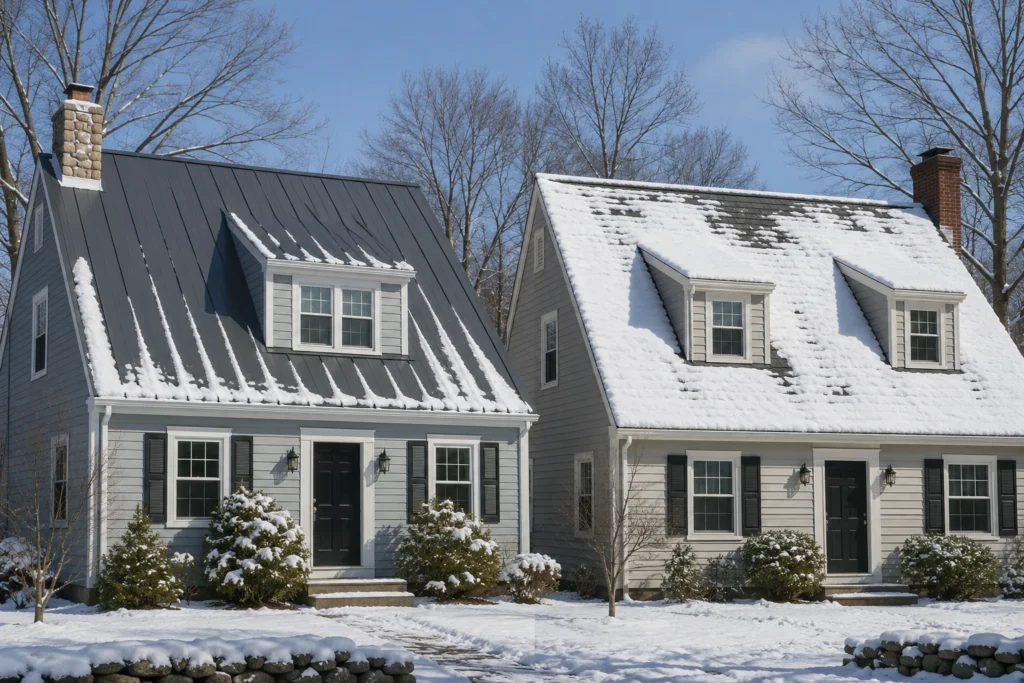
Yes. Metal is slick, so snow slides off it faster than off asphalt shingles, which have a rougher surface that grips snow. That sounds like a clean win for metal. It is not that simple.
When a heavy load of snow lets go from a steep metal roof, it comes down all at once. That is why metal roofs in snow country need snow guards, small brackets that hold the snow so it melts off in pieces instead of one sheet. Tom Silva of This Old House gives the same warning: put barriers above the entryways on a metal roof so a slide does not land on someone at the door.
Asphalt does the opposite. It holds snow on the roof and lets it melt off slowly. On most homes, that is easier to live with, and there is nothing hanging over the front step waiting to drop.
In Massachusetts, Ice Dams Do the Real Winter Damage
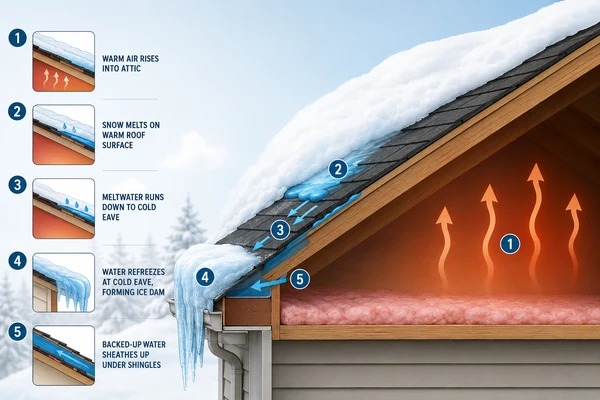
Ice dams cause far more winter roof damage in Massachusetts than snow weight ever does. An ice dam is a ridge of ice that builds up at the edge of the roof and traps melting snow behind it. That trapped water backs up under the shingles and finds its way into the house.
The way it forms has nothing to do with the roof material. Warm air leaks out of the house into the attic. That heat warms the roof deck. Snow on the roof melts, runs down to the cold edge, and freezes again. The University of Minnesota Extension points to air leakage through the ceiling as the main way heat reaches the attic and starts that cycle. An ice dam needs three things: snow on the roof, freezing weather, and an attic that leaks heat. You cannot control the first two. The third one you can.
Does a Metal Roof Actually Stop Ice Dams?
No. A metal roof over a warm, leaky attic still gets ice dams. I have seen it happen. The material on top is not the fix.
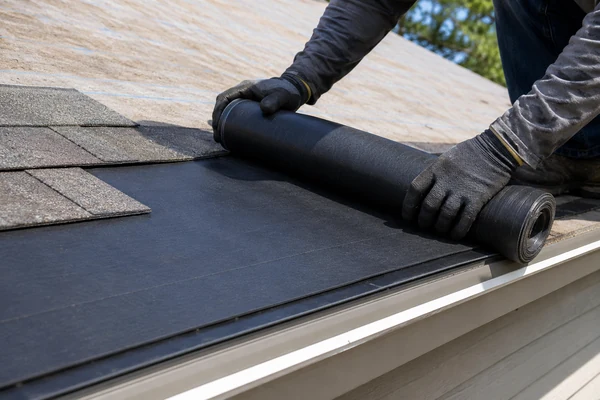
What stops ice dams is the part you cannot see from the street. The U.S. Department of Energy’s Building America program lays out the order: seal the air leaks between the house and the attic, add insulation so heat stays in the rooms you pay to heat, and keep the attic cold with steady venting. For our climate, that means attic insulation around R-49 or higher. Then protect the roof edge with an ice and water barrier under the shingles. Do that, and the snow melts slowly and evenly, dam or no dam.
This is the honest reason most Massachusetts homes do not need metal. The winter fight is won in the attic and at the eaves, not on the shingle surface.
Metal vs Asphalt for Snow, Side by Side
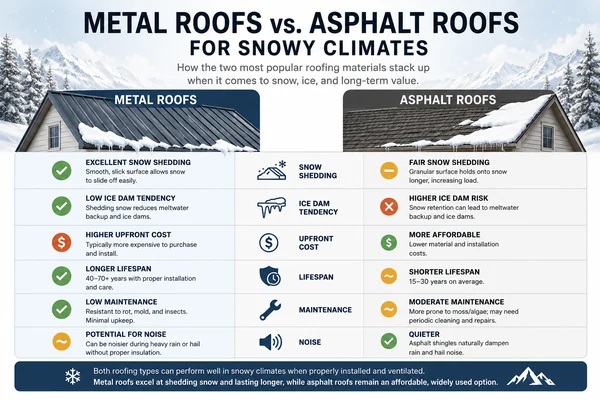
For a straight comparison in a snowy climate, this is how architectural asphalt and standing seam metal stack up.
| Factor | Architectural asphalt | Standing seam metal |
|---|---|---|
| Snow shedding | Holds snow, releases it slowly | Sheds fast, needs snow guards |
| Ice dam control | Depends on the attic and edge barrier | Depends on the attic and edge barrier |
| Lifespan | About 30 years | 40 to 70 years |
| Snow guards | Usually not needed | Needed over doors and walkways |
| Rain and hail noise | Quiet | Louder |
| Repairs | Easy, common parts | Specialized |
| Best fit | Most Massachusetts homes | Long holds, certain designs, some low-slope details |
How Much Does a Snow-Ready Roof Cost in Massachusetts?
Metal roofing generally costs significantly more to install than asphalt shingles, often several times more depending on the material, roof design, and installation requirements.
Massachusetts is its own market, and every roof is different. The final cost depends on roof size, pitch, the number of existing layers that need to be removed, rotted decking discovered during the tear-off, chimney and skylight flashing, ventilation upgrades, and access around the property.
I don’t post one-size-fits-all prices because they rarely reflect the actual scope of the job. What I can say is that choosing asphalt instead of metal can leave room in the budget for attic insulation and ventilation improvements that help prevent ice dams and protect the roof system.
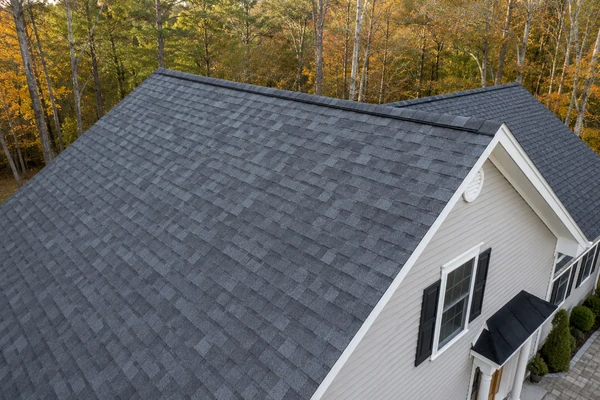
How We Build an Asphalt Roof for New England Winters
A roof works as a system. The shingle is the part you see. The parts that keep water out of your house in February sit underneath and at the edges. Across the roofs we do, the problem usually isn’t the shingle itself. It is old flashing, weak ventilation, reused pipe boots, and rotted decking at the edges where water has been getting in for years. Here is the GAF system we install and why each piece matters in snow country.
- Ice and water barrier at the eaves and in the valleys. We run GAF WeatherWatch along the edge. Massachusetts code requires this leak barrier from the roof edge to at least 24 inches inside the exterior wall line, which is exactly where ice dams form.
- Synthetic underlayment, GAF FeltBuster, across the rest of the deck as a second layer under the shingles.
- Starter strip and GAF Timberline HDZ architectural shingles, built to take the wind and storm damage we get here, including near the coast.
- A cold, vented attic using the GAF Cobra SnowCountry ridge vent. It is made for snow country, passed a 110 mile per hour wind-driven rain and snow test, and has a built-in snow filter, so it lets attic heat out without letting snow blow in.
- New drip edge, flashing, and pipe boots, because that is where most leaks we find actually start.
That system comes with a written workmanship warranty on top of the GAF material coverage. Most of our standard replacements go on in one to two days once the material is on site and the weather cooperates, often in a single day.
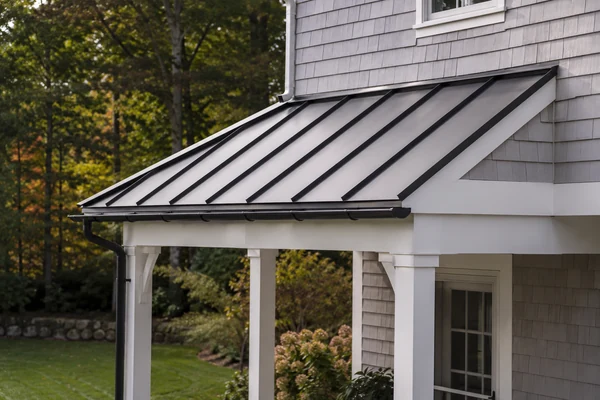
When a Metal Roof Is Worth the Money
Sometimes it is. If you plan to stay in the house 40 years and never want to think about the roof again, metal can earn its price. It also fits certain low-slope sections, modern designs where the look is the whole point, or a porch where a standing seam panel solves a detail that asphalt cannot.
We install both asphalt and metal roofing, and we will give you the straight read for your house.If a roofer cannot explain why metal is worth triple the price on your specific roof, that is your answer. Start with a roof inspection and real photos, then decide.
Asphalt Shingles and Massachusetts Snow Load
Asphalt handles Massachusetts snow load without a problem, because snow load is a question about the frame of your house, not the shingles on top. The state building code sets a ground snow load for every town, running from about 25 pounds per square foot near the southeast coast to 50 or more in the western hills. Your rafters and trusses are built to carry that. A layer of asphalt shingles weighs a small fraction of the snow sitting on it.
If your roof structure is sound, asphalt is not going to fail under a normal winter here. What fails is an old roof with cracked flashing, no ice and water barrier, and a warm attic dumping heat into the snow above it. That is a build problem, not a material problem.
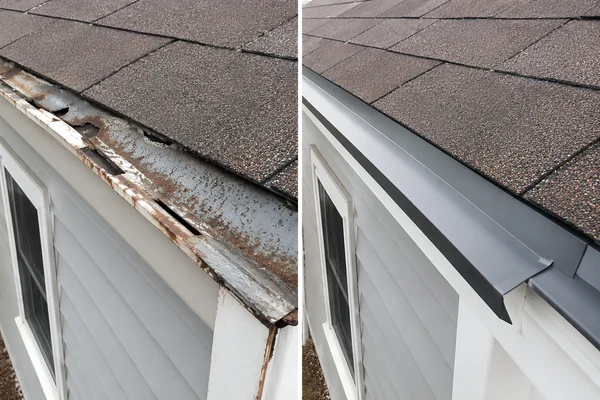
What I Tell Homeowners About Snow
Do not buy a roof material to fix a winter problem that lives in your attic. Spend first on air sealing, insulation, ventilation, and a proper ice and water barrier at the edges. Put a well-built asphalt roof on top of that, and you have a house that stays dry and warm for about 30 years. Want metal instead? Fine, we build the same system underneath it. The snow does not care what the shingle is made of. It cares whether the attic is cold and the edges are sealed. If you want a straight answer for your own roof, get an honest estimate and we will show you the photos.
Frequently Asked Questions
Is a metal or asphalt roof better for snow?
Metal sheds snow faster because its surface is slick. Asphalt holds snow and releases it slowly, which is easier to live with over doors and walkways. Both keep a house dry in snow country only when the attic and roof edges are built to stop ice dams. Metal costs two to three times more to install.
Do metal roofs really stop ice dams?
No. Ice dams come from heat leaking out of the house into the attic, which melts snow that refreezes at the cold edge. A metal roof over a warm, leaky attic still gets them. The fix is air sealing, attic insulation around R-49 or higher, steady ventilation, and an ice and water barrier at the eaves.
How long does an asphalt roof last in a cold climate?
Architectural asphalt shingles like the GAF Timberline HDZ are built to last about 30 years. Basic three-tab shingles last only 15 to 20. Metal runs 40 to 70 years. In a Massachusetts winter, lifespan depends less on the material and more on flashing, ventilation, and the ice and water barrier underneath.
Do I need snow guards on my roof?
On a metal roof in snow country, yes, especially over entryways and walkways, because metal sheds snow in sudden sheets. On an asphalt roof you usually do not, because the shingle surface holds snow and lets it melt off gradually.
Does Massachusetts require an ice and water barrier?
Yes. State code requires a leak barrier running from the roof edge to at least 24 inches inside the exterior wall line, which is where ice dams push water back under the shingles. We install GAF WeatherWatch at the eaves and valleys on every roof.
What is the best roof for snow in Massachusetts?
The best roof for snow here is any roof built as a full system: a cold, sealed, well-insulated attic, an ice and water barrier at the edges, and quality shingles on top. A properly built asphalt system does this for most homes at about a third the cost of metal.