You can do some of your own roof work. An exposed nail head near the eave, a gutter full of maple seeds, a shingle that blew off within reach of a ladder, all fine on a dry day. DIY roof repair stops being a good idea the moment you cannot see the whole problem. On most Massachusetts roofs that happens sooner than people expect.
First, a correction. Almost every roofing site in the country tells you that working on your own roof voids your warranty. GAF’s own warranty document says the opposite, in writing. I’ll show you the line.
Then the two Massachusetts rules that change the math here. You need a permit for most of it, and no square-footage or dollar cutoff gets you out of it. And there’s a band of leak barrier under your eaves that a shingle patch does nothing about.
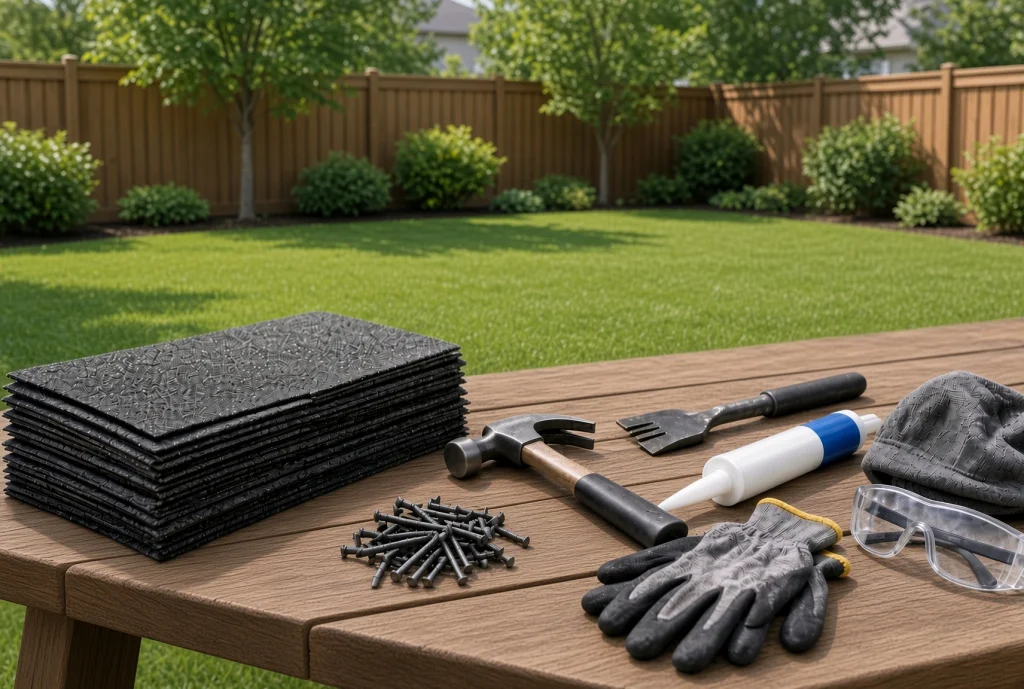
What Is DIY Roof Repair?
DIY roof repair is a homeowner fixing roof damage themselves instead of hiring a licensed contractor. It usually means replacing a few asphalt shingles, sealing an exposed nail, or patching around a vent. It does not cover structural work, valleys, chimney flashing, or anything that needs the roof opened up.
That last sentence is where most of the trouble lives. The repair a homeowner can see is rarely the repair the roof needs.
Does DIY Roof Repair Void Your Roof Warranty?
No. Your shingle warranty survives a bad installation, including your own. What you give up is workmanship coverage, which most homeowners never had in the first place.
Here is the line, and note where GAF puts it. It opens the “What Is Not Covered” section of the standard shingle limited warranty: “Even if your GAF Products were not properly installed according to GAF’s application instructions or to standard good roofing practices, this limited warranty remains in effect. However, GAF will NOT be liable for and this warranty does NOT apply to:” and then the exclusions start. GAF’s warranty comparison chart makes the same point in one word. Under “Who can install?” for base and system coverage it says: anyone.
So the scary version is wrong. The real version is more useful.
GAF’s base warranty covers manufacturing defects in the shingle. That’s all it covers. It won’t pay for “improper fastening of your shingles or accessories or application not in strict accordance with GAF’s printed application instructions, if the improper installation was the cause of the damage.” It doesn’t cover labor, tear-off, disposal, underlayment, metal work, or flashing. Inadequate ventilation is on the exclusion list too, which catches more roofs than people expect.
| Coverage level | Who can install it | Covers a manufacturing defect | Covers a bad install |
|---|---|---|---|
| Base shingle warranty | Anyone, including you | Yes | No |
| System coverage | Anyone | Yes | No |
| Enhanced, entry tier | GAF-certified contractor, registered after install | Yes | No |
| Enhanced, upper tiers | Certified Plus or Master Elite only | Yes | Yes, length varies by tier and shingle |
Read the last two rows. Workmanship, which GAF calls misapplication, is the only coverage that pays when a roof leaks because of how it went on. It lives at the top of the ladder only, and even the entry-level enhanced warranty leaves it out. You also can’t buy it later. It attaches to the contractor at the time of install, or it doesn’t exist at all.
So patch your own shingle and you haven’t voided anything. You’ve confirmed that nobody is covering the workmanship, because on most roofs nobody ever was.
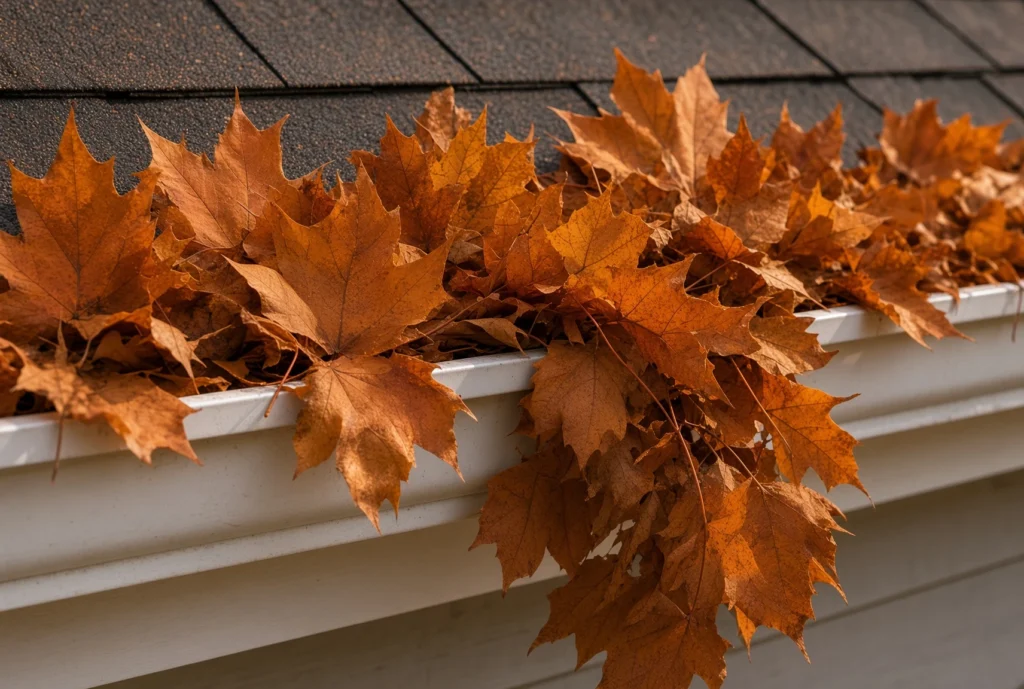
The Repairs A Homeowner Can Safely Do
Four jobs are fine to do yourself, and they share one thing. You can see the entire problem from where you are standing.
Clear the gutters and valleys of leaves and grit. Seal a single exposed nail head with a dab of roof sealant. If one or two field shingles blew off in a wind event and they sit on a low slope you can reach, put new ones in. A loose gutter bracket can go back into solid fascia with a screw.
Everything on that list is reversible. Do it badly and a roofer can undo it in ten minutes. That’s the real test, and it beats sorting jobs by difficulty. Ask whether a mistake here is embarrassing or expensive.
Before any of it: tie the ladder off, let it run three feet past the eave, wear rubber soles, and have somebody on the ground. If you’re going onto the roof instead of working from the ladder, a ridge anchor and a harness cost less than one urgent care visit. Nobody is going to make you wear it. That turns out to matter, and I’ll come back to why.
Now the other side. When homeowners call us, four sentences come up over and over. “My shingles are lifting.” “There are black stains.” “The wood feels soft.” “Water is coming in by the chimney.” Only the first one is usually about shingles. Black streaks are algae and cosmetic. Soft wood means the deck is wet and has been for a while. Water by the chimney is almost always flashing, and no amount of shingle work touches it. If you’re trying to figure out where yours starts, our guide on tracking down a roof leak walks the attic first for that reason.
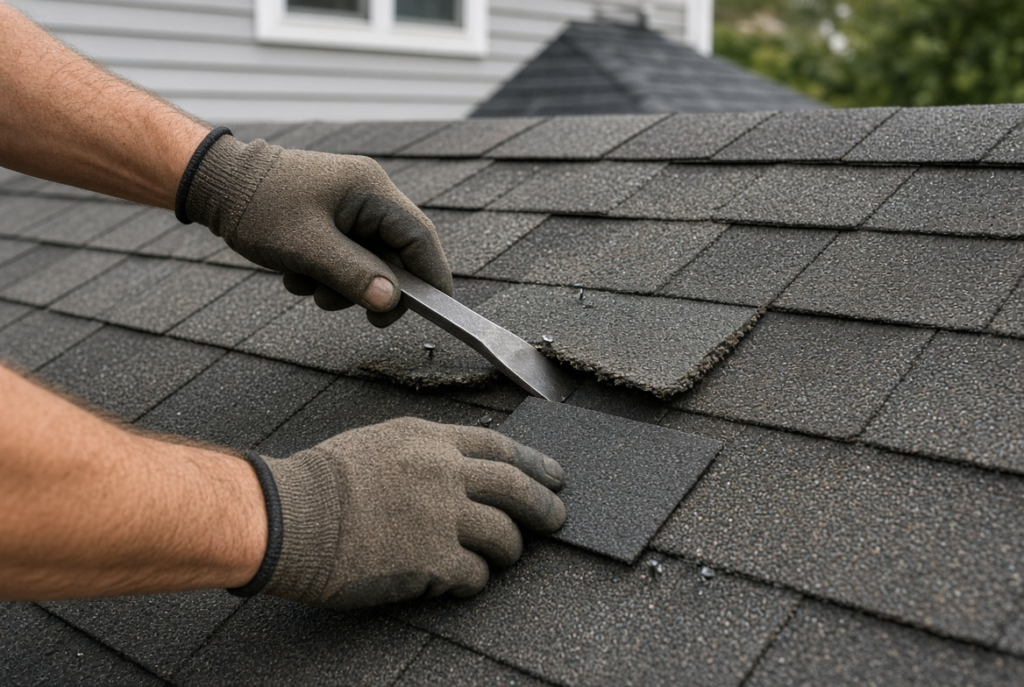
Replacing One Damaged Shingle, Step By Step
Five steps, on a dry day somewhere between about 50 and 80 degrees. That range is shop practice, not a code number. Below 50 the shingles crack when you bend them and the sealant won’t re-bond. Above 80 they scuff and shed granules under your knees.
- Buy shingles that match. Colors drift between production runs, so pull a sample piece and match it in person. If your roof is over ten years old, expect the new one to stand out.
- Break the seal on the shingle above the damaged one. Slide a flat bar under it and work slowly. Cold shingles crack. Hot shingles scuff and lose granules under your knees.
- Pull the nails. Expect four in the target shingle, plus four in the course above that pass through its top edge. Miss that second set and the shingle won’t come out. On a South Shore roof you may find six, which is what GAF requires for its wind coverage, so count before you assume.
- Slide the new one in and nail it on the same line the old one used. On a laminated architectural shingle that is the printed nail zone, the reinforced band running across the shingle. On an old 3-tab it sits about an inch above the cutouts. Nail above the zone and you miss the shingle underneath, so the fastener holds nothing.
- Press the courses back down, seal the exposed nail heads, and put a dab of asphalt roof cement under every tab you lifted. Breaking a factory seal takes a second. Getting it to re-bond on its own does not happen reliably, and an unsealed tab going into a nor’easter is the reason you were up there in the first place. Don’t smear cement across the face of the shingle though. It traps water, and it’s the first thing a roofer looks for.
If you’re pulling more than three or four shingles to get to the problem, stop. At that point you’re not patching, you’re opening the roof, and what’s under it decides the job. We wrote about where the line sits between repairing part of a roof and doing the whole thing.
DIY Roof Repair Cost vs Hiring A Roofer
The money question has a real answer, and it isn’t a number. What a repair costs is decided by what sits under the shingles, and nobody knows that from the driveway.
Swapping one shingle costs you part of a bundle, a handful of nails, and a tube of sealant. That’s the cheap part and the least useful thing to know.
I’m not going to post repair prices. Every roof is different, and the roofers who publish tidy ranges are guessing at a house they have never seen. What I’ll tell you is what moves the number. How many shingles have to come off to reach the problem. Whether the deck under them is sound. Whether flashing is involved. How the roof is reached from the ground. Get those four written down as a scope and you can compare two quotes honestly. Ask for a figure over the phone and you’ll get a guess.
The comparison that matters is not materials against labor. It’s a patch that holds against a patch that hides a leak for eight months while the deck under it goes soft. We have replaced decking that failed under a repair somebody made in good faith.
Do You Need A Permit To Repair A Roof In Massachusetts?
For anything past a minor patch, yes, and there is no square-footage or dollar threshold that lets you skip it.
The Massachusetts residential code says it is unlawful to “construct, reconstruct, alter, repair, remove or demolish a building or structure” without first getting a permit. The code then lists the work you can do without one. That list runs twelve items long and covers fences, driveways, painting and wallpaper, small decks, and window awnings. Roofing is not on it, in any form.
There’s one relief valve, and it’s deliberately vague. The code says notice “is not required for ordinary repairs to structures.” It never defines ordinary. What it does instead is name work that always needs a permit: cutting away a wall, pulling a structural beam or load-bearing support, changing a required exit. Roofing is not named in either direction, which leaves the call with your local building official. Swapping two blown-off shingles isn’t something Quincy is going to write you up for. Re-roofing a slope is.
Call your building department and ask. It’s a two-minute phone call.
One more thing worth knowing before you pull a permit in your own name: doing that changes your standing under the state’s contractor protection rules, which is a separate problem from the roof itself.
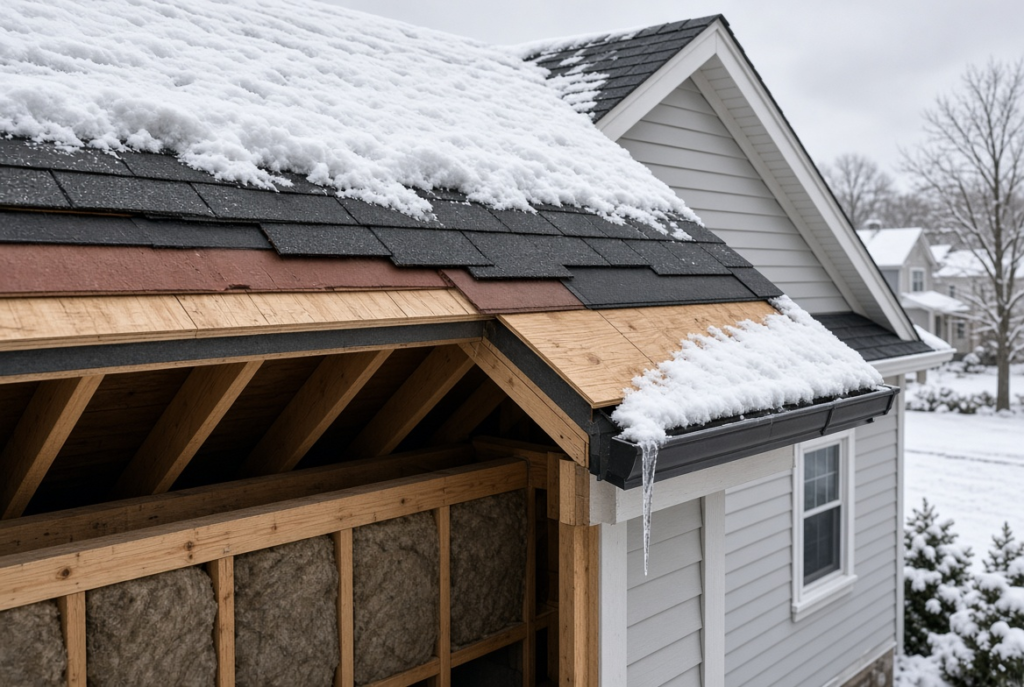
What A Shingle Patch Never Fixes Under A Massachusetts Eave
Massachusetts requires an ice barrier on asphalt shingle roofs statewide, and it lives under the shingles you are about to replace.
Most of the country makes this a local call based on climate. Massachusetts doesn’t. The state writes it into its own version of the code’s climate table as a single statewide yes. Section R905.1.2 of the residential code then says the barrier has to run from the lowest edge of the roof “to a point not less than 24 inches inside the exterior wall line of the building.” On a roof of 8 in 12 or steeper, it also has to run at least 36 inches measured from the eave edge. The one carve-out is for detached structures with no heated floor area, so a bare garage is out, your house is not.
Picture where that puts it. The band starts at your gutter and runs up past the wall of your house, under the shingles, where you can’t see it. That is the same stretch of roof where ice dams form and where almost every winter leak we get called for actually starts.
A new shingle nailed over a failed or missing ice barrier looks finished from the driveway and does nothing in February. Water backs up under the courses, gets past the shingle line, and finds the deck. The Massachusetts Division of Insurance says damage from ice dams and from the weight of ice and snow is generally covered under a homeowners policy. Read the rest of that answer though. Only the area damaged in the loss is covered, and further damage from wear and tear or neglect is not. A leak that has been running under a patch since October is the exact fact pattern that second half was written for. We have written more on what actually causes leaks here, and ice is near the top of it.
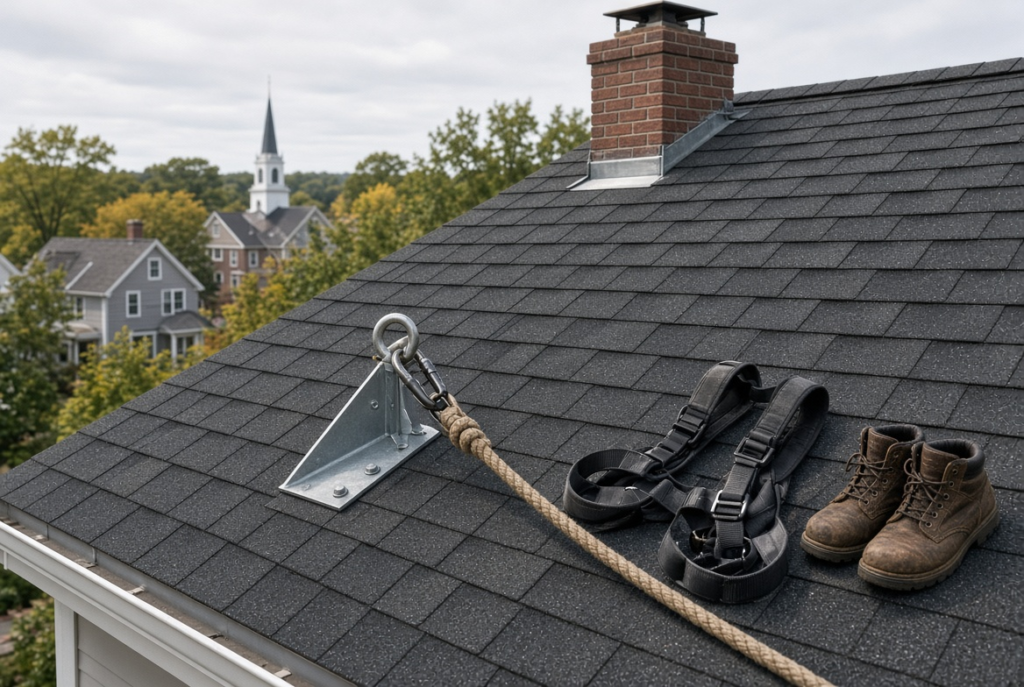
How Steep Is Too Steep To Walk On?
Four in twelve. Above that, the roof is officially steep, and the odds change with it.
You’ll see 6:12 quoted as the DIY cutoff on a lot of roofing blogs. That number isn’t from anywhere. OSHA’s fall protection rules define it clearly: “Steep roof means a roof having a slope greater than 4 in 12.” Massachusetts code draws a separate line for the shingles themselves, requiring at least 2 in 12 for asphalt, with a doubled underlayment between 2 in 12 and 4 in 12. Three real numbers exist. Six in twelve isn’t one of them.
OSHA’s 6-foot fall protection rule binds employers and their crews. It doesn’t reach a homeowner on their own house, which means the person with the least training on that roof is also the only one with no rules and no harness.
On the numbers: the Consumer Product Safety Commission estimated 227,000 emergency room visits tied to ladders and stools in 2020. That’s the right figure to look at here, because CPSC’s coding rules throw out work injuries before the count is made. What’s left is everybody who was not on the clock. Separately, the Bureau of Labor Statistics put the 2024 fatal injury rate for roofers at 48.7 per 100,000 full-time workers against 3.3 for all occupations. That second number describes people who do this every day for a living. That isn’t your risk. It’s a measure of how unforgiving the surface is.
Insurance, Resale, And The Patch Nobody Documented
Take photos of your own work. That’s the whole recommendation, and almost nobody does it.
The problem with an undocumented patch isn’t a legal one, it’s a practical one. A home inspector who finds roof cement smeared across three courses will write it up, and you will be answering questions about a repair you no longer remember making. A dated photo of clean work answers it in five seconds.
Same logic on a claim. Adjusters are looking at cause, not at who held the hammer. What sinks a claim is usually not the DIY repair. It’s the absence of any record of what the roof looked like before the storm. If water is coming in right now, get it stopped first and sort the paperwork after. Our guide on slowing a leak from inside covers that without wrecking your claim.
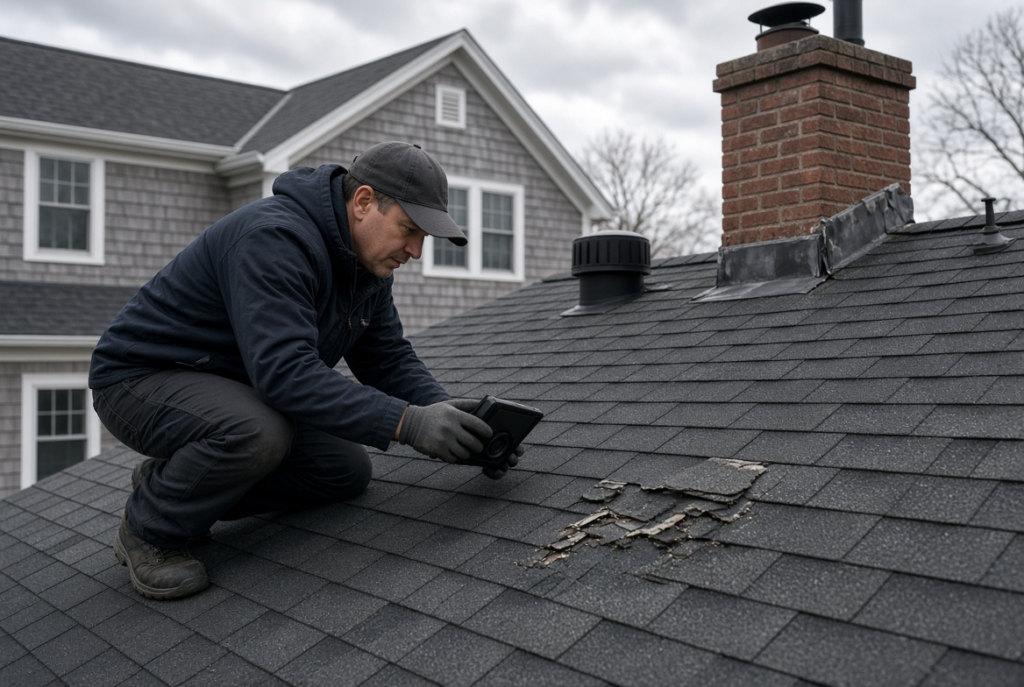
When To Stop And Call A Roofer In 2026
Stop when the problem gets bigger the closer you look. That’s the honest rule, and it beats any checklist.
Concretely: soft or spongy decking underfoot, a stain on a ceiling, anything at a chimney or a wall junction, valleys, more than a few shingles, a second story, a slope over 4 in 12, or a roof you’d need to be talked into climbing. Any tile, slate, or standing seam metal, where a wrong step costs more than the repair.
And the one people miss. From the ground a roof can look fine. What we find up close is granule loss, nail pops, cracked pipe boots, flashing that was reused on the last job, and ventilation that was never cut in. A homeowner standing on that same roof still won’t see most of it, because the tells are small and they only mean something if you have seen them fail before.
We don’t sell fear. If your roof can be repaired, we’ll tell you that and put it in writing. Most standard replacements go on in a day or two once material is on site and the weather holds, so the pitch is never urgency. It’s a written scope you can compare against anyone else’s. If you’re weighing the bigger call, our take on repair or replace lays out how we sort it, photos and all.
DIY roof repair is worth doing on the small stuff. Do the gutters, seal the nail, swap the shingle that blew off. Then call somebody the moment the roof stops answering your questions. We do roof repair in Quincy and across the South Shore, and the inspection comes with photos you keep either way.
DIY Roof Repair FAQ For Massachusetts Homeowners
Can I repair my own roof in Massachusetts?
Yes, for minor work. The Massachusetts residential code makes it unlawful to repair a structure without a permit, and roofing does not appear anywhere on the twelve-item list of work exempt from permits. The code allows “ordinary repairs” without notice, never defines the term, and instead names the work that always needs a permit, none of it roofing. Your local building official decides where the line sits. Call them before you start anything larger than a couple of shingles.
Does DIY roof repair void my shingle warranty?
No. GAF’s standard shingle limited warranty states that even if the products “were not properly installed according to GAF’s application instructions or to standard good roofing practices, this limited warranty remains in effect.” The base warranty covers manufacturing defects only. It never covered workmanship, which GAF calls misapplication. Only the upper enhanced warranties carry that, and they have to be installed by a certified contractor and registered after the job.
What roof pitch is too steep to work on?
Anything over 4 in 12. OSHA defines a steep roof as one with a slope greater than 4 in 12, which is the only number here backed by a standard. The 6:12 figure quoted on many roofing sites has no source behind it. Massachusetts code separately requires at least 2 in 12 for asphalt shingles, with doubled underlayment from 2 in 12 up to 4 in 12.
Do I need ice and water shield when I patch shingles in Massachusetts?
The barrier is required across the whole state, and it sits under the shingles rather than on top. Massachusetts requires it from the lowest roof edge to a point at least 24 inches inside the exterior wall line, and at least 36 inches measured from the eave edge on roofs of 8 in 12 or steeper. Replacing a surface shingle doesn’t restore a barrier that has failed underneath it.
How dangerous is DIY roof work?
The Consumer Product Safety Commission estimated 227,000 emergency room visits involving ladders and stools in 2020, and its counting rules exclude workplace injuries before the estimate is made. For comparison, the Bureau of Labor Statistics put the 2024 fatal injury rate for roofers at 48.7 per 100,000 full-time workers against 3.3 across all jobs. OSHA’s 6-foot fall protection rule applies to employers, not to you on your own house.
Will homeowners insurance still cover a roof I repaired myself?
Generally yes, since adjusters assess the cause of the damage rather than who performed past repairs. The Massachusetts Division of Insurance says damage from ice dams and the weight of ice and snow is generally covered, but adds that only the area damaged in the loss is covered and that further damage from wear and tear or neglect is not. Photograph your own work and date it, because a claim is weakened most by having no record of the roof beforehand.
When should I stop and call a roofer instead of patching?
Stop at soft decking, ceiling stains, chimney or wall flashing, valleys, more than three or four shingles, a second story, or any slope over 4 in 12. Each of those means the visible damage is a symptom. Pulling more shingles to reach the problem is no longer a patch, it’s opening the roof, and what’s underneath decides the actual job.