Repair your roof when the damage is small, the roof is still young, and the structure underneath is solid. Replace it when the damage is widespread, the roof is near the end of its life, or you’ve already patched it more than once. That’s the whole repair or replace decision in three factors: the roof’s age, how far the damage spreads, and the condition of the system under the shingles. Notice what’s missing from that list: price.
A roof repair fixes one specific problem, like a leak, a bad flashing detail, or a few torn shingles, while the rest of the roof keeps its remaining life. A roof replacement strips everything down to the wood deck and rebuilds every layer: the underlayment, starter, shingles, ridge vent, and ridge cap. One buys you time. The other starts the clock over.
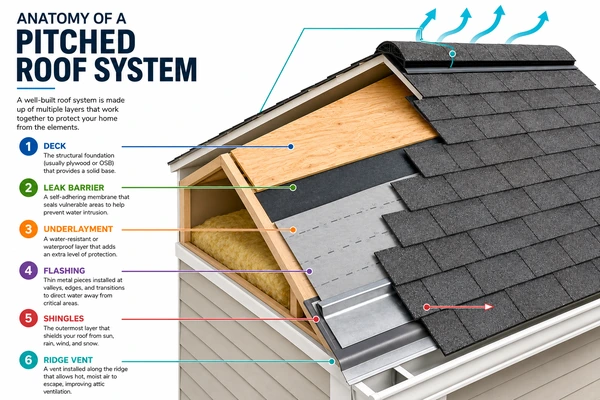
Your Roof Is a System, and the Shingles Are Just the Part You See
The most common mistake homeowners make is judging a roof by its shingles alone. The shingles are the layer you can see, but the deck, underlayment, flashing, attic ventilation, drip edge, valleys, and pipe boots decide how long the roof actually holds up. We explain each layer of a roof system separately if you want the plain version.
Across the roofs we work on in Massachusetts, the leak usually isn’t coming from the shingle at all. It’s flashing that was never sealed right, a valley that funnels water the wrong way, a reused pipe boot, weak attic ventilation, or rotted decking at the eaves where water has been sneaking in for years. Patch the shingle, ignore the system, and the leak comes back next season.
What’s the Difference Between a Roof Repair and a Roof Replacement?
A repair fixes a contained problem and leaves the rest of the roof in place. A replacement removes the whole roof down to the deck and rebuilds it.
On a full replacement, we install the complete GAF system: a leak barrier at the eaves and in the valleys, synthetic underlayment across the deck, starter strips, GAF Timberline HDZ shingles, a ridge vent, and matching ridge cap. That combination is what people mean when a new roof “resets” the roof. A new roof means the whole system is new, with its warranty clock starting at zero.
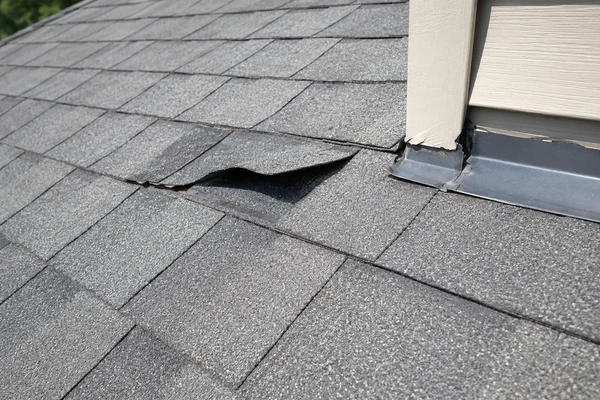
When a Repair Is the Right Call
Repair makes sense when the roof is young, the damage is contained, and the system under it still has life. If your roof is under about 15 years old and you’ve got one leak, a few shingles torn off after a windstorm, or a single bad flashing detail, a targeted roof repair is usually the honest answer.
The problems homeowners describe as “a couple shingles lifting” or “a small stain on the ceiling by the chimney” are often exactly that, a contained fix. There’s no reason to replace a whole roof with ten good years left because of one bad pipe boot.
This is where plenty of roofers push a full replacement anyway. We don’t sell fear. If your roof can be repaired, we’ll tell you, show you the photos, and fix the thing that’s actually broken.
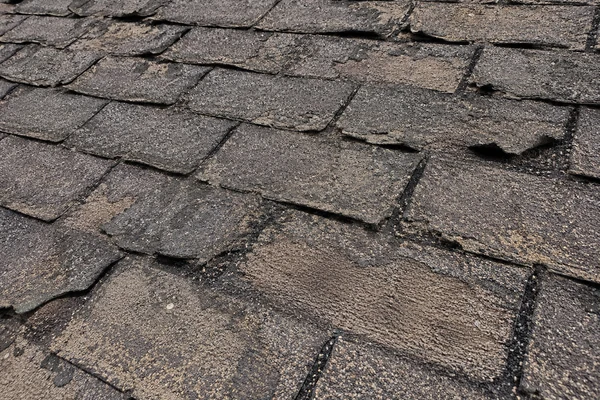
When Replacement Wins
Replace the roof when the damage covers more than one slope, the structure is failing, or you’re back up there for the third repair in a few years. Past that point, another repair only buys a few more months.
Watch for widespread granule loss, leaks showing up in more than one room, a roofline that sags, wood that feels soft underfoot, mold, or daylight coming through the deck in the attic. Those point to a worn-out system, not one bad spot. A roof that’s been patched again and again reaches a point where the next patch is money spent on a system that’s already going. That’s when a full roof replacement is the better move, and it’s worth knowing what a new roof actually gives you before you decide.
How Old Is Too Old?
Age is the single biggest factor, so start there. InterNACHI rates architectural asphalt shingles, the kind on most Massachusetts homes today, at about 30 years, and older three-tab shingles at about 20. In practice, our freeze-thaw winters, ice dams, and weak attic ventilation often bring the real number closer to 20 to 25.
A quick read by age:
- Under 15 years: repair is usually right, unless the damage is structural.
- 15 to 20 years: it depends on the damage and how many times you’ve fixed it. Start planning either way.
- Over 20 years: replacement is usually the smarter move, especially before you sell.
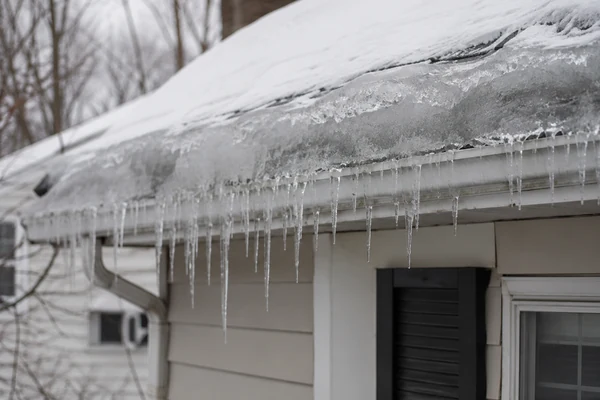
Ice dams are a big reason New England roofs age out early. Heat escaping into the attic melts the snow, the water refreezes at the cold eaves, and it backs up under the shingles. University of Minnesota Extension lays out the mechanics, and the real fix is attic air sealing and ventilation, not just new shingles. It’s also why we won’t quote a replacement without looking at your attic. We’ve written more about what an aging roof puts at risk if you’re near that line.
Age changes your insurance, too. Once a roof passes about 15 years, many carriers pay actual cash value, the depreciated amount, instead of full replacement cost. The Insurance Information Institute explains how that split works.
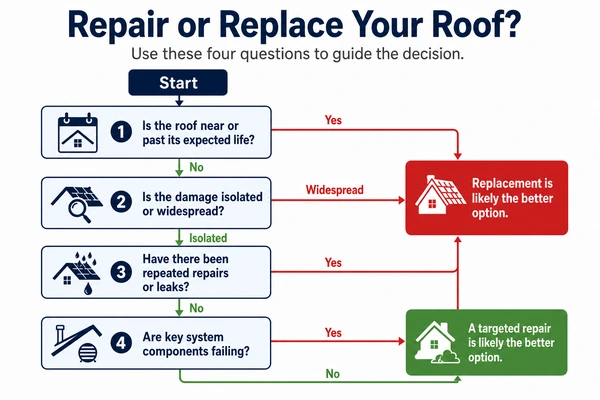
The 60-Second Repair-Or-Replace Decision
Run your roof through four questions. Answer “replace” to two or more, and it’s probably time.
| Question | Points to repair | Points to replace |
|---|---|---|
| How old is the roof? | Under 15 years | Over 20 years |
| How widespread is the damage? | One spot or one slope | Several slopes or the whole roof |
| How many times have you repaired it? | First time | Third time in a few years |
| Is the system sound (deck, flashing, ventilation)? | Yes, solid | Soft decking, bad flashing, or poor ventilation |
None of these four is about the price of a single fix. They’re about one thing: whether you’re maintaining a roof that still has life, or propping up one that doesn’t.
Should You Repair or Replace After Storm Damage?
After a storm, the answer depends on how much of the roof the wind or hail actually hit, not on how bad it looks from the yard. A few lifted shingles is a repair. Bruised or cracked shingles across several slopes is usually a replacement.
Here’s how we handle storm damage: we do a full roof inspection, photograph everything, and tell you straight whether it’s real storm damage or normal wear. If it’s real and you file a claim, we document it and meet your adjuster. We won’t tell you to file for damage that isn’t there, and we won’t promise the carrier will approve it. You’re responsible for your deductible, and an older roof may be paid at depreciated value, so age matters here too.
Why Matching a Few New Shingles Rarely Works
Even a clean repair can leave your roof looking patched, because new shingles almost never match old ones. Weathering, faded granules, discontinued colors, and different manufacturing lots all work against a match. The same shingle in the same color still stands out next to twelve years of sun and salt air.
That’s not only about looks. If storm-damaged shingles can’t be matched, it can affect how an insurance claim gets settled. And a patch of bright new shingles on a tired roof usually just marks where the next problem starts.
How We Decide at Powersol, Without the Fear Pitch
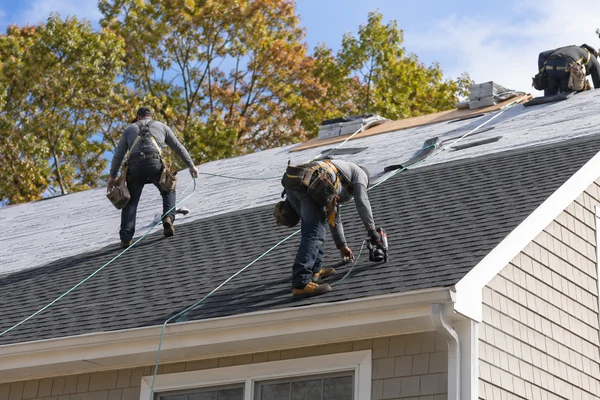
Our process is short: inspect, photograph, and show you what’s going on before anyone mentions tearing off a roof. You see what we see.
Take a recent Taunton project. The homeowner needed more than shingles, so we replaced the roof, swapped the gutters, and changed the fascia and soffit over to PVC so the edges would stop rotting. In Randolph, it was a roof, gutters, and siding package. In Dorchester, a roof paired with new windows. Different houses, same approach: fix what the house needs, skip what it doesn’t.
Most standard replacements go on in one to two days, once the material is delivered and the weather holds. Our average is about a day. Every replacement is a full GAF system backed by a GAF workmanship warranty [confirm exact GAF warranty name and term].
We won’t be the cheapest quote you get, and we’re fine with that. A low number usually means something got left out: the tear-off, the decking, the flashing, the ventilation, the cleanup, or the warranty. Ask any roofer what’s included before you compare.
So, should you repair or replace your roof? Get a real set of eyes on it before you decide. We offer a free roof inspection across Greater Boston, the South Shore, and southeastern Massachusetts, with photos and an honest recommendation either way. Book yours, and we’ll show you exactly what your roof needs.
Frequently asked questions
How do I know if I should repair or replace my roof?
Look at three things: the roof’s age, how far the damage spreads, and whether the system under the shingles is sound. A young roof with one leak is a repair. A 20-year-old roof with damage on several slopes is usually a replacement.
How long does an asphalt roof last in Massachusetts?
Architectural asphalt shingles are rated at about 30 years and older three-tab shingles at about 20, according to InterNACHI. In practice, New England freeze-thaw winters, ice dams, and weak attic ventilation often bring that closer to 20 to 25 years.
Can I just replace part of my roof?
Sometimes, but matching new shingles to old ones is hard, and a partial job leaves two different ages of roof on one house. New shingles rarely match weathered ones, even in the same color and brand.
Should I repair or replace my roof after a storm?
It depends on how much of the roof the wind or hail actually damaged. We inspect, photograph the damage, and tell you whether it’s real storm damage or normal wear before you decide or file a claim.
Will insurance pay to replace my roof?
Maybe. If a storm caused the damage, a claim may cover it, but many insurers pay depreciated value on roofs older than about 15 years, and you’re responsible for your deductible. We document the damage and meet your adjuster, but we never promise approval.
How long does a roof replacement take?
Most standard roof replacements go on in one to two days, once the materials arrive and the weather holds. At Powersol, the average is about a day.
What are the signs I need a new roof instead of a repair?
Widespread granule loss, leaks in more than one room, a sagging roofline, soft or rotted decking, and daylight through the attic all point to replacement. Repeated repairs on the same roof are another sign the system is failing as a whole.