Metal roofs do increase home value in Massachusetts. Less than you’ve been told, and less than asphalt returns in this market.
Zonda’s 2025 Cost vs. Value Report tracks 28 remodeling projects in the Boston market. Metal roofing ranks 21st. A metal roof job modeled at $56,042 returns $22,465 at resale, or 40.1%. Asphalt shingles in the same report cost $35,658 and return $21,177, or 59.4%.
Run that math and the upgrade looks different than the brochure. Going metal instead of asphalt costs $20,384 more and hands you $1,288 more at the closing table. That’s a 6.3% return on the extra money.
I’m a roofer. I’d rather you hear that from me now than from an appraiser later.
What “Increases Home Value” Actually Means for a Roof
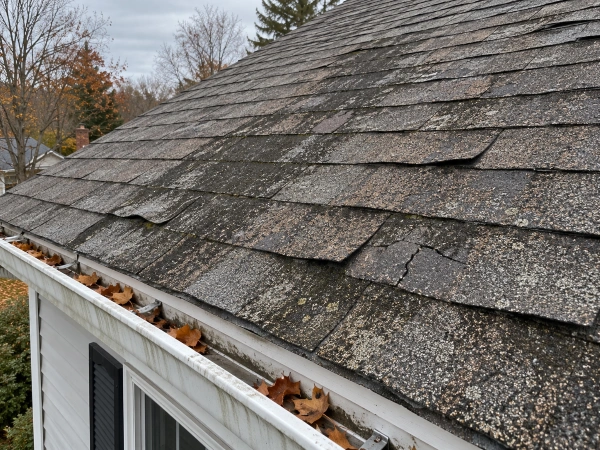
A metal roof increases home value the way any roof replacement does. It removes a known repair liability that a buyer would otherwise price into their offer. In the Boston market, Zonda’s 2025 Cost vs. Value Report puts that recovery at 40.1% of the job cost, the 21st best return out of 28 tracked projects.
That’s the honest frame. A roof isn’t an upgrade that adds value on top. It’s a deduction you stop taking.
How Much Value Does a Metal Roof Add?
In Boston, a metal roof returns about 40 cents on the dollar. Here’s where it lands against the rest of the exterior work homeowners ask me about.
| Project (Boston, 2025 Cost vs. Value) | Job cost | Resale value | Recouped | Rank of 28 |
|---|---|---|---|---|
| Garage door replacement | $4,312 | $12,240 | 283.9% | 1st |
| Fiber-cement siding | $20,568 | $23,973 | 116.6% | 5th |
| Vinyl windows | $21,977 | $15,318 | 69.7% | 10th |
| Roofing, asphalt shingles | $35,658 | $21,177 | 59.4% | 16th |
| Backyard patio | $53,526 | $23,667 | 44.2% | 18th |
| Roofing, metal | $56,042 | $22,465 | 40.1% | 21st |
A $4,312 garage door beats a $56,042 metal roof by 7 times on percentage recovered. That’s not an argument against roofs. Nobody sells a house because the garage door looked great. It’s an argument against buying a roof as an investment.
The $20,384 Upgrade That Returns $1,288
Compare the 2 roofing rows against each other and the metal question answers itself.
Metal costs $20,384 more than asphalt in that Boston dataset. It returns $1,288 more. You’re spending 20 grand to move the resale needle by about the price of a decent set of gutters.
I’m not anti-metal. We quote it, and there are roofs it belongs on. But if a salesman tells you a metal roof pays for itself when you sell, ask him which market data he’s using. The Boston numbers say otherwise.
One more number worth knowing before you sit through that pitch: the “up to 6%” home value bump you’ll see repeated across metal roofing websites traces back to a newspaper home-advice column, not a study. Zillow puts the average Massachusetts home value near $660,000, so 6% of that is close to $40,000. That’s nearly double the entire resale value the Cost vs. Value data assigns to a metal roof job in Boston. The claim doesn’t survive its own arithmetic.
Why Does Massachusetts Return Less Than the National Average?
Because our labor and material costs run high while the resale credit doesn’t move with them. Nationally, metal roofing recoups 50%. Across New England it drops to 38.9%. Boston sits at 40.1%.
Asphalt tells the same story. It recoups 68% nationally and 59.4% in Boston.
So every national article promising you 60% to 70% back on a roof is quoting a number that runs 8.6 points high for asphalt and 9.9 points high for metal once you land it in Boston. Massachusetts buyers already assume the roof works. They don’t pay a premium for it. They just subtract when it doesn’t.
That’s the pattern I see in the driveway. Nobody offers more because the roof is new. Plenty of deals get chopped because it isn’t.
What an Old Roof Actually Costs You at the Closing Table
The roof rarely kills a deal outright. It gets repriced, and that number never shows up in a Cost vs. Value table.
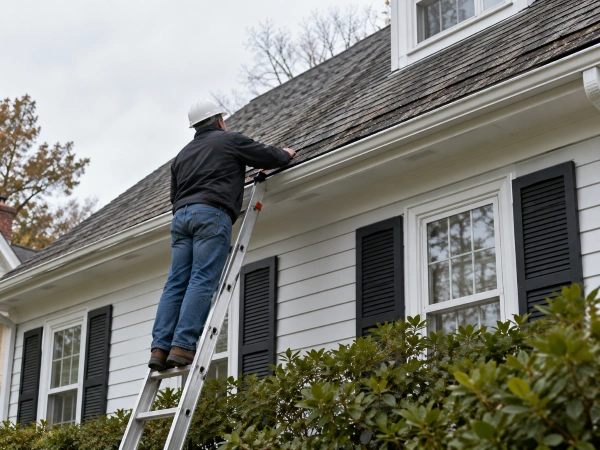
The sequence runs the same way almost every time. The buyer’s home inspector goes up, or looks from a ladder at the eaves, and writes a line like “roofing at or near the end of its serviceable life, recommend evaluation by a licensed contractor.” That sentence moves the negotiation. The buyer’s agent asks for a credit. The number they ask for usually isn’t what the roof costs. It’s what the highest estimate they collected says it costs, and it lands 10 days before closing, when you have a moving truck booked and nothing left to push back with.
A homeowner who replaces the roof before listing knows the number in advance and controls the scope. A homeowner who waits gets a number set by a stranger who has never been on the roof.
So the 40.1% and 59.4% recovery rates aren’t the whole story. Cost vs. Value measures what shows up in an appraisal. It doesn’t measure the concession you never had to make.
Do Metal Roofs Lower Homeowners Insurance in Massachusetts?
Sometimes, but roof age and condition drive carrier decisions here far more than the material does. Massachusetts insurers are making non-renewal decisions off aerial photos of your roof, and the state has weighed in on how they’re allowed to do it.
What the state told insurers in 2025
The Massachusetts Division of Insurance issued Bulletin 2025-02 on April 30, 2025, signed by Commissioner Michael T. Caljouw. 3 things in it matter to you:
- Carriers can use drone and satellite imagery in underwriting, and they do.
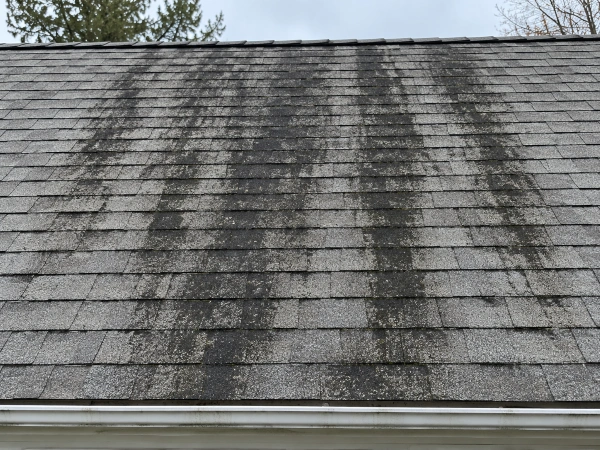
- Cosmetic issues alone aren’t enough. The bulletin says “roof discoloration or streaking” should not be the sole basis for a non-renewal, cancellation, or refusal to write.
- If they act, they have to tell you why, specifically, so you can arrange remedial action. They also have to review evidence you send back contesting their finding.
A follow-up consumer advisory from the same office, dated November 5, 2025, confirms insurers must give at least 45 days’ notice before non-renewing your policy. It also warns about third-party mailers dressed up as insurance notices that aren’t from any carrier at all.
Here’s the part that matters for this article: those black streaks on your roof are algae. Under the state’s own bulletin, that alone shouldn’t cost you your policy. A metal roof won’t grow algae, and that’s a real advantage. But replacing a sound asphalt roof with metal to satisfy an insurer is solving a problem the Commissioner already said they can’t use against you. If you get one of those letters, document the roof with photos before you call anybody.
What a Metal Roof Costs in Massachusetts in 2026
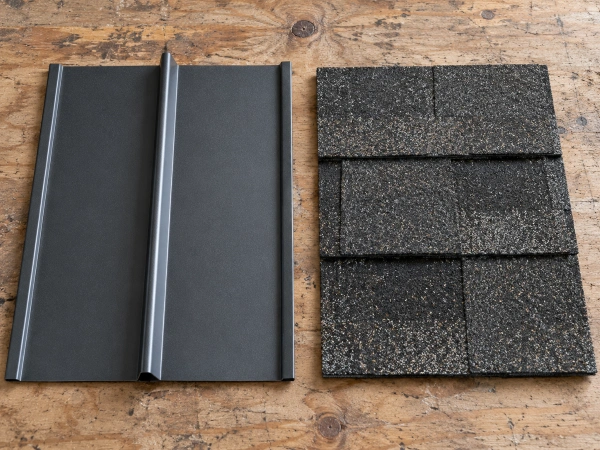
Expect a wide range, because “metal roof” covers 4 different products at 4 different prices. This Old House puts metal shingles at $7 to $22 per square foot and standing seam at $9 to $30, against $2 to $4 per square foot for architectural asphalt shingles plus about $2 for installation.
| Architectural asphalt | Metal | |
|---|---|---|
| Material, per square foot | $2 to $4 | $7 to $30 depending on type |
| Expected service life | 15 to 30 year warranty range | 30 to 50 year warranty, often lasting 40 to 70 years |
| Boston resale recovery | 59.4% | 40.1% |
I don’t publish fake prices, so here’s the real range instead. A lot of Massachusetts asphalt roofs come in under $10,000. Plenty land at $15,000 to $20,000 or more. What moves the number is roof size, pitch, how many layers come off, rotted decking, chimney and skylight flashing, ventilation, access around the house, and whether gutters or fascia are in the scope.
That $56,042 figure in the Cost vs. Value table isn’t what your house costs. It’s one large standardized job the researchers price nationwide so the percentages stay comparable. Use the percentage. Ignore the dollar amount.
Metal Earns Its Money on Service Life, Not Resale
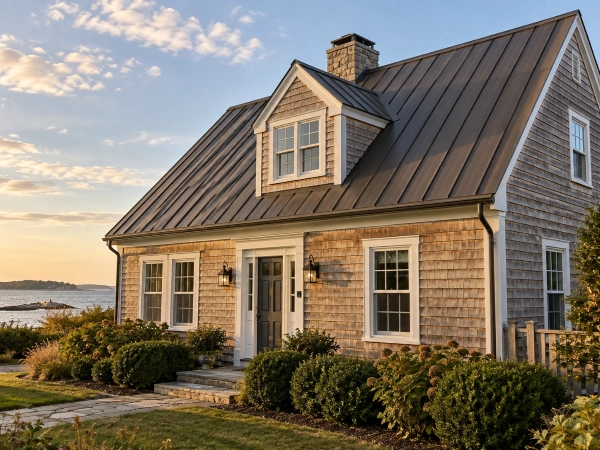
The strongest case for metal has nothing to do with selling. It’s that you may never buy another roof.
An architectural asphalt roof carries a 15 to 30 year warranty range. Metal carries 30 to 50 and frequently runs 40 to 70 years in service. If you’re 45 and staying put, metal can mean 1 roof instead of 2.
Run that over 50 years. 2 asphalt roofs at Massachusetts pricing cost more than 1 metal roof, and that’s before you count the second tear-off, the second dumpster in the driveway, and the second round of scheduling around New England weather. That calculation favors metal, and it has nothing to do with what a buyer will pay you.
Energy is a smaller piece than the brochures suggest. The Department of Energy says a reflective roof can stay more than 50°F cooler than a standard one under the same sun, and it recommends metal shingles or tiles with a factory-applied cool coating or reflective granules. Note what DOE does not publish: a specific percentage off your cooling bill. Anyone quoting you an exact savings number is quoting somebody’s marketing, not the government’s guidance. In a Massachusetts climate with roughly 3 months of real cooling load, treat energy savings as a bonus, not a reason.
Which Massachusetts Homes Are Actually Right for Metal?
Low-slope sections, porch roofs, additions, and houses in heavy snow country. Metal is also the right call on a roof you physically cannot get to easily every few years.
Metal does shed snow better than asphalt, which matters on a north-facing slope that ices up every February. What metal doesn’t do is fix the thing that causes most ice dams, which is heat leaking into a cold attic. Put metal over a bad ventilation setup and you’ve bought an expensive roof with the same problem underneath.
For most center-entrance colonials and capes around Quincy, the South Shore, and out toward the roofers in Worcester territory, a properly installed GAF system does the job for roughly a third of the price. That’s not me talking down a product. That’s me telling you what I’d put on my own house.
2 questions come up in almost every metal conversation. Are they loud in the rain? Over a finished attic with decking, underlayment, and insulation below, no louder than asphalt. Over an open porch or a barn, yes, noticeably. And can metal go over your existing shingles? Sometimes, depending on the product and what Massachusetts code allows for your specific roof, but I’d rather pull the old roof and look at the deck. You can’t warranty wood you never saw.
If you want metal on part of the house and asphalt on the rest, that’s a normal job. We quote metal roofing in Quincy and we’ll tell you where it earns its keep.
What Adds More Value Than the Material on Top
The install. Every time.
Buyers don’t hire an appraiser to grade your shingles. They hire a home inspector, and inspectors write up the same short list of things on almost every roof I look at.
What We Find When the Old Roof Comes Off
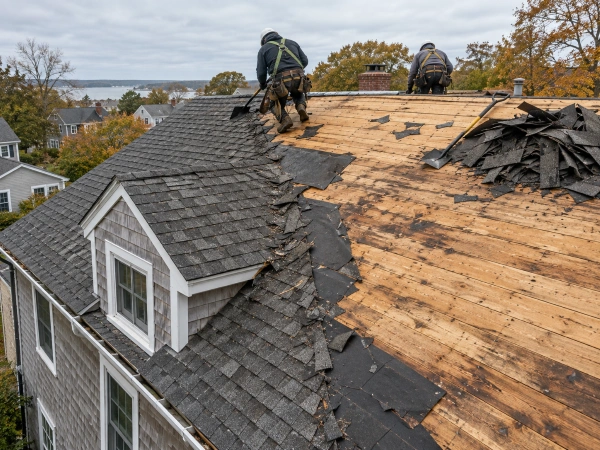
The problem is almost never just the shingle. Across the roofs we tear off, what shows up underneath is flashing that was caulked instead of replaced, ventilation that was never right, pipe boots that got reused from the last roof, nails driven in the wrong spot, no proper ice-and-water barrier at the eaves, and decking that’s soft enough to feel through your boot.
None of that is visible from the street. All of it lands in an inspection report.
That’s why a full new roof installation from us is a system, not a shingle: GAF WeatherWatch leak barrier, FeltBuster synthetic underlayment, Pro-Start starter strip, Timberline HDZ shingles, Cobra ridge vent, Seal-A-Ridge cap, new drip edge, new flashing, new pipe boots. Most standard replacements go on in 1 to 2 days once material is delivered, and our average is usually a single day.
Here’s the part nobody in this conversation says out loud. A cheap metal roof installed over the same bad flashing is worth less to a buyer than a well-installed asphalt roof with a transferable warranty behind it. When a quote comes in thousands lower than everyone else’s, ask what’s missing: tear-off, decking, ventilation, flashing, cleanup, warranty, insurance, and who’s standing behind the work in 5 years.
New roofing does carry real weight with agents, for what it’s worth. The National Association of Realtors’ 2025 Remodeling Impact Report gives new roofing a perfect joy score of 10, with 37% of realtors recommending it to sellers before listing and 43% reporting increased buyer demand for it. Notice what that report does not say: it publishes no cost-recovery percentage for roofing at all. Any page telling you “NAR says a roof recoups X%” made that attribution up.
So Do Metal Roofs Increase Home Value, or Not?
They do, by about 40 cents on the dollar in Boston, which is less than asphalt returns and less than most exterior projects on the same list. Buy metal because you want to stop thinking about your roof for 40 years, because your roof geometry calls for it, or because you like how it looks. Don’t buy it as a resale play.
And whichever material you land on, the install decides what it’s worth. If you want somebody to walk your roof, take real photos, and give you a written scope instead of a number on a business card, that’s what Powersol Roofing does. We’ll tell you if it can be repaired, too.
Frequently Asked Questions
Do metal roofs increase home value?
Yes, but less than most homeowners expect. In the Boston market, Zonda’s 2025 Cost vs. Value Report shows metal roofing recouping 40.1% of its cost at resale, ranking 21st out of 28 tracked remodeling projects. Asphalt shingles recoup 59.4% in the same market. Metal is worth buying for its service life, not for its resale return.
How much more does a metal roof add to home value than asphalt?
About $1,288 more in the Boston market, on an upgrade that costs $20,384 more. The 2025 Cost vs. Value Report puts metal roofing at $56,042 with $22,465 in resale value, against $35,658 and $21,177 for asphalt shingles. That works out to a 6.3% return on the extra spend.
Do metal roofs lower homeowners insurance in Massachusetts?
Sometimes, but roof age and condition matter more to carriers than the material. Massachusetts Division of Insurance Bulletin 2025-02, issued April 30, 2025, confirms insurers use aerial imagery in underwriting decisions and requires them to give specific reasons for a non-renewal. It also states that cosmetic issues such as roof discoloration or streaking should not be the sole basis for dropping a policy.
How long does a metal roof last compared to asphalt?
Metal roofing typically carries a 30 to 50 year warranty and often stays in service 40 to 70 years, according to This Old House. Architectural asphalt shingles generally carry a 15 to 30 year warranty range. For a homeowner planning to stay put for decades, that difference is the real argument for metal.
How much does a metal roof cost in Massachusetts in 2026?
Metal shingles run roughly $7 to $22 per square foot and standing seam $9 to $30, compared with $2 to $4 per square foot for architectural asphalt plus about $2 for installation. Your actual number depends on roof size, pitch, how many layers come off, decking condition, flashing work, and ventilation, so get a written scope rather than a per-foot estimate.
Is a metal roof worth it if I am selling in the next few years?
Generally no. At a 40.1% recovery rate in Boston, you would be leaving roughly $33,500 of a $56,042 job on the table. If the goal is to get the house sold without a roof concession, a properly installed asphalt system does that for about a third of the cost and recoups a higher percentage.
Does a new roof help a house sell faster?
Agents rate it at the top. The National Association of Realtors’ 2025 Remodeling Impact Report gives new roofing a joy score of 10, with 37% of realtors recommending it to sellers before listing and 43% reporting increased buyer demand. The report does not publish a cost-recovery percentage for roofing, so treat any page that quotes one to NAR with suspicion.