Usually yes, but not for the reason your quote says. The industry skips this part. “Replace the skylight” and “replace the flashing” are two separate line items, and only one of them is non-negotiable. The flashing comes off and goes back new every single time, because it’s woven into shingle courses that are being torn off. The unit itself is a judgment call. The US Department of Energy’s own retrofit guidance says to keep a skylight that’s in good shape and relatively new. So if a roofer quotes you a new unit without telling you what’s wrong with the one you have, you’re owed an answer before you sign.
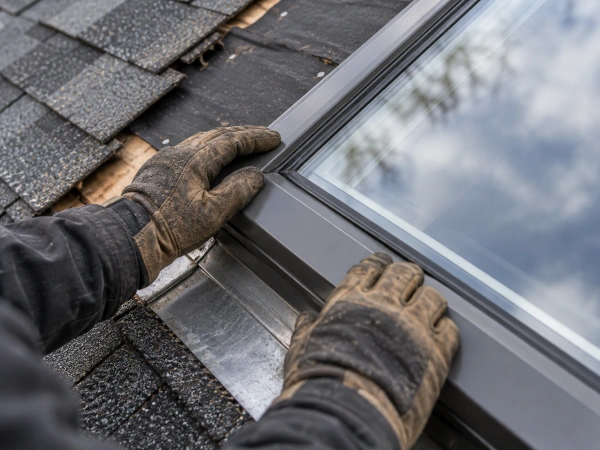
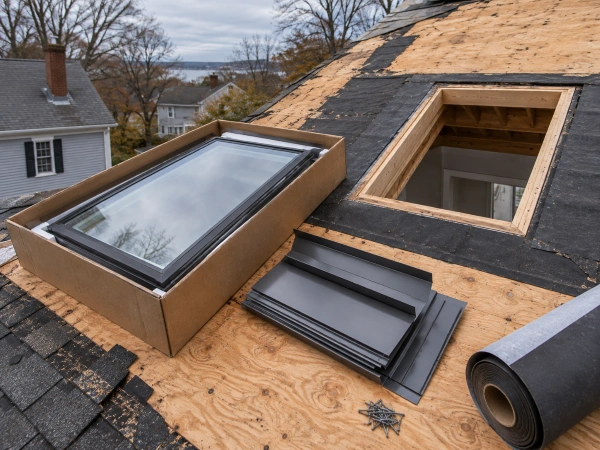
Replacing a skylight during a roof replacement means pulling the unit and its flashing while the shingles around it are already off. A new unit goes into a factory flashing kit, and the new shingle courses weave over it. It happens on open deck, on the same crew day. Done later, the same work means cutting back a finished roof.
The Short Answer, and the Two Times It’s Wrong
Replace the skylight when the roof comes off if the unit is over 10 years old, fogged between the panes, or plastic. Keep it if it’s glass, under 10 years, and dry.
VELUX made a large share of the skylights on Massachusetts roofs. It puts it plainly: “The best time to replace old skylights is when you replace your roofing material because it saves time and money, and enables you to synchronize your skylight and roofing warranties.” That’s true, and it’s also a manufacturer telling you to buy a skylight.
The Building America Solution Center, the Department of Energy’s residential retrofit guidance run through Pacific Northwest National Laboratory, draws the line differently. Its skylight guidance says to consider keeping a unit that “is in good shape, relatively new, and meets performance goals of the project.” It names 3 conditions that push the other way. A failed insulated glass seal, which shows up as fog between the panes. Leaks at the frame joints. Failed gaskets or weather stripping.
I’ll take the DOE’s version. I’ve pulled 8-year-old glass units off roofs that had nothing wrong with them except the tar somebody smeared around the curb. New flashing, same skylight, dry ever since.
The catch is that this only works if the flashing is done right, and that’s where the money actually goes.
What Does It Cost to Do It With the Roof Instead of Later?
Doing it during the tear-off is cheaper, and the gap is mostly labor you’d pay twice.
This Old House puts a professionally installed skylight at $1,000 to $3,000, with custom units above that. That figure covers the unit and a standard install. It does not cover what changes when the roof around it is already finished.
Here’s what actually moves between the two timelines.
| During the roof replacement | As a separate job later | |
|---|---|---|
| Roof access and setup | Already staged and paid for | Priced again for one unit |
| Shingle work | New courses go over new flashing | Finished courses cut back, then patched in |
| Flashing | New kit, on open deck | New kit, worked into existing shingles |
| Deck inspection around the curb | Visible, already open | Hidden until it’s opened |
| Warranty alignment | Roof and skylight start the same day | Two clocks, two claims paths |
| Crew days | Folded into the roof schedule | A separate mobilization |
On timing, our own numbers are simple. A like-for-like skylight swap is typically a one-day job on its own. During a tear-off it disappears into the schedule, since most of our standard roof replacements run 1 to 2 days once material is on site. VELUX says a single replacement “typically takes a couple hours” of actual install time. Both are true. The hours are short; the setup is what you pay for.
What I won’t do is publish a fake number for your house. A skylight line depends on the unit size, whether it’s deck-mounted or curb-mounted, what the deck under it looks like, and how many courses have to come back. Get it itemized.
Glass or Plastic? Check That Before You Decide Anything
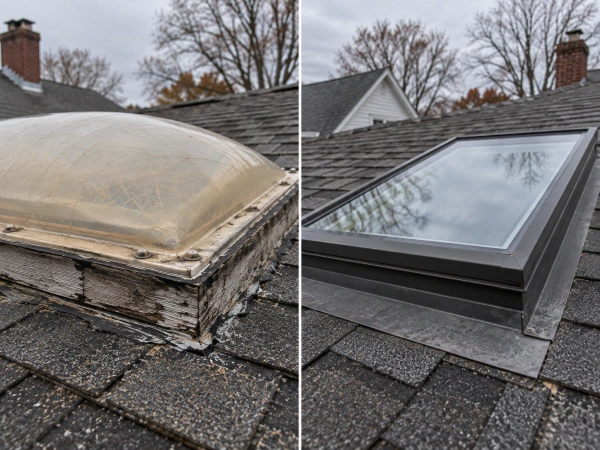
Look at your skylight from inside. If it’s a domed bubble, it’s plastic, and it’s on a shorter clock than the roof. Flat glass in a frame means you have a real decision.
This is why every lifespan number online contradicts every other one. You’ll see 10 years, 15 to 25, 20 or more, all with no source. They’re describing different products. The split is documented. Glass, per This Old House, is “more durable and scratch-resistant” with better clarity. Plastic is “lighter and cheaper initially, but prone to scratches, discoloration, and brittleness,” and the same guide notes that “many units leak.”
That yellowed, hazy dome over a 1980s Massachusetts kitchen isn’t dirty. The plastic has gone brittle and cloudy, and it’s the one case where I’ll tell a homeowner to replace the unit without much discussion. A brittle dome cracks under the first ice load, and by then the roof is new and you’re cutting into it.
Glass units are a different conversation. A fogged pane means the seal between the panes failed, which the DOE guidance lists as a replace condition. A clear glass unit with a dry frame and working gaskets can go back down under new flashing.
One more thing before you shop. Skylights rated 0.60 or higher for visible transmittance read as clear, per This Old House. Lower numbers cut glare but darken the room. Ask for the rating, not the adjective.
What Happens if You Replace the Roof and Keep the Old Skylight?
Nothing, for a while. Then it leaks at the flashing, and the new roof gets blamed for it.
The DOE guidance calls skylights “among the most common sources of water infiltration issues in a home.” That’s the baseline risk on a good install. Now add a roofer who shingled around the curb and left the old metal in place.
VELUX ties its 10-year installation warranty to correct skylight and “appropriate flashing installations (product and labor) against leaks.” The flashing is inside the coverage, not beside it. I wrote out the exact exclusion language and what it means for a re-roof in a longer piece on why a skylight leaks, because that part deserves its own page.
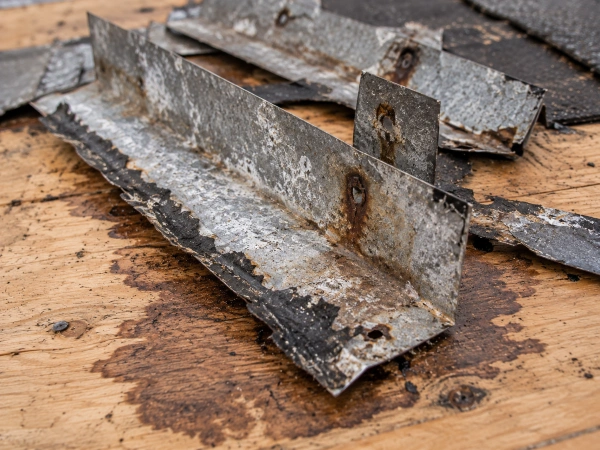
The DOE guidance does allow reusing metal: “Take care not to damage any metal flashing materials that are intended to be reused.” That line is written for a careful retrofit, where the metal is sound and the roof around it stays put. On a full tear-off in Massachusetts, where the step flashing has been under snow load and ice for 20 winters, I don’t reuse it. I’ve never regretted that call.
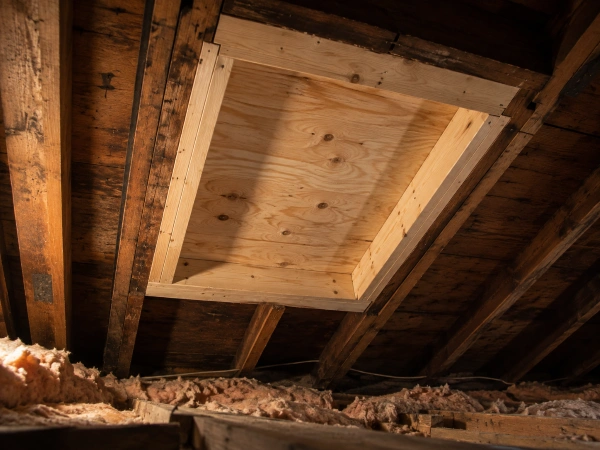
The Option Nobody Offers You: Deck It Over
You can also remove the skylight and close the hole. Almost nobody brings this up, because there’s no unit to sell.
Maybe it lights a hallway you never look at. Maybe the shaft has been a condensation problem every winter, or the room already has good windows. Closing the opening is a legitimate answer. The deck gets framed and sheathed to match, the assembly gets insulated and air sealed, and the ceiling gets patched. No flashing, no seal to fail, no future replacement.
It isn’t free. You’re paying for framing, insulation, drywall, and paint instead of a skylight. And you lose the daylight, which for a lot of Massachusetts homeowners is the whole reason the skylight is there. But it belongs on the list of options, and if your roofer never mentioned it, that tells you something about how the quote was built.
There’s a middle path too. A sun tunnel brings daylight down a reflective shaft with a much smaller roof penetration, and it’s usually under a day of work.
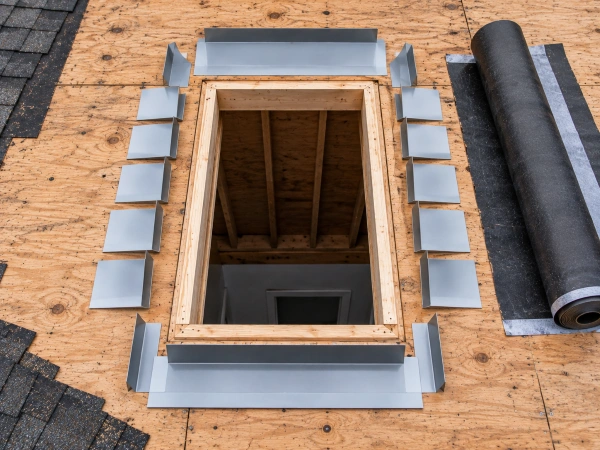
How to Read the Skylight Line on a 2026 Roof Quote
A skylight line that says “skylight” and a price is not a scope.
Ask for 4 things by name. The unit make and model, and whether it’s deck-mounted or curb-mounted. The factory flashing kit built for that model. The underlayment detail that wraps the curb. And what happens if the deck under the curb turns out soft once it’s opened. That last one becomes a change order on a lot of jobs.
On the product side, This Old House advises buying a quality curbed skylight along with “the factory flashing kit made for it.” A kit matched to the model isn’t an upsell. It’s the thing the manufacturer’s leak coverage was written around.
On our side, the skylight ties into the rest of the system: GAF WeatherWatch leak barrier, FeltBuster synthetic underlayment, Pro-Start starter strip, Timberline HDZ shingles, and a Cobra ridge vent up top. The curb detail has to work with all of it, which is why it’s a roofing decision and not a window decision. We do this on new roof installation jobs across the South Shore and through our roofers in Worcester crews.
For context on the roof number itself, plenty of Massachusetts asphalt shingle roofs land under $10,000, and plenty run $15,000 to $20,000 and up. What moves it: roof size, pitch, how many layers come off, rotted decking, chimney and skylight and flashing work, ventilation, access around the house, and whether gutters or fascia are in the job. The skylight is one line in that, and it should read like one.
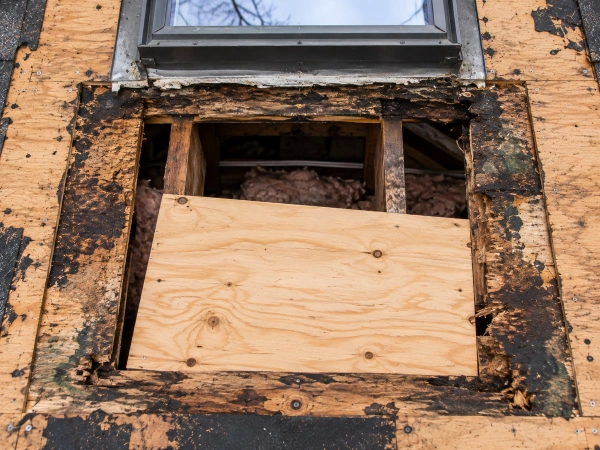
What Do We Find When the Shingles Come Off?
Usually the flashing, and usually something soft.
Across the roofs we do, the problem is rarely just the shingle. It’s flashing, ventilation, a bad previous install, pipe boots, valleys, rotted decking, or the edges of the roof where water has been getting in quietly. Skylights sit at the intersection of most of those. The curb is a flashing detail, a penetration, and a low-insulation patch all at once.
What that means in practice: the skylight decision often isn’t made until the shingles are back and we can see the deck around the curb. That’s not a dodge. It’s why we photograph what we find and show it to you before anything gets ordered, and why our quotes are itemized instead of one number. If the deck is sound and the glass unit is clear, I’ll tell you to keep it and save the money. If it’s soft, you’ll see the photo.
We do the same check on skylight installation and repair calls that aren’t part of a full roof. If you’ve already booked a roof, the checklist for how to prepare for a roof replacement covers the driveway, the material drop, and what to move.
If you want a straight answer on whether to replace your skylight when you replace the roof, that’s what an inspection is for. Powersol Roofing works Quincy and the South Shore, and we’d rather tell you to keep a good skylight than sell you one you don’t need.
Frequently Asked Questions
Is it cheaper to replace a skylight during a roof replacement?
Yes, and the savings are in labor rather than the unit. When the skylight comes out during a tear-off, the roof access, staging, and shingle work are already paid for, and the flashing goes onto open deck. Done later as a standalone job, a roofer has to set up again and cut back finished shingle courses to work the new flashing in. This Old House puts a professionally installed skylight at $1,000 to $3,000 before that extra labor.
Can I keep my old skylight when I get a new roof?
Sometimes, and the US Department of Energy says so in writing. Its Building America Solution Center guidance advises keeping a skylight that is “in good shape, relatively new, and meets performance goals of the project.” Replace it instead if the glass seal has failed and the panes are fogged, the frame joints leak, or the gaskets and weather stripping are shot. A clear glass unit under 10 years old with a dry frame is usually worth keeping.
Do skylights need new flashing when the roof is replaced?
On a full tear-off, yes. The step flashing is woven into shingle courses that are coming off, so it has to come off with them. VELUX ties its 10-year installation warranty to correct skylight and “appropriate flashing installations (product and labor) against leaks,” which means the flashing is part of what’s covered rather than an optional add-on. This is the line item that stays on the quote even when the unit itself is kept.
What happens if I don’t replace my skylight when I replace my roof?
Two things, on a delay. The Department of Energy’s retrofit guidance calls skylights “among the most common sources of water infiltration issues in a home,” so an aging unit on a new roof is the likeliest leak point you have. And if it does fail, getting to it means cutting back shingles you just paid for. A plastic dome unit is the clearest case for replacing now.
Can a roofer remove a skylight instead of replacing it?
Yes, and it’s a real option that rarely makes it onto a quote. The opening gets framed and sheathed to match the deck, insulated and air sealed, and the ceiling below gets patched. You trade the daylight for one less penetration and no future replacement. A sun tunnel is the middle option, with a much smaller hole in the roof, and it’s usually under a day of work.
How long does it take to replace a skylight during a roof job?
The install itself is short. VELUX says a single skylight replacement “typically takes a couple hours,” and on its own a like-for-like swap is typically a one-day job for us. During a roof replacement it folds into the schedule, and most of our standard roof replacements run 1 to 2 days once material is on site and the weather holds. Cutting a brand new opening and finishing the shaft is the longer one, at 2 to 3 days.