Home / Services / Emergency Roof Repair (24/7)
Emergency Roof Repair In Quincy, MA (24/7)
Water coming in right now? Call, and a real person answers, at 2pm or 2am, on holidays and during nor’easters. We tarp and stabilize the leak fast, then schedule the permanent repair on your timeline.
Serving Quincy and the South Shore. Keep buckets under the leak, stay off the roof, and call.
Call (617) 631-5435 Send Details InsteadWhat happens when you call
From Your First Call to a Dry Home in Three Steps
A person answers and triages
You describe what you see, we tell you what to do right now to protect the house, and the emergency visit is quoted before anyone climbs a ladder. No callback queue, no voicemail maze.
Tarp, seal, stabilize
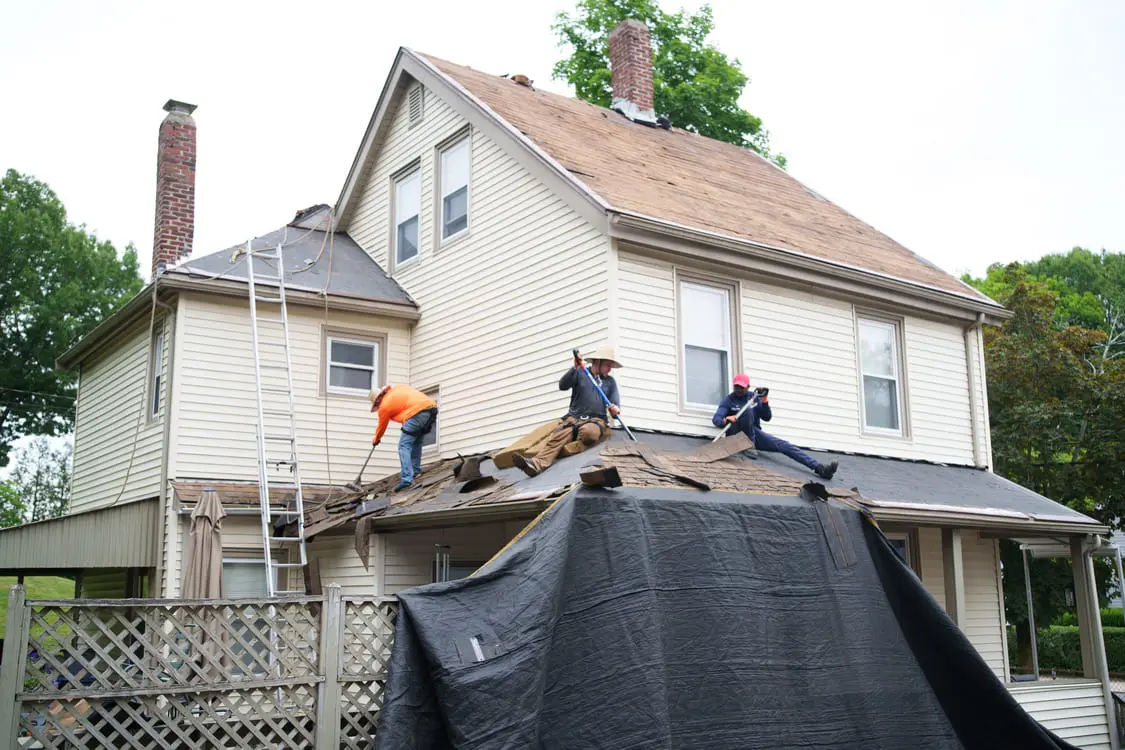
We stop the water at the entry point with tarping and emergency sealing, then photograph exactly what failed: the lifted shingles, the split pipe boot, the failed flashing, the ice-packed eave. We make sure nothing overhead is unsafe. The bleeding stops before any bigger decision is made.
Permanent fix, on your timeline
You get photos of what failed and an itemized quote for the real repair. If insurance is involved, the documentation is already done. You decide the next step with a dry ceiling, not a dripping one.
What Counts as a Roofing Emergency?
A simple test: is water, or weather, getting into the house right now, or is something overhead unsafe? If the answer is yes, it is an emergency and the visit cannot wait for business hours. Water that has found a path does not pause overnight. It follows framing, soaks insulation, and works its way toward drywall, wiring, and whatever is stored below. The difference between a two-hour response and a two-day response is usually the difference between drying out a corner of the attic and replacing a ceiling.
These are the calls we treat as drop-everything emergencies across Quincy and the South Shore:
Why the First Hour Matters More Than the First Day
Roof leaks do their worst damage quietly. The drip you can see in the bucket is the overflow; the water you cannot see is soaking into insulation, tracking along joists, and finding the top plate of a wall. Insulation that stays wet loses its value and grows mold. Drywall that absorbs water sags in hours and crumbles in days.
Winter adds a second clock. According to Massachusetts state guidance, an ice dam forms when heat escaping into the attic warms the roof deck and melts the snow on top, and that meltwater runs down to the cold eave and refreezes. The ridge of ice grows, ponds the next round of meltwater behind it, and pushes it back up under the shingles until it finds a seam and drips inside, usually at an exterior wall or a ceiling edge rather than the middle of the room. That is why an ice-dam leak needs the water stopped and the ice managed the same night, not a patch in the spring.
While you wait
What To Do, and What Not To Do.
The minutes before the crew arrives matter. Protect the inside of the house and let the roof wait for people with harnesses.
Do this now
- Move furniture and electronics out from under the leak
- Put a container under the drip and towels around it
- If a ceiling bulge forms, pierce it with a screwdriver over a bucket so it drains instead of bursting
- Photograph the water and any visible damage for the claim
Please don’t
- Go on the roof, especially in wind, rain, or ice
- Use light fixtures or outlets that water has reached
- Sign anything from a door-knocking crew that shows up after the storm
- Throw away damaged items before they are photographed
Why local matters at 2am
Local Crews Ready When You Need Them
Emergency response is a geography problem. Powersol Roofing is owned by Manuel “Manny” Reynoso and has worked out of 100 Hancock St in Quincy since 2020. The person who answers your call and the crew that shows up are working the same streets you live on: Quincy, Dorchester, Randolph, Stoughton, Brockton, and Bridgewater, with recent roof and exterior projects in Randolph and Dorchester. Nobody is dispatching from two states away.
And after the storm passes, we are still here. The same company that tarped your roof at midnight quotes the permanent repair, honors the workmanship, and answers the phone next winter too. That is the difference between an emergency service and a storm chaser with a magnetic door sign.
One Continuous Repair, From Tarp to Finish
The emergency visit is the first half of one continuous job, not a separate transaction. While the crew is stopping the water, they are also photographing the cause: the torn shingles, the failed flashing, the puncture, the ice-packed gutter line. Those photos become the itemized quote for the permanent roof repair, and if the damage is storm-related, they become the dated evidence your insurance company will ask for. You never pay for a second diagnostic visit to tell you what the first one already saw.
When the weather clears, the permanent repair happens on a dry deck in daylight, which is the only way roofing should be done. If the damage turns out to be a symptom of a roof at the end of its life, we show you that with photos too, and the conversation becomes a replacement conversation, with the emergency work already protecting the house while you decide. There is no pressure clock ticking, because the tarp bought you time. That is what it is for.
Straight answers
Frequently Asked Questions
Is the emergency line really answered 24/7?
Yes. (617) 631-5435 reaches a person around the clock, including nights, weekends, and during nor’easters, which is when roofs actually fail.
What should I do while I wait for the crew?
Move belongings out from under the leak, put down a container and towels, and if water is near a light fixture, stop using that fixture. Do not go on the roof, especially in wind, rain, or ice. Take photos of the water inside if you can do so safely; they help with any insurance claim.
What does the emergency visit actually do?
The first visit stops the damage: we tarp and seal the affected area so no more water enters, photograph the cause, and stabilize anything unsafe. The permanent repair is then quoted and scheduled, so you decide the next step without water coming in. For the full fix, see roof repair.
Will this be covered by my homeowners insurance?
Sudden storm damage often is, wear and age generally is not. Either way, our photo documentation of the damage and the emergency work gives you what your insurance company needs to evaluate the claim.
Do you charge extra for nights and weekends?
The emergency visit is quoted before anyone climbs a ladder, whatever the hour. You will know the number when you call, not after.
Can it wait until morning?
Sometimes, and the person who answers will tell you honestly. A slow drip into an unfinished basement corner can often hold until daylight with a bucket under it. Water near wiring, a spreading ceiling stain, or weather still coming through an opening cannot. Call and describe what you see; the triage costs nothing.
What does the tarp actually do? Is it a real fix?
A properly installed emergency tarp is anchored above the damage, lapped so water sheds over it, and secured so nor’easter wind cannot lift it. It is not the permanent repair, and we never pretend it is, but it reliably keeps a home dry for the days or weeks until the permanent repair can be done on a dry deck.